
Catalogue Search | MBRL


Are you sure you want to remove the book from the shelf?

{{itemTitle}}
54
result(s) for
"Ji, Qing-Xin"
Sort by:
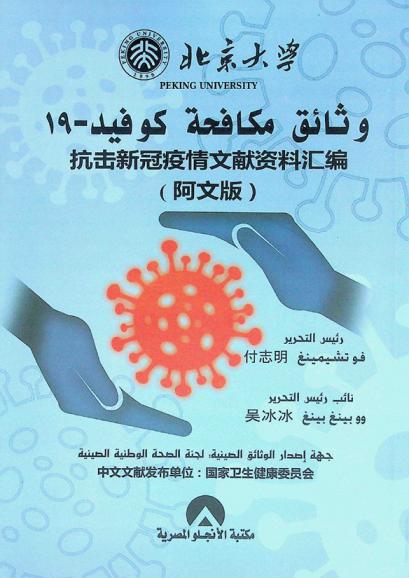
وثائق مكافحة كوفيد-19
بين يدي القارئ كتاب يجمع بين دفتيه الترجمة العربية لوثائق مكافحة كوفيد 19- التي أصدرتها لجنة الصحة الوطنية الصينية، ومـن بـين هذه الوثائق النسخ الست مـن آليات الوقاية مـن الالتهاب الرئوي الناجم عـن فيروس كـورونا المستجد ومكافحته، والنسخة التجريبية السابعة لآليات تـشخيص الالتـِهاب الـرئوي الناجِم عـن فـيروس كـورونا المستجد وعلاجه وغـيرها مـن الـمرفقات. وعـمل على ترجمة النـسخة الـعربية لوثائق مكافحة كـوفيد 19- الصينية فريـق ترجمة به أكـثر من عشريـن أستاذا وطالبا مـن قسم اللغة العربية بكلية اللغات الأجنبية بجامعة بكين بـالتعاون مع كلية الآداب في جامعة القاهرة والمعهد العالي للغات بتونس في جامعة قرطاج، في الفترة مـن مارس وحتى مايو 2020، قام خلالها فـريق الترجمة بترجمة قرابة 100 ألـف رمز صيني.
BOOK

Dispersive-wave induced noise limits in miniature soliton microwave sources
Compact, low-noise microwave sources are required throughout a wide range of application areas including frequency metrology, wireless-communications and airborne radar systems. And the photonic generation of microwaves using soliton microcombs offers a path towards integrated, low noise microwave signal sources. In these devices, a so called quiet-point of operation has been shown to reduce microwave frequency noise. Such operation decouples pump frequency noise from the soliton’s motion by balancing the Raman self-frequency shift with dispersive-wave recoil. Here, we explore the limit of this noise suppression approach and reveal a fundamental noise mechanism associated with fluctuations of the dispersive wave frequency. At the same time, pump noise reduction by as much as 36 dB is demonstrated. This fundamental noise mechanism is expected to impact microwave noise (and pulse timing jitter) whenever solitons radiate into dispersive waves belonging to different spatial mode families.
Here the authors explore the noise spectrum of soliton microcomb when the pump is decoupled from the solitons motion by balancing the Raman shift with the emitted dispersive wave. Based on the analysis of the phase noise and the soliton repetition rate, they identify the uncorrelated thermal fluctuations as underlying mechanism.
Journal Article
Chaos-assisted two-octave-spanning microcombs
Since its invention, optical frequency comb has revolutionized a broad range of subjects from metrology to spectroscopy. The recent development of microresonator-based frequency combs (microcombs) provides a unique pathway to create frequency comb systems on a chip. Indeed, microcomb-based spectroscopy, ranging, optical synthesizer, telecommunications and astronomical calibrations have been reported recently. Critical to many of the integrated comb systems is the broad coverage of comb spectra. Here, microcombs of more than two-octave span (450 nm to 2,008 nm) is demonstrated through
χ
(2)
and
χ
(3)
nonlinearities in a deformed silica microcavity. The deformation lifts the circular symmetry and creates chaotic tunneling channels that enable broadband collection of intracavity emission with a single waveguide. Our demonstration introduces a new degree of freedom, cavity deformation, to the microcomb studies, and our microcomb spectral range is useful for applications in optical clock, astronomical calibration and biological imaging.
Here, the authors demonstrate the use of chaos to obtain 2-octave comb generation. The deformation lifts the circular symmetry and creates chaotic tunneling channels that enable broadband collection of intracavity emission with a single waveguide, introducing a new degree of freedom to microcomb studies.
Journal Article

3D integration enables ultralow-noise isolator-free lasers in silicon photonics
Photonic integrated circuits are widely used in applications such as telecommunications and data-centre interconnects
1
–
5
. However, in optical systems such as microwave synthesizers
6
, optical gyroscopes
7
and atomic clocks
8
, photonic integrated circuits are still considered inferior solutions despite their advantages in size, weight, power consumption and cost. Such high-precision and highly coherent applications favour ultralow-noise laser sources to be integrated with other photonic components in a compact and robustly aligned format—that is, on a single chip—for photonic integrated circuits to replace bulk optics and fibres. There are two major issues preventing the realization of such envisioned photonic integrated circuits: the high phase noise of semiconductor lasers and the difficulty of integrating optical isolators directly on-chip. Here we challenge this convention by leveraging three-dimensional integration that results in ultralow-noise lasers with isolator-free operation for silicon photonics. Through multiple monolithic and heterogeneous processing sequences, direct on-chip integration of III–V gain medium and ultralow-loss silicon nitride waveguides with optical loss around 0.5 decibels per metre are demonstrated. Consequently, the demonstrated photonic integrated circuit enters a regime that gives rise to ultralow-noise lasers and microwave synthesizers without the need for optical isolators, owing to the ultrahigh-quality-factor cavity. Such photonic integrated circuits also offer superior scalability for complex functionalities and volume production, as well as improved stability and reliability over time. The three-dimensional integration on ultralow-loss photonic integrated circuits thus marks a critical step towards complex systems and networks on silicon.
Three-dimensional integration of distributed-feedback lasers and ultralow-loss silicon nitride waveguides results in ultralow-noise lasers without the need for optical isolators.
Journal Article
Photonic chip-based low-noise microwave oscillator
Numerous modern technologies are reliant on the low-phase noise and exquisite timing stability of microwave signals. Substantial progress has been made in the field of microwave photonics, whereby low-noise microwave signals are generated by the down-conversion of ultrastable optical references using a frequency comb
1
–
3
. Such systems, however, are constructed with bulk or fibre optics and are difficult to further reduce in size and power consumption. In this work we address this challenge by leveraging advances in integrated photonics to demonstrate low-noise microwave generation via two-point optical frequency division
4
,
5
. Narrow-linewidth self-injection-locked integrated lasers
6
,
7
are stabilized to a miniature Fabry–Pérot cavity
8
, and the frequency gap between the lasers is divided with an efficient dark soliton frequency comb
9
. The stabilized output of the microcomb is photodetected to produce a microwave signal at 20 GHz with phase noise of −96 dBc Hz
−1
at 100 Hz offset frequency that decreases to −135 dBc Hz
−1
at 10 kHz offset—values that are unprecedented for an integrated photonic system. All photonic components can be heterogeneously integrated on a single chip, providing a significant advance for the application of photonics to high-precision navigation, communication and timing systems.
We leverage advances in integrated photonics to generate low-noise microwaves with an optical frequency division architecture that can be low power and chip integrated.
Journal Article
Probing material absorption and optical nonlinearity of integrated photonic materials
Optical microresonators with high quality (
Q
) factors are essential to a wide range of integrated photonic devices. Steady efforts have been directed towards increasing microresonator
Q
factors across a variety of platforms. With success in reducing microfabrication process-related optical loss as a limitation of
Q
, the ultimate attainable
Q
, as determined solely by the constituent microresonator material absorption, has come into focus. Here, we report measurements of the material-limited
Q
factors in several photonic material platforms. High-
Q
microresonators are fabricated from thin films of SiO
2
, Si
3
N
4
, Al
0.2
Ga
0.8
As, and Ta
2
O
5
. By using cavity-enhanced photothermal spectroscopy, the material-limited
Q
is determined. The method simultaneously measures the Kerr nonlinearity in each material and reveals how material nonlinearity and ultimate
Q
vary in a complementary fashion across photonic materials. Besides guiding microresonator design and material development in four material platforms, the results help establish performance limits in future photonic integrated systems.
Optical absorption and nonlinear index are important performance drivers in devices like microcombs. Here the authors use resonance-enhanced nonlinear spectroscopy to characterize absorption limits and nonlinear index for some integrated photonic materials.
Journal Article
Pro-ferroptotic signaling promotes arterial aging via vascular smooth muscle cell senescence
Senescence of vascular smooth muscle cells (VSMCs) contributes to aging-related cardiovascular diseases by promoting arterial remodelling and stiffness. Ferroptosis is a novel type of regulated cell death associated with lipid oxidation. Here, we show that pro-ferroptosis signaling drives VSMCs senescence to accelerate vascular NAD
+
loss, remodelling and aging. Pro-ferroptotic signaling is triggered in senescent VSMCs and arteries of aged mice. Furthermore, the activation of pro-ferroptotic signaling in VSMCs not only induces NAD
+
loss and senescence but also promotes the release of a pro-senescent secretome. Pharmacological or genetic inhibition of pro-ferroptosis signaling, ameliorates VSMCs senescence, reduces vascular stiffness and retards the progression of abdominal aortic aneurysm in mice. Mechanistically, we revealed that inhibition of pro-ferroptotic signaling facilitates the nuclear-cytoplasmic shuttling of proliferator-activated receptor-γ and, thereby impeding nuclear receptor coactivator 4-ferrtin complex-centric ferritinophagy. Finally, the activated pro-ferroptotic signaling correlates with arterial stiffness in a human proof-of-concept study. These findings have significant implications for future therapeutic strategies aiming to eliminate vascular ferroptosis in senescence- or aging-associated cardiovascular diseases.
Ferroptosis is a novel form of regulated cell death associated with lipid oxidation. Here, the authors demonstrate that the proferroptosis signal is activated and drives vascular aging by inducing senescence in vascular smooth muscle cells.
Journal Article
Near-visible integrated soliton microcombs with detectable repetition rates
Integrated soliton microcombs benefit a wide range of conventional comb applications through their compactness and scalability. And applications such as optical clocks and biosensing have driven interest in their operation at wavelengths approaching the visible band. However, increasing normal dispersion and optical loss at shorter wavelengths make short pulse operation at low pumping power challenging, especially for detectable-rate microcombs. Here, low-pump-power, detectable-rate soliton microcombs are demonstrated from telecom to visible bands using ultra-low-loss silicon nitride waveguides. Wavelength-multiplexed operation spanning 2/3 octave is also demonstrated in a single device. The results fill a gap needed for realization of integrated self-referenced visible microcombs.
Integrated optical frequency combs are powerful tools for optical spectroscopy. Here, authors demonstrate low-power, detectable-rate soliton microcombs from telecom to visible bands, including wavelength-multiplexed operation, using ultra-low-loss silicon nitride waveguides.
Journal Article
Integrated turnkey soliton microcombs
Optical frequency combs have a wide range of applications in science and technology
1
. An important development for miniature and integrated comb systems is the formation of dissipative Kerr solitons in coherently pumped high-quality-factor optical microresonators
2
–
9
. Such soliton microcombs
10
have been applied to spectroscopy
11
–
13
, the search for exoplanets
14
,
15
, optical frequency synthesis
16
, time keeping
17
and other areas
10
. In addition, the recent integration of microresonators with lasers has revealed the viability of fully chip-based soliton microcombs
18
,
19
. However, the operation of microcombs requires complex startup and feedback protocols that necessitate difficult-to-integrate optical and electrical components, and microcombs operating at rates that are compatible with electronic circuits—as is required in nearly all comb systems—have not yet been integrated with pump lasers because of their high power requirements. Here we experimentally demonstrate and theoretically describe a turnkey operation regime for soliton microcombs co-integrated with a pump laser. We show the appearance of an operating point at which solitons are immediately generated by turning the pump laser on, thereby eliminating the need for photonic and electronic control circuitry. These features are combined with high-quality-factor Si
3
N
4
resonators to provide microcombs with repetition frequencies as low as 15 gigahertz that are fully integrated into an industry standard (butterfly) package, thereby offering compelling advantages for high-volume production.
A turnkey regime for soliton microcombs is demonstrated, in which solitons are generated by switching on a co-integrated pump laser, eliminating the need for photonic and electronic control circuitry.
Journal Article

Soliton pulse pairs at multiple colours in normal dispersion microresonators
Soliton microcombs are helping to advance the miniaturization of a range of comb systems. These combs mode lock through the formation of short temporal pulses in anomalous dispersion resonators. Here, a new microcomb is demonstrated that mode locks through the formation of pulse pairs in coupled normal dispersion resonators. Unlike conventional microcombs, pulses in this system cannot exist alone, and instead phase lock in pairs wherein pulses in each pair feature different optical spectra. The pairwise mode-locking modality extends to multiple pulse pairs and beyond two rings, and it greatly constrains mode-locking states. Two- (bipartite) and three-ring (tripartite) states containing many pulse pairs are demonstrated, including crystal states. Pulse pairs can also form at recurring spectral windows. We obtained the results using an ultra-low-loss Si3N4 platform that has not previously produced bright solitons on account of its inherent normal dispersion. The ability to generate multicolour pulse pairs over multiple rings is an important new feature for microcombs. It can extend the concept of all-optical soliton buffers and memories to multiple storage rings that multiplex pulses with respect to soliton colour and that are spatially addressable. The results also suggest a new platform for the study of topological photonics and quantum combs.Bright solitons are produced through the interaction of pulse pairs generated via a continuous-wave fibre laser, which pumps two coupled microresonators featuring normal dispersion. Multicolour pulse pairs over multiple rings can also be generated, of great promise for applications such as all-optical soliton buffers and memories, study of quantum combs and topological photonics.
Journal Article