
Catalogue Search | MBRL


Are you sure you want to remove the book from the shelf?

{{itemTitle}}
8,069
result(s) for
"Jia, Fu"
Sort by:

Strategic operations management
Operations strategy ensures that operational results coincide with company objectives. The strategic dimension to operations management is realized in the role of the chief operating officer who must respond to market changes. This text focuses on the core themes of this vital topic: strategy, innovation, services, and supply.
Book

Does supply chain concentration improve sustainability performance: the role of operational slack and information transparency
PurposeDespite the increasing interest in the role of supply chain concentration (SCC) in improving performance, its influence on firms' sustainability performance remains unexplored, as do the underlying mechanisms of this relationship. Drawing on resource dependence theory, the authors investigate the relationship between SCC and manufacturing firms' sustainability performance and the moderating roles of operational slack and information transparency.Design/methodology/approachThe authors use secondary data from 3,581 manufacturing firms listed on the Shanghai and Shenzhen A-share stock markets from 2006 to 2020 to conduct an empirical analysis using panel data regression models.FindingsManufacturing firms' SCC is negatively related to sustainability performance until it reaches a certain point, where SCC positively affects sustainability performance, presenting a U-shaped relationship. In addition, operational slack represented by a quick ratio moderates the relationship between SCC and sustainability performance by flattening the curve. Operational slack represented by receivable turnover ratio moderates the relationship between SCC and sustainability performance by steepening the curve and shifting the turning point left. Information transparency strengthens the effect of SCC on the sustainability performance by steepening the curve.Originality/valueThis investigation provides a comprehensive view of the SCC– sustainability performance relationship.
Journal Article
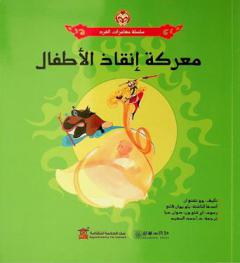
معركة إنقاذ الأطفال
فوق جبل الأزهار والثمار في مملكة آولاي في القارة الشرقية كانت صخرة كبيرة تمتص الطاقة الروحية للسماء والأرض وضوء الشمس والقمر، حتى انشقت ذات يوم وخرج منها قرد حجري، كان القرد شجاعا بما يكفي للمرور عبر شلال ودخول الكهف فنصبته القردة زعيما لها، لكن القرد أراد أن يعيش حياة أبدية، وسعيا منه لمعرفة سر الخلود، سافر إلى القارة الغربية وصار تلميذا للمعلم الذي منحه اسم (سون وو كونغ)، وعلمه أيضا مهارات مدهشة، مثل : التحولات الاثنين والسبعين والانتقال من مكان إلى آخر بالسحابة وغيرها من الفنون السحرية، ومع ذلك، طرده المعلم بسبب إظهاره لمهاراته أمام الآخرين، فعاد القرد إلى جبل الأزهار والثمار وعلم أن كهفه تعرض لهجوم من الشيطان، فذهب إليه وقتله وأعاد الأمن إلى جبل الأزهار والثمار ولتعزيز دفاعه، حصل القرد على أسلحة لا حصر لها من عاصمة مملكة آولاي ودرب القردة على ممارسة فنون الدفاع عن النفس.
Book
Supply chain learning of sustainability in multi-tier supply chains
PurposeThe purpose of this paper is to explore how multinational corporations (MNCs) orchestrate internal and external resources to help their multi-tier supply chains learn sustainability-related knowledge.Design/methodology/approachAn exploratory multiple case study approach was adopted and three MNCs’ sustainable initiatives in China were examined. The data were primarily collected through 43 semi-structured interviews with managers of focal companies and their multi-tier suppliers.FindingsThe authors found that in order to facilitate their supply chains to learn sustainability, MNCs tend to orchestrate in breadth by internally setting up new functional departments and externally working with third parties, and orchestrate in depth working directly with their extreme upstream suppliers adopting varied governance mechanisms on lower-tier suppliers along the project lifecycle. The resource orchestration in breadth and depth and along the project lifecycle results in changes of supply chain structure.Practical implicationsThe proposed conceptual model provides an overall framework for companies to design and implement their multi-tier sustainable initiatives. Companies could learn from the suggested learning stages and the best practices of case companies.Originality/valueThe authors extend and enrich resource orchestration perspective (ROP), which is internally focused, to a supply chain level, and answer a theoretical question of how MNCs orchestrate their internal and external resources to help their supply chains to learn sustainability. The extension of ROP refutes the resource dependence theory, which adopts a passive approach of relying on external suppliers and proposes that MNCs should proactively work with internal and external stakeholders to learn sustainability.
Journal Article


The Chinese Society of Clinical Oncology (CSCO): clinical guidelines for the diagnosis and treatment of gastric cancer
China is one of the countries with the highest incidence of gastric cancer. There are differences in epidemiological characteristics, clinicopathological features, tumor biological characteristics, treatment patterns, and drug selection between gastric cancer patients from the Eastern and Western countries. Non-Chinese guidelines cannot specifically reflect the diagnosis and treatment characteristics for the Chinese gastric cancer patients. The Chinese Society of Clinical Oncology (CSCO) arranged for a panel of senior experts specializing in all sub-specialties of gastric cancer to compile, discuss, and revise the guidelines on the diagnosis and treatment of gastric cancer based on the findings of evidence-based medicine in China and abroad. By referring to the opinions of industry experts, taking into account of regional differences, giving full consideration to the accessibility of diagnosis and treatment resources, these experts have conducted experts’ consensus judgement on relevant evidence and made various grades of recommendations for the clinical diagnosis and treatment of gastric cancer to reflect the value of cancer treatment and meeting health economic indexes. This guideline uses tables and is complemented by explanatory and descriptive notes covering the diagnosis, comprehensive treatment, and follow-up visits for gastric cancer.
Journal Article

وثائق مكافحة كوفيد-19
بين يدي القارئ كتاب يجمع بين دفتيه الترجمة العربية لوثائق مكافحة كوفيد 19- التي أصدرتها لجنة الصحة الوطنية الصينية، ومـن بـين هذه الوثائق النسخ الست مـن آليات الوقاية مـن الالتهاب الرئوي الناجم عـن فيروس كـورونا المستجد ومكافحته، والنسخة التجريبية السابعة لآليات تـشخيص الالتـِهاب الـرئوي الناجِم عـن فـيروس كـورونا المستجد وعلاجه وغـيرها مـن الـمرفقات. وعـمل على ترجمة النـسخة الـعربية لوثائق مكافحة كـوفيد 19- الصينية فريـق ترجمة به أكـثر من عشريـن أستاذا وطالبا مـن قسم اللغة العربية بكلية اللغات الأجنبية بجامعة بكين بـالتعاون مع كلية الآداب في جامعة القاهرة والمعهد العالي للغات بتونس في جامعة قرطاج، في الفترة مـن مارس وحتى مايو 2020، قام خلالها فـريق الترجمة بترجمة قرابة 100 ألـف رمز صيني.
BOOK

Towards an integrated conceptual model of supply chain learning: an extended resource-based view
Purpose
The purpose of this paper is to systematically review the academic literature on Supply Chain Learning (SCL), including the definitions, drivers, sources, barriers and consequences of SCL, and to propose an integrated conceptual model.
Design/methodology/approach
A systematic literature review has been conducted, with an analysis of 123 papers in peer-reviewed academic journals published from 1998 up to March 2018.
Findings
Through analysis and synthesis of the literature, this paper identifies and classifies the concepts of SCL into four types, that is, process orientation, structure orientation, consequence orientation and other informal definitions. Based on the Extended Resource-Based View (ERBV), the authors develop an integrated conceptual framework, which brings together various constructs. Within the framework, the authors identify the drivers and sources of SCL at intra- and inter-organizational levels. SCL consists of exploratory and exploitive learning capabilities, and the outcomes of SCL are dynamic supply chain management capabilities and sustainable supply chain performance.
Originality/value
The authors propose a capability perspective of SCL and develop a conceptual model and a number of associated propositions of SCL based on the ERBV and review findings, which is subject to future empirical testing and propose five future research directions. The findings of this paper can be extended beyond the dyad and be applied in multi-tier supply chain context.
Journal Article
The role of technology in supply chain decarbonisation: towards an integrated conceptual framework
Purpose
This study aims to systematically review the current academic literature on the role of technologies in low-carbon supply chain management (SCM), identify and analyse critical themes and propose an integrated conceptual model.
Design/methodology/approach
A systematic literature review of 48 papers published between 2010 and 2022 was conducted. A conceptual model was advanced.
Findings
Based on the analysis and synthesis of the reviewed papers, this review provides an initial attempt to integrate technology adoption and low-carbon SCM by developing a diffusion of innovation model of technology-enabled low-carbon SCM within the technology–organisation–environment (TOE) framework, in which drivers, enablers and barriers to technology adoption practices are identified. The environmental, economic and social outcomes of adoption practices are also identified.
Originality/value
This study provides a novel and comprehensive roadmap for future research on technology-enabled low-carbon SCM. Furthermore, policy, as well as managerial implications, is presented for policymakers and managers.
Journal Article

Artificial intelligence adoption in business-to-business marketing: toward a conceptual framework
Purpose
The purpose of this study is to develop a synthesized conceptual framework for artificial intelligence (AI) adoption in the field of business-to-business (B2B) marketing.
Design/methodology/approach
A conceptual development approach has been adopted, based on a content analysis of 59 papers in peer-reviewed academic journals, to identify drivers, barriers, practices and consequences of AI adoption in B2B marketing. Based on these analyses and findings, a conceptual model is developed.
Findings
This paper identifies the following two key drivers of AI adoption: the shortcomings of current marketing activities and the external pressure imposed by informatization. Seven outcomes are identified, namely, efficiency improvements, accuracy improvements, better decision-making, customer relationship improvements, sales increases, cost reductions and risk reductions. Based on information processing theory and organizational learning theory (OLT), an integrated conceptual framework is developed to explain the relationship between each construct of AI adoption in B2B marketing.
Originality/value
This study is the first conceptual paper that synthesizes drivers, barriers and outcomes of AI adoption in B2B marketing. The conceptual model derived from the combination of information processing theory and OLT provides a comprehensive framework for future work and opens avenues of research on this topic. This paper contributes to both AI literature and B2B literature.
Journal Article