
Catalogue Search | MBRL


Are you sure you want to remove the book from the shelf?

{{itemTitle}}
2,884
result(s) for
"Jiang, Lai"
Sort by:
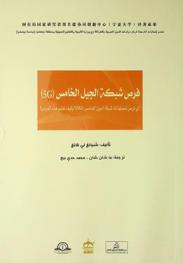
فرص شبكة الجيل الخامس (5G) : أي فرص تحملها لنا شبكة الجيل الخامس (5G) ؟ وكيف نغتنم هذه الفرص ؟
يثير الجيل الخامس (5G) متابعة العالم بأسره ويحظى أيضا باهتمام في الصين من القمة إلى القاعدة، وكل ذلك يبرهن على أمر معين وهو ما يتحلى به الناس من تطلع عميق تجاه الجيل الخامس (5G) بعد أن عشنا الجيل الرابع من الاتصالات (4G) ونحن على ثقة بأن الجيل الخامس (5G) يمثل فرصة كبرى لتغيير العالم ؛ فما الفرص التي سيجلب لنا الجيل الخامس (5G) يا ترى ؟ ومتى ستظهر هذه الفرص ؟ وكيف تغتنمها ؟ ؛ بعد فترة طويلة من المراقبة والتحليل والإحساس ومن خلال رسم خط مستقيم من الفرص ونظرة استشرافية شاركنا خبير الاتصالات شيانغ لي قانغ فرص الجيل الخامس (5G)، وهذا لم يسمح للمزيد من الناس بمعرفة ما الذي يعنيه الجيل الخامس (5G) فحسب، بل اطلعوا بشكل أوضح على ما يكن أن ينجز الجيل الخامس (5G) واستوعبوا أكثر من ذلك ما يمكن أن يفعله كل واحد منا من خلال الجيل الخامس (5G)
BOOK

Metformin Alleviates LPS-Induced Acute Lung Injury by Regulating the SIRT1/NF-κB/NLRP3 Pathway and Inhibiting Endothelial Cell Pyroptosis
Acute respiratory distress syndrome (ARDS), a devastating complication of numerous conditions, is often associated with high mortality. It is well known that endothelial cell (EC) damage and inflammation are vital processes in the pathogenesis of ARDS. Nevertheless, the mechanisms of EC damage are largely unknown. In the present study, we investigated the role of pyroptosis in the initiation of ARDS and demonstrated that endothelial pyroptosis might play a pivotal role in the pathophysiology of ARDS. Metformin, an antidiabetic drug, exhibited a protective effect in lipopolysaccharide (LPS)-induced lung injury, and we hypothesized that metformin alleviated LPS-induced lung injury via inhibiting ECs pyroptosis. In vivo , male ICR mice were intratracheally injected with LPS, and metformin was previously administered intraperitoneally. Morphological properties of lung tissues were detected. We showed that metformin inhibited NLRP3 inflammasome activation and NLRP3-stimulated pyroptosis induction, as shown by decreased levels of cleaved caspase-1, N-terminal fragment of GSDMD, and protein contents of IL-1β in lung tissues of mice exposed to LPS. LPS-induced expression of vascular adhesion molecules was also reduced after the treatment with metformin. In vitro , exposure of pulmonary ECs to LPS resulted in increased expression of NLRP3 and pyroptosis-associated indicators. By inhibiting the expression of NLRP3 with NLRP3 inhibitor MCC950, pyroptosis-related markers and vascular adhesion molecules were ameliorated. Moreover, metformin treatment significantly inhibited the NF-κB signaling pathway and increased the expression of sirtuin 1 (SIRT1) both in LPS-stimulated lung tissues and pulmonary ECs. Administration of the selective SIRT1 inhibitor nicotinamide significantly reversed the protective effect of metformin against endothelial pyroptosis and lung injury in LPS-treated ECs and LPS-induced acute lung injury (ALI). Thus, these findings demonstrated that metformin alleviated LPS-induced ALI by inhibiting NF-κB-NLRP3–mediated ECs pyroptosis, possibly by upregulating the expression of SIRT1.
Journal Article

One-phase-low-pH enzyme induced carbonate precipitation (EICP) method for soil improvement
Enzyme induced carbonate precipitation (EICP) is an emerging soil improvement method using free urease enzyme for urea hydrolysis. This method has advantages over the commonly used microbially induced carbonate precipitation (MICP) process as it does not involve issues related to bio-safety. However, in terms of efficiency of calcium carbonate production, EICP is considered lower than that of MICP. In this paper, a high efficiency EICP method is proposed. The key of this new method is to adopt a one-phase injection of low pH solution strategy. In this so-called one-phase-low-pH method, EICP solution consisting of a mixture of urease solution of pH = 6.5, urea and calcium chloride is injected into soil. The test results have shown that the one-phase-low-pH method can improve significantly the calcium conversion efficiency and the uniformity of calcium carbonate distribution in the sand samples as compared with the conventional two-phase EICP method. Furthermore, the unconfined compressive strength of sand treated using the one-phase-low-pH method is much higher than that using the two-phase method and the one-phase-low-pH method is also simpler and more efficient as it involves less number of injections.
Journal Article

TRIM37-mediated stabilization of PEX5 via monoubiquitination attenuates oxidative stress and demyelination in multiple sclerosis insights from EAE and LPC-induced experimental models
Multiple sclerosis (MS) is a chronic autoimmune disease of the central nervous system (CNS), characterized by myelin damage and neurodegeneration. This study focuses on the role of the TRIM37-PEX5 axis in regulating oxidative stress in oligodendrocytes and myelin repair, exploring its potential as a novel therapeutic target for MS. Through bioinformatics analysis, TRIM37 was found to be significantly downregulated in MS patients. In vitro experiments demonstrated that overexpression TRIM37 could stabilize PEX5 protein via non-degradative monoubiquitination, thereby maintaining peroxisomal metabolic function, reducing oxidative stress levels, significantly decreasing apoptosis in both oligodendrocytes and neurons, and promoting the expression of myelin basic protein (MBP). Further mechanistic studies revealed that the TRIM37-PEX5 axis mitigates apoptosis in oligodendrocytes by regulating oxidative stress levels. in vivo experiments further confirmed the neurorestorative effects of TRIM37. In an experimental autoimmune encephalomyelitis (EAE) model, overexpression TRIM37 significantly suppressed neuroinflammation mediated by microglia, reduced the expression of interleukin-1β (IL-1β) and tumor necrosis factor-α (TNF-α), and alleviated demyelination lesions (as evidenced by reduced myelin damage shown by Luxol fast blue (LFB) staining, P < 0.001), while simultaneously increasing MBP expression levels ( P < 0.001). In conclusion, targeting the TRIM37-PEX5 axis holds promise as a novel strategy for improving myelin damage and providing neuroprotection in MS, offering a theoretical basis for interventions in metabolism-oxidative stress-related diseases.
Journal Article

Neuroinflammation in Alzheimer’s disease: insights from peripheral immune cells
Alzheimer’s disease (AD) is a serious brain disorder characterized by the presence of beta-amyloid plaques, tau pathology, inflammation, neurodegeneration, and cerebrovascular dysfunction. The presence of chronic neuroinflammation, breaches in the blood-brain barrier (BBB), and increased levels of inflammatory mediators are central to the pathogenesis of AD. These factors promote the penetration of immune cells into the brain, potentially exacerbating clinical symptoms and neuronal death in AD patients. While microglia, the resident immune cells of the central nervous system (CNS), play a crucial role in AD, recent evidence suggests the infiltration of cerebral vessels and parenchyma by peripheral immune cells, including neutrophils, T lymphocytes, B lymphocytes, NK cells, and monocytes in AD. These cells participate in the regulation of immunity and inflammation, which is expected to play a huge role in future immunotherapy. Given the crucial role of peripheral immune cells in AD, this article seeks to offer a comprehensive overview of their contributions to neuroinflammation in the disease. Understanding the role of these cells in the neuroinflammatory response is vital for developing new diagnostic markers and therapeutic targets to enhance the diagnosis and treatment of AD patients.
Journal Article

Advancing Breast Cancer Heterogeneity Analysis: Insights from Genomics, Transcriptomics and Proteomics at Bulk and Single-Cell Levels
Breast cancer continues to pose a significant healthcare challenge worldwide for its inherent molecular heterogeneity. This review offers an in-depth assessment of the molecular profiling undertaken to understand this heterogeneity, focusing on multi-omics strategies applied both in traditional bulk and single-cell levels. Genomic investigations have profoundly informed our comprehension of breast cancer, enabling its categorization into six intrinsic molecular subtypes. Beyond genomics, transcriptomics has rendered deeper insights into the gene expression landscape of breast cancer cells. It has also facilitated the formulation of more precise predictive and prognostic models, thereby enriching the field of personalized medicine in breast cancer. The comparison between traditional and single-cell transcriptomics has identified unique gene expression patterns and facilitated the understanding of cell-to-cell variability. Proteomics provides further insights into breast cancer subtypes by illuminating intricate protein expression patterns and their post-translational modifications. The adoption of single-cell proteomics has been instrumental in this regard, revealing the complex dynamics of protein regulation and interaction. Despite these advancements, this review underscores the need for a holistic integration of multiple ‘omics’ strategies to fully decipher breast cancer heterogeneity. Such integration not only ensures a comprehensive understanding of breast cancer’s molecular complexities, but also promotes the development of personalized treatment strategies.
Journal Article

Immune metabolic restoration in systemic lupus erythematosus: the impact of gut microbiota, probiotics, and nutritional synergy
Gut microbiota alterations have been considered one of the attributes of Systemic Lupus Erythematosus (SLE), and may offer an immunological disorder and even cause the disease. The probiotic administration, especially the Lactobacillus and Bifidobacterium probiotics, is becoming highly utilized for the maintenance of the intestinal barrier’s integrity and immune function, minimizing further the risks of developing some complications such as lupus nephritis, mechanisms that have remained so incompletely defined. This review focuses on the analysis of literature data about the influence of certain probiotic strains on the pathogenesis and course of SLE as immunomodulators and a new therapy strategy that seeks to achieve a synergistic effect with the help of an additional probiotic in combination with dietary supplements gingerols or vitamin D. The current review, therefore, provided the limitations in current trials addressing SLE and therapy optimization. The work is done with the intention of addressing the existing gaps in knowledge, thereby creating more space for new approaches to emerge toward the SLE management and improvement of patients’ outcomes.
Journal Article

Target Detection Method for Soil-Dwelling Termite Damage Based on MCD-YOLOv8
With global climate change and the deterioration of the ecological environment, the safety of hydraulic engineering faces severe challenges, among which soil-dwelling termite damage has become an issue that cannot be ignored. Reservoirs and embankments in China, primarily composed of earth and rocks, are often affected by soil-dwelling termites, such as Odontotermes formosanus and Macrotermes barneyi. Identifying soil-dwelling termite damage is crucial for implementing monitoring, early warning, and control strategies. This study developed an improved YOLOv8 model, named MCD-YOLOv8, for identifying traces of soil-dwelling termite activity, based on the Monte Carlo random sampling algorithm and a lightweight module. The Monte Carlo attention (MCA) module was introduced in the backbone part to generate attention maps through random sampling pooling operations, addressing cross-scale issues and improving the recognition accuracy of small targets. A lightweight module, known as dimension-aware selective integration (DASI), was added in the neck part to reduce computation time and memory consumption, enhancing detection accuracy and speed. The model was verified using a dataset of 2096 images from the termite damage survey in hydraulic engineering within Hubei Province in 2024, along with images captured by drone. The results showed that the improved YOLOv8 model outperformed four traditional or enhanced models in terms of precision and mean average precision for detecting soil-dwelling termite damage, while also exhibiting fewer parameters, reduced redundancy in detection boxes, and improved accuracy in detecting small targets. Specifically, the MCD-YOLOv8 model achieved increases in precision and mean average precision of 6.4% and 2.4%, respectively, compared to the YOLOv8 model, while simultaneously reducing the number of parameters by 105,320. The developed model is suitable for the intelligent identification of termite damage in complex environments, thereby enhancing the intelligent monitoring of termite activity and providing strong technical support for the development of termite control technologies.
Journal Article

Ultrafast laser-scanning time-stretch imaging at visible wavelengths
Optical time-stretch imaging enables the continuous capture of non-repetitive events in real time at a line-scan rate of tens of MHz—a distinct advantage for the ultrafast dynamics monitoring and high-throughput screening that are widely needed in biological microscopy. However, its potential is limited by the technical challenge of achieving significant pulse stretching (that is, high temporal dispersion) and low optical loss, which are the critical factors influencing imaging quality, in the visible spectrum demanded in many of these applications. We present a new pulse-stretching technique, termed free-space angular-chirp-enhanced delay (FACED), with three distinguishing features absent in the prevailing dispersive-fiber-based implementations: (1) it generates substantial, reconfigurable temporal dispersion in free space (>1 ns nm
−1
) with low intrinsic loss (<6 dB) at visible wavelengths; (2) its wavelength-invariant pulse-stretching operation introduces a new paradigm in time-stretch imaging, which can now be implemented both with and without spectral encoding; and (3) pulse stretching in FACED inherently provides an ultrafast all-optical laser-beam scanning mechanism at a line-scan rate of tens of MHz. Using FACED, we demonstrate not only ultrafast laser-scanning time-stretch imaging with superior bright-field image quality compared with previous work but also, for the first time, MHz fluorescence and colorized time-stretch microscopy. Our results show that this technique could enable a wider scope of applications in high-speed and high-throughput biological microscopy that were once out of reach.
Pulse stretching: stretching achieved at visible wavelengths
A new pulse-stretching technique has enabled ultrafast laser-scanning time-stretch imaging to be achieved in the important visible region. Optical time-stretching is used to realize real-time continuous imaging at ultrahigh frame rates, but current technologies based on dispersive fibers are generally restricted to near-infrared wavelengths. Now, a team at the University of Hong Kong led by Kevin Tsia has overcome this limitation by developing a pulse-stretching technique that they dub free-space angular-chirp-enhanced delay. It has the advantages of generating a large dispersion in free space with low loss and of enabling wavelength-invariant stretching. The researchers demonstrated its potential by realizing ultrafast laser-scanning time-stretch imaging with excellent bright-field image quality. They also used it to achieve megahertz fluorescence and color time-stretch microscopy at the optical wavelength of 700 nm.
Journal Article

Carbon stocks and changes of dead organic matter in China's forests
Forests play an important role in global carbon cycles. However, the lack of available information on carbon stocks in dead organic matter, including woody debris and litter, reduces the reliability of assessing the carbon cycles in entire forest ecosystems. Here we estimate that the national DOM carbon stock in the period of 2004–2008 is 925 ± 54 Tg, with an average density of 5.95 ± 0.35 Mg C ha
−1
. Over the past two decades from periods of 1984−1988 to 2004−2008, the national dead organic matter carbon stock has increased by 6.7 ± 2.2 Tg carbon per year, primarily due to increasing forest area. Temperature and precipitation increase the carbon density of woody debris, but decrease that of litter. Additionally, the woody debris increases significantly with above ground biomass and forest age. Our results can improve estimates of the carbon budget in China's forests and for better understanding of effects of climate and stand characteristics on dead organic matter distribution.
Reliable estimates of the total forest carbon (C) pool are lacking due to insufficient information on dead organic matter (DOM). Here, the authors estimate that the current DOM C stock in China is 925 ± 54 Tg and that it grew by 6.7 ± 2.2 Tg C/yr over the past two decades primarily due to increasing forest area
Journal Article