
Catalogue Search | MBRL


Are you sure you want to remove the book from the shelf?

{{itemTitle}}
24,444
result(s) for
"Johnson, Andrew"
Sort by:


Interlibrary loans, subscriptions and copyright in the UK academic library sector
Higher education institution (HEI) libraries in the UK undertake a variety of interlibrary loan (ILL) and document supply operations, against a current background of increasing budgetary pressures. This article considers the foundations in so‑called library privilege exceptions in copyright law that underpin the long‑standing practice of ILL, aiming to address recurring issues and questions around what is permitted within the legislation, and which limitations apply. The focus is on addressing the ILL situation as it exists for non‑profit UK HEI academic libraries, including looking at some perceived ‘grey areas’.
Journal Article

Sargent Claude Johnson
In this catalogue, leading scholars examine Johnson's artistic evolution and offer fresh perspectives on his work. From sculptures of underrepresented subjects to majestic architectural commissions - including a celebrated mural reproduced in lavish gatefold format - the book positions Johnson's oeuvre within an expansive framework of global modernism.
Book

High Fat Diet Causes Depletion of Intestinal Eosinophils Associated with Intestinal Permeability
The development of intestinal permeability and the penetration of microbial products are key factors associated with the onset of metabolic disease. However, the mechanisms underlying this remain unclear. Here we show that, unlike liver or adipose tissue, high fat diet (HFD)/obesity in mice does not cause monocyte/macrophage infiltration into the intestine or pro-inflammatory changes in gene expression. Rather HFD causes depletion of intestinal eosinophils associated with the onset of intestinal permeability. Intestinal eosinophil numbers were restored by returning HFD fed mice to normal chow and were unchanged in leptin-deficient (Ob/Ob) mice, indicating that eosinophil depletion is caused specifically by a high fat diet and not obesity per se. Analysis of different aspects of intestinal permeability in HFD fed and Ob/Ob mice shows an association between eosinophil depletion and ileal paracelullar permeability, as well as leakage of albumin into the feces, but not overall permeability to FITC dextran. These findings provide the first evidence that a high fat diet causes intestinal eosinophil depletion, rather than inflammation, which may contribute to defective barrier integrity and the onset of metabolic disease.
Journal Article

P.S. I love you
A young widow discovers that her late husband has left her 10 messages intended to help ease her pain and start a new life.
DVD

Cell perturbation and lasers illuminate the genetics of latent blood cell traits
A new study combining experimental treatments of human blood cells from thousands of individuals with flow-cytometry-based phenotyping and then genome-wide association analyses identifies genetic loci associated with non-resting cell states. Integrating the results with disease association signals yields insights into the underlying biology.
Journal Article
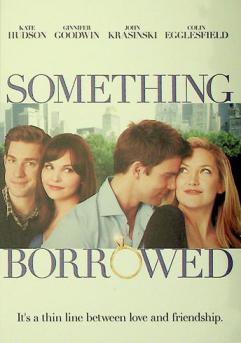
Something borrowed
Rachel is a generous and loyal pal to her engaged best friend Darcy. But after celebrating her 30th birthday, perpetual good girl Rachel unexpectedly ends up in the arms of Dex, the guy she's had a crush on since law school, and who happens to be Darcy's fiancé. In the frantic weeks leading up to Darcy's wedding, Rachel finds herself caught between her longtime friendship with Darcy and the prospect of losing the love of her life.
DVD

Generative AI, UK Copyright and Open Licences: considerations for UK HEI copyright advice services version 1; peer review: awaiting peer review
With the enormous growth in interest and use of generative artificial intelligence (AI) systems seen since the launch of ChatGPT in autumn 2022 have come questions both about the legal status of AI outputs, and of using protected works as training inputs. It is inevitable that UK higher education institution (HEI) library copyright advice services will see an increase in questions around use of works with AI as a result. Staff working in such library services are not lawyers or able to offer legal advice to their academic researchers. Nonetheless, they must look at the issues raised, consider how to advise in analogous situations of using copyright material, and offer opinion to researchers accordingly. While the legal questions remain to be answered definitively, copyright librarians can still offer advice on both open licences and use of copyright material under permitted exceptions. We look here at how library services can address questions on copyright and open licences for generative AI for researchers in UK HEIs.
Journal Article
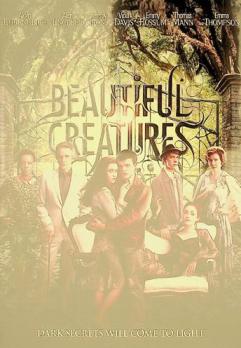
Beautiful creatures : dark secrets will come to light
\"Lena has just moved to the small, Southern town of Gatlin, where the only person who seems to understand her, or dream of bigger places or ideas, is a cute guy named Ethan Wate, who recognizes her instantly from the cryptic dreams he's been having every night. Lena is an orphan, and she's come to stay with her mysterious uncle, Macon Ravenwood, the patriarch of her powerful family. Powerful, because The Ravenwood clan are Casters, born with powers that ordinary mortals don't have, like the ability to move objects, control the elements, and even step out of normal space and time to communicate only with each other. But just as Lena feels ready to open up to Ethan, she discovers that their love is in imminent danger, because when female Casters turn 16, their destiny as either good or evil is revealed. Unwilling to let her nature be dictated by forces outside her control, Lena and Ethan set out together to uncover the strange, secret lore of their families' intertwined histories dating back to the Civil War, and figure out how to grant Lena the power to choose her own destiny\"--Allmovie.com, September 28, 2018.
DVD

70-year legacy of the Framingham Heart Study
The Framingham Heart Study (FHS) was established in 1948 to improve understanding of the epidemiology of coronary heart disease (CHD) in the USA. In 1961, seminal work identified major risk factors for CHD (high blood pressure, high cholesterol levels and evidence on the electrocardiogram of left ventricular hypertrophy), which later formed the basis for multivariable 10-year and 30-year risk-prediction algorithms. The FHS cohorts now comprise three generations of participants (n ≈ 15,000) and two minority cohorts. The FHS cohorts are densely phenotyped, with recurring follow-up examinations and surveillance for cardiovascular and non-cardiovascular end points. Assessment of subclinical disease and physiological profiling of these cohorts (with the use of echocardiography, ambulatory electrocardiographic monitoring, exercise stress testing, cardiac CT, heart and brain MRI, serial vascular tonometry and accelerometry) have been performed repeatedly. Over the past decade, the FHS cohorts have undergone deep ‘omics’ profiling (including whole-genome sequencing, DNA methylation analysis, transcriptomics, high-throughput proteomics and metabolomics, and microbiome studies). The FHS is a rich, longitudinal, transgenerational and deeply phenotyped cohort study with a sustained focus on state-of-the-art epidemiological methods and technological advances to facilitate scientific discoveries.The Framingham Heart Study (FHS) has been collecting epidemiological data on cardiovascular risk factors and disease for >70 years. In this Timeline Perspectives article, the authors summarize the major achievements of the FHS, highlight some of the seminal publications and discuss how epidemiological research has changed and continues to evolve.
Journal Article