
Catalogue Search | MBRL


Are you sure you want to remove the book from the shelf?

{{itemTitle}}
1,225
result(s) for
"Johnson, Stuart"
Sort by:


Clinical Practice Guidelines for Clostridium difficile Infection in Adults and Children: 2017 Update by the Infectious Diseases Society of America (IDSA) and Society for Healthcare Epidemiology of America (SHEA)
A panel of experts was convened by the Infectious Diseases Society of America (IDSA) and Society for Healthcare Epidemiology of America (SHEA) to update the 2010 clinical practice guideline on Clostridium difficile infection (CDI) in adults. The update, which has incorporated recommendations for children (following the adult recommendations for epidemiology, diagnosis, and treatment), includes significant changes in the management of this infection and reflects the evolving controversy over best methods for diagnosis. Clostridium difficile remains the most important cause of healthcare-associated diarrhea and has become the most commonly identified cause of healthcare-associated infection in adults in the United States. Moreover, C. difficile has established itself as an important community pathogen. Although the prevalence of the epidemic and virulent ribotype 027 strain has declined markedly along with overall CDI rates in parts of Europe, it remains one of the most commonly identified strains in the United States where it causes a sizable minority of CDIs, especially healthcare-associated CDIs. This guideline updates recommendations regarding epidemiology, diagnosis, treatment, infection prevention, and environmental management.
Journal Article


Potential of Sorghum Polyphenols to Prevent and Treat Alzheimer’s Disease: A Review Article
Alzheimer’s disease (AD) is characterized by the excessive deposition of extracellular amyloid-beta peptide (Aβ) and the build-up of intracellular neurofibrillary tangles containing hyperphosphorylated tau proteins. This leads to neuronal damage, cell death and consequently results in memory and learning impairments leading to dementia. Although the exact cause of AD is not yet clear, numerous studies indicate that oxidative stress, inflammation, and mitochondrial dysfunction significantly contribute to its onset and progression. There is no effective therapeutic approach to stop the progression of AD and its associated symptoms. Thus, early intervention, preferably, pre-clinically when the brain is not significantly affected, is a better option for effective treatment. Natural polyphenols (PP) target multiple AD-related pathways such as protecting the brain from Aβ and tau neurotoxicity, ameliorating oxidative damage and mitochondrial dysfunction. Among natural products, the cereal crop sorghum has some unique features. It is one of the major global grain crops but in the developed world, it is primarily used as feed for farm animals. A broad range of PP, including phenolic acids, flavonoids, and condensed tannins are present in sorghum grain including some classes such as proanthocyanidins that are rarely found in others plants. Pigmented varieties of sorghum have the highest polyphenolic content and antioxidant activity which potentially makes their consumption beneficial for human health through different pathways such as oxidative stress reduction and thus the prevention and treatment of neurodegenerative diseases. This review summarizes the potential of sorghum PP to beneficially affect the neuropathology of AD.
Journal Article
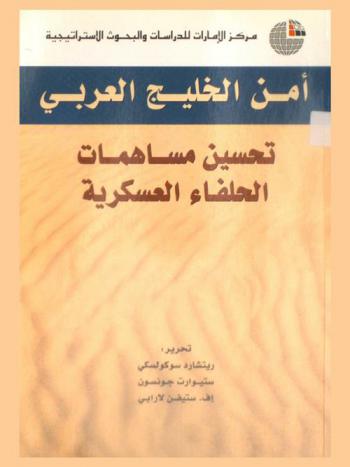
أمن الخليج العربي : تحسين مساهمات الحلفاء العسكرية
يستقصي هذا الكتاب السيناريوهات التي ستحتاج في إطارها الولايات المتحدة الأمريكية إلى مساهمة عسكرية كبيرة من حلفائها الأوربيين في الدفاع عن منطقة الخليج العربي ويقوم قدرات أولئك الحلفاء في مجال حشد القوة العسكرية ويحدد الوسائل الرئيسية لتحسين هذه القدرات كما يقدم الكتاب تحليلا واقعيا للتحديات السياسية والعسكرية والمالية التي تواجهها الدول الأوربية الأعضاء في حلف شمال الأطلسي (الناتو) ويطرح أيضا استراتيجية تتلاءم وإمكانيات هذه الدول لتضمن الولايات المتحدة الأمريكية الحصول منها على مساهمة عسكرية كبيرة في منطقة الخليج العربي.
Book

Membrane properties specialize mammalian inner hair cells for frequency or intensity encoding
The auditory pathway faithfully encodes and relays auditory information to the brain with remarkable speed and precision. The inner hair cells (IHCs) are the primary sensory receptors adapted for rapid auditory signaling, but they are not thought to be intrinsically tuned to encode particular sound frequencies. Here I found that under experimental conditions mimicking those in vivo, mammalian IHCs are intrinsically specialized. Low-frequency gerbil IHCs (~0.3 kHz) have significantly more depolarized resting membrane potentials, faster kinetics, and shorter membrane time constants than high-frequency cells (~30 kHz). The faster kinetics of low-frequency IHCs allow them to follow the phasic component of sound (frequency-following), which is not required for high-frequency cells that are instead optimally configured to encode sustained, graded responses (intensity-following). The intrinsic membrane filtering of IHCs ensures accurate encoding of the phasic or sustained components of the cell’s in vivo receptor potential, crucial for sound localization and ultimately survival. Many animals’ survival depends on them accurately and quickly identifying sounds in their environment. In animals with backbones, cells with hair-like projections (called hair cells) inside the ear convert information collected from sound waves into electrical signals. These signals are then transmitted to the brain, which processes the information further. Animals like bullfrogs are adapted to hearing low frequency sounds, like their own mating calls. These frog’s hair cells are individually tuned so that they can capture sounds in this low frequency range. Mammals, on the other hand, have evolved to hear a much wider range of sounds from loud and low frequency sounds, such as thunder, to soft and high frequency sounds, like the cries of their young. In mammals, the part of inner ear involved in hearing (called the cochlea) has an elaborate spiral-like shape. The structure of the cochlea results in different frequencies of sound being transformed by the hair cells into electrical signals at different points around the spiral. Because of this, most researchers didn’t think that hair cells in mammals were individually tuned like those in bullfrogs. Now, Stuart Johnson demonstrates that hair cells in different parts of the gerbil’s cochlea are specialized for encoding sounds of specific frequencies. In conditions that mimic the environment inside the ear, a very precise jet of fluid was used to stimulate single hair cells in a similar way to a sound wave. The experiments then compared how hair cells from the upper and lower parts of the cochlea’s spiral responded. Johnson found that hair cells from the upper portion of the gerbils’ cochlea are specialized to capture low frequency sounds. They have electrical properties that allow them to quickly transmit information to the brain about low frequency sounds. In the lower portion of the cochlea, hair cells are specialized to capture high frequency sounds. That is, their electrical properties make it easier for these hair cells to transmit detailed information to the brain about the volume of high frequency sounds. Together, these findings help explain how these animals are able to localize sounds, which requires capturing both the timing and intensity of different types of sounds.
Journal Article
Clinical Practice Guidelines for Clostridium difficile Infection in Adults and Children: 2017 Update by the Infectious Diseases Society of America (IDSA) and Society for Healthcare Epidemiology of America (SHEA)
A panel of experts was convened by the Infectious Diseases Society of America (IDSA) and Society for Healthcare Epidemiology of America (SHEA) to update the 2010 clinical practice guideline on Clostridium difficile infection (CDI) in adults. The update, which has incorporated recommendations for children (following the adult recommendations for epidemiology, diagnosis, and treatment), includes significant changes in the management of this infection and reflects the evolving controversy over best methods for diagnosis. Clostridium difficile remains the most important cause of healthcare-associated diarrhea and has become the most commonly identified cause of healthcare-associated infection in adults in the United States. Moreover, C. difficile has established itself as an important community pathogen. Although the prevalence of the epidemic and virulent ribotype 027 strain has declined markedly along with overall CDI rates in parts of Europe, it remains one of the most commonly identified strains in the United States where it causes a sizable minority of CDIs, especially healthcare-associated CDIs. This guideline updates recommendations regarding epidemiology, diagnosis, treatment, infection prevention, and environmental management.
Journal Article

Calcium entry into stereocilia drives adaptation of the mechanoelectrical transducer current of mammalian cochlear hair cells
Significance In the inner ear, the sensory receptor cells (hair cells) signal reception of sound. They do so by converting mechanical input, due to sound waves moving the hair bundles on these cells, into electrical current through ion channels situated at the tips of the bundles. To keep the receptors operating at their maximum sensitivity, the current declines rapidly, a process known as adaptation. In nonmammalian vertebrates, Ca ²⁺ ions entering the mechanosensitive ion channels drive adaptation, but it has been questioned whether this mechanism applies to mammals. We show that adaptation in mammalian cochlear hair cells is, as in other vertebrates, driven by Ca ²⁺ entry, demonstrating the importance of this process as a fundamental mechanism in vertebrate hair cells.
Mechanotransduction in the auditory and vestibular systems depends on mechanosensitive ion channels in the stereociliary bundles that project from the apical surface of the sensory hair cells. In lower vertebrates, when the mechanoelectrical transducer (MET) channels are opened by movement of the bundle in the excitatory direction, Ca ²⁺ entry through the open MET channels causes adaptation, rapidly reducing their open probability and resetting their operating range. It remains uncertain whether such Ca ²⁺-dependent adaptation is also present in mammalian hair cells. Hair bundles of both outer and inner hair cells from mice were deflected by using sinewave or step mechanical stimuli applied using a piezo-driven fluid jet. We found that when cochlear hair cells were depolarized near the Ca ²⁺ reversal potential or their hair bundles were exposed to the in vivo endolymphatic Ca ²⁺ concentration (40 µM), all manifestations of adaptation, including the rapid decline of the MET current and the reduction of the available resting MET current, were abolished. MET channel adaptation was also reduced or removed when the intracellular Ca ²⁺ buffer 1,2-Bis(2-aminophenoxy)ethane- N , N , N ′, N ′-tetraacetic acid (BAPTA) was increased from a concentration of 0.1 to 10 mM. The findings show that MET current adaptation in mouse auditory hair cells is modulated similarly by extracellular Ca ²⁺, intracellular Ca ²⁺ buffering, and membrane potential, by their common effect on intracellular free Ca ²⁺.
Journal Article

Lupin Kernel Fibre: Nutritional Composition, Processing Methods, Physicochemical Properties, Consumer Acceptability and Health Effects of Its Enriched Products
The kernels (dehulled seeds) of lupins (Lupinus spp.) contain far higher dietary fibre levels than other legumes. This fibre is a complex mixture of non-starch polysaccharides making up the thickened cell walls of the kernel. The fibre has properties of both insoluble and soluble fibres. It is a major by-product of the manufacture of lupin protein isolates, which can be dried to produce a purified fibre food ingredient. Such an ingredient possesses a neutral odour and flavour, a smooth texture, and high water-binding and oil-binding properties. These properties allow its incorporation into foods with minimum reduction in their acceptability. The lupin kernel fibre (LKF) has demonstrated beneficial effects in clinical studies on biomarkers for metabolic diseases such as obesity, type 2 diabetes, and cardiovascular disease. It can be described as a “prebiotic fibre” since it improves gut micro-floral balance and the chemical environment within the colon. Thus, LKF is a health-functional ingredient with great opportunity for more widespread use in foods; however, it is evident that more non-thermal methods for the manufacture of lupin kernel fibre should be explored, including their effects on the physicochemical properties of the fibre and the effect on health outcomes in long term clinical trials.
Journal Article

Grxcr1 regulates hair bundle morphogenesis and is required for normal mechanoelectrical transduction in mouse cochlear hair cells
Tasmanian devil ( tde ) mice are deaf and exhibit circling behaviour. Sensory hair cells of mutants show disorganised hair bundles with abnormally thin stereocilia. The origin of this mutation is the insertion of a transgene which disrupts expression of the Grxcr1 (glutaredoxin cysteine rich 1) gene. We report here that Grxcr1 exons and transcript sequences are not affected by the transgene insertion in tde homozygous ( tde/tde ) mice. Furthermore, 5’RACE PCR experiments showed the presence of two different transcripts of the Grxcr1 gene, expressed in both tde/tde and in wild-type controls. However, quantitative analysis of Grxcr1 transcripts revealed a significantly decreased mRNA level in tde/tde mice. The key stereociliary proteins ESPN, MYO7A, EPS8 and PTPRQ were distributed in hair bundles of homozygous tde mutants in a similar pattern compared with control mice. We found that the abnormal morphology of the stereociliary bundle was associated with a reduction in the size and Ca 2+ -sensitivity of the mechanoelectrical transducer (MET) current. We propose that GRXCR1 is key for the normal growth of the stereociliary bundle prior to the onset of hearing, and in its absence hair cells are unable to mature into fully functional sensory receptors.
Journal Article