
Catalogue Search | MBRL


Are you sure you want to remove the book from the shelf?

{{itemTitle}}
8,913
result(s) for
"Jones, Ben"
Sort by:


Agreement and Reliability of Running Stride-Time Variability Analyses from Wearable Devices
Stride-time variability is typically quantified using measures including the coefficient of variation (CV) and detrended fluctuation analysis (DFA). Whilst several studies have reported guidelines for applying such measures, few have considered the sensitivity of these measures to the way stride times are obtained. This study investigated the agreement and between-day reliability of stride-time variability measures derived from wearable devices compared to measures derived from an instrumented treadmill. Thirty-one runners completed eight minutes of running on two days. Stride times were obtained concurrently using Loadsol
insoles, Blue Trident inertial measurement units (IMUs) at four sampling rates, RunScribe™ IMUs and an AMTI instrumented treadmill. Stride-time CV and DFA-α were calculated on time-matched series. Agreement with the instrumented treadmill was quantified using Bland Altman plots and concordance correlation coefficients. Loadsol
insoles and RunScribe™ IMUs displayed the highest and lowest agreement, respectively. For the Blue Trident IMU, sampling below 400 Hz reduced agreement relative to higher rates. Between-day reliability was moderate-to-good and poor-to-moderate for stride-time CV and DFA-α, respectively, although within narrower bands than reported across studies using different measurement devices. Hence, Loadsol
insoles and Blue Trident IMUs, at sufficient sampling rates, can facilitate stride-time variability analyses, although changes over time should be interpreted cautiously.
Journal Article

Avoiding data pitfalls : how to steer clear of common blunders when working with data and presenting analysis and visualizations
\"Avoiding Data Pitfalls is a useful resource that points out common data viz. mistakes so that users can avoid making them and notice them when they are made by others. Working with data is so common now, but the vast majority of \"data workers\" were trained in another technical field like engineering or science. Most were not explicitly taught how to successfully work with today's tools and the types of data at their disposal. This book will provide illustrative examples of common mistakes, first outlining how we often think about data and the \"data-reality gap,\" before walking the reader through each step of successful data visualization, from calculating and analyzing data to eventually presenting it in a way that is both clear and effective. The author will detail common data viz. blunders like cluttered design and ineffective use of color so that the reader can differentiate between a poor presentation and something truly representative and useful\"-- Provided by publisher.
Book

Reliability of running gait variability measures calculated from inertial measurement units
Changes to the variability within biomechanical signals may reflect a change in the health of the human system. However, for running gait variability measures calculated from wearable device data, it is unknown whether a between-day difference reflects a shift in system dynamics reflective of a change in human health or is a result of poor between-day reliability of the measurement device or the biomechanical signal. This study investigated the reliability of stride time and sacral acceleration variability measures calculated from inertial measurement units (IMUs). Nineteen runners completed six treadmill running trials on two occasions seven days apart. Stride time and sacral acceleration signals were obtained using IMUs. Stride time variability and complexity were calculated using the coefficient of variation (CV) and detrended fluctuation analysis (DFA), respectively. Sacral acceleration regularity was quantified using sample entropy with a range of input parameters m (vector length) and r (similarity threshold). Between-day reliability was assessed using the intraclass correlation coefficient (ICC), standard error of measurement (SEM) and minimum detectable change. Stride time CV displayed moderate relative reliability (ICC = 0.672), but with a large absolute minimum detectable change = 0.525 %, whilst stride time DFA-α displayed poor relative reliability (ICC = 0.457) and yielded large minimum detectable changes (≥ 0.208). Sample entropy displayed good relative reliability in mediolateral and resultant sacral acceleration signals for certain combinations of the parameters m and r, although again with large minimum detectable changes. Researchers should be cognisant of these reliability metrics when interpreting changes in running gait variability measures in clinical contexts.
Journal Article

Lonely boy : tales from a Sex Pistol
The Sex Pistols transformed twentieth-century culture and kick-started a social revolution. On the 40th anniversary of punk, Jones takes readers on his journey from the Kings Road of the early '70s through the years of the Sex Pistols and punk rock. He delves into the details of his self-imposed exile in New York and Los Angeles, where he battled alcohol, heroin, and sex addiction but eventually emerged to gain fresh acclaim as an actor and radio host.
BOOK

Detection of Bartonella schoenbuchensis and a novel sigmavirus within the microbiome of deer keds (Lipoptena cervi) from the United Kingdom
Background
Lipoptena cervi
is a member of the Hippoboscidae family of insects and is a hematophagous ectoparasite of cervid species, commonly referred to as the deer ked.
Lipoptena cervi
has a wide geographical distribution and can be found from North America through Europe into East Asia. Deer keds occasionally bite humans and domestic animals and might act as disease vectors. The microbiome associated with this species of biting insect has not been investigated.
Methods
Mass sequencing of both DNA and RNA extracted from
L. cervi
specimens collected from two locations in southern England was conducted to characterise the complete microbiome consisting of bacterial, viral and eukaryotic species. Three specimens were collected after landing on humans in Somerset, and three specimens were collected from European roe deer (
Capreolus capreolus
) in Oxfordshire. Bioinformatic analysis investigated the host and microbial composition of each specimen.
Results
Near-complete mitochondrial genomes were assembled from all six specimens confirming morphological speciation as
L. cervi
. Bacterial endosymbionts were the most dominant organisms identified with
Candidatus
Arsenophonus lipoptenae being most abundant. In specimens that had fed on deer, the pathogen
Bartonella schoenbuchensis
was detected. A novel sigmavirus was also detected in five samples, four of which yielded near-complete genomes. The closest relative of this virus was a sigmavirus found in a sheep ked (
Melophagus ovinus
) sampled in the Russian Federation.
Conclusions
The data from this study will allow for a better baseline understanding of the microbiome of
L. cervi
and provide evidence for their role as vectors of zoonotic pathogens.
Graphical Abstract
Journal Article
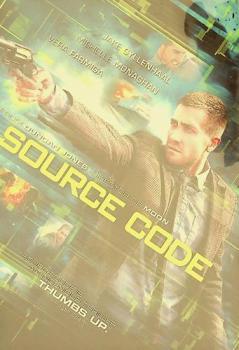
Source code
\"Jake Gyllenhaal headlines this sci-fi time-travel thriller directed by Moon's Duncan Jones from a script by Ben Ripley. A bomb explodes on a Chicago train, derailing the locomotive and killing hundreds. In an attempt to identify the bomber and prevent another, larger attack on downtown Chicago, Captain Colter Stevens (Gyllenhaal) agrees to take part in a clandestine government experiment dubbed \"Source Code,\" which allows him to enter the body of a male passenger during the eight minutes before the man is killed. But during his first trip back, Capt. Stevens fails to gather enough clues to prevent the second attack. With time quickly running out, he repeats the mission ad nauseam in a desperate race to head off one of the most deadly terrorist attacks ever to take place on American soil\"--Allmovie.com, viewed August 29, 2017.
DVD
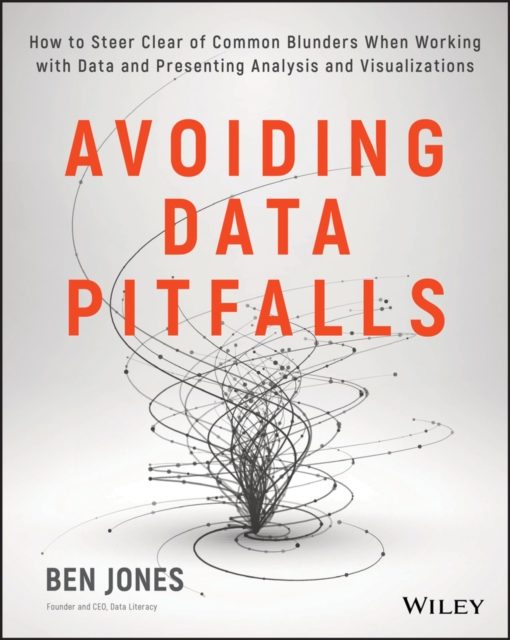
Avoiding Data Pitfalls
Avoid data blunders and create truly useful visualizations Avoiding Data Pitfalls is a reputation-saving handbook for those who work with data, designed to help you avoid the all-too-common blunders that occur in data analysis, visualization, and presentation. Plenty of data tools exist, along with plenty of books that tell you how to use them—but unless you truly understand how to work with data, each of these tools can ultimately mislead and cause costly mistakes. This book walks you step by step through the full data visualization process, from calculation and analysis through accurate, useful presentation. Common blunders are explored in depth to show you how they arise, how they have become so common, and how you can avoid them from the outset. Then and only then can you take advantage of the wealth of tools that are out there—in the hands of someone who knows what they're doing, the right tools can cut down on the time, labor, and myriad decisions that go into each and every data presentation. Workers in almost every industry are now commonly expected to effectively analyze and present data, even with little or no formal training. There are many pitfalls—some might say chasms—in the process, and no one wants to be the source of a data error that costs money or even lives. This book provides a full walk-through of the process to help you ensure a truly useful result. * Delve into the \"data-reality gap\" that grows with our dependence on data * Learn how the right tools can streamline the visualization process * Avoid common mistakes in data analysis, visualization, and presentation * Create and present clear, accurate, effective data visualizations To err is human, but in today's data-driven world, the stakes can be high and the mistakes costly. Don't rely on \"catching\" mistakes, avoid them from the outset with the expert instruction in Avoiding Data Pitfalls.
eBook

Welcome to the punch
Three years ago, master criminal Jacob Sternwood escaped London during a daring robbery that left detective Max Lewinsky physically and emotionally scarred. When a failed heist puts Sternwood's son in a hospital, the fugitive is forced to come out of hiding, giving Max his second chance to get the one criminal who got away. But as Max returns to the pursuit of his arch-nemesis, he begins to uncover evidence of a vast conspiracy that may put him in even greater danger than his personal vendetta.
DVD

Statistical analysis considerations within longitudinal studies of physical qualities in youth athletes: A qualitative systematic methodological review
The evaluation of physical qualities in talent identification and development systems is vital and commonplace in supporting youth athletes towards elite sport. However, the complex and dynamic development of physical qualities in addition to temporal challenges associated with the research design, such as unstructured data collection and missing data, requires appropriate statistical methods to be applied in research to optimise the understanding and knowledge of long-term physical development. To collate and evaluate the application of methodological and statistical methods used in studies investigating the development of physical qualities within youth athletes. Electronic databases were systematically searched form the earliest record to June 2021 and reference lists were hand searched in accordance with the PRISMA guidelines. Studies were included if they tested physical qualities over a minimum of 3 timepoints, were observational in nature and used youth sporting populations. Forty articles met the inclusion criteria. The statistical analysis methods applied were qualitatively assessed against the theoretical underpinnings (i.e. multidimensional development, non-linear change and between and within athlete change) and temporal challenges (i.e. time variant and invariant variables, missing data, treatment of time and repeated measures) encountered with longitudinal physical testing research. Multilevel models were implemented most frequently (50%) and the most appropriately used statistical analysis method when qualitatively compared against the longitudinal challenges. Independent groups ANOVA, MANOVA and X.sup.2 were also used, yet failed to address any of the challenges posed within longitudinal physical testing research. This methodological review identified the statistical methods currently employed within longitudinal physical testing research and addressed the theoretical and temporal challenges faced in longitudinal physical testing research with varying success. The findings can be used to support the selection of statistical methods when evaluating the development of youth athletes through the consideration of the challenges presented.
Journal Article