
Catalogue Search | MBRL


Are you sure you want to remove the book from the shelf?

{{itemTitle}}
2,410
result(s) for
"Jones, Jeremy"
Sort by:


Understanding links between water-quality variables and nitrate concentration in freshwater streams using high frequency sensor data
Real-time monitoring using in-situ sensors is becoming a common approach for measuring water-quality within watersheds. High-frequency measurements produce big datasets that present opportunities to conduct new analyses for improved understanding of water-quality dynamics and more effective management of rivers and streams. Of primary importance is enhancing knowledge of the relationships between nitrate, one of the most reactive forms of inorganic nitrogen in the aquatic environment, and other water-quality variables. We analysed high-frequency water-quality data from in-situ sensors deployed in three sites from different watersheds and climate zones within the National Ecological Observatory Network, USA. We used generalised additive mixed models to explain the nonlinear relationships at each site between nitrate concentration and conductivity, turbidity, dissolved oxygen, water temperature, and elevation. Temporal auto-correlation was modelled with an auto-regressive–moving-average (ARIMA) model and we examined the relative importance of the explanatory variables. Total deviance explained by the models was high for all sites (99%). Although variable importance and the smooth regression parameters differed among sites, the models explaining the most variation in nitrate contained the same explanatory variables. This study demonstrates that building a model for nitrate using the same set of explanatory water-quality variables is achievable, even for sites with vastly different environmental and climatic characteristics. Applying such models will assist managers to select cost-effective water-quality variables to monitor when the goals are to gain a spatial and temporal in-depth understanding of nitrate dynamics and adapt management plans accordingly.
Journal Article

Negotiating change : the new politics of the Middle East
The Middle East is frequently portrayed as a collection of stubbornly authoritarian states, whose behaviour can only be changed by the table-thumping or even the military intervention of the US government. But as Jeremy Jones uncovers in this fascinating book, the region is in fact engaged in a profound and tumultuous process of political change. The movements seeking democracy and reform that have emerged are rooted in local cultures and political traditions. And because of this, they are overlooked, obstructed, or even undermined by the US's pursuit of a one-size-fits-all Western democratic model. -- Publisher description.
Book

Rapid evolution of A(H5N1) influenza viruses after intercontinental spread to North America
Highly pathogenic avian influenza A(H5N1) viruses of clade 2.3.4.4b underwent an explosive geographic expansion in 2021 among wild birds and domestic poultry across Asia, Europe, and Africa. By the end of 2021, 2.3.4.4b viruses were detected in North America, signifying further intercontinental spread. Here we show that the western movement of clade 2.3.4.4b was quickly followed by reassortment with viruses circulating in wild birds in North America, resulting in the acquisition of different combinations of ribonucleoprotein genes. These reassortant A(H5N1) viruses are genotypically and phenotypically diverse, with many causing severe disease with dramatic neurologic involvement in mammals. The proclivity of the current A(H5N1) 2.3.4.4b virus lineage to reassort and target the central nervous system warrants concerted planning to combat the spread and evolution of the virus within the continent and to mitigate the impact of a potential influenza pandemic that could originate from similar A(H5N1) reassortants.
Highly pathogenic avian influenza A(H5N1) viruses of clade 2.3.4.4b underwent an explosive geographic expansion in 2021 among wild birds and domestic poultry. Here, Kandeil et al. show that the Western movement of this clade was followed by reassortment with viruses circulating in wild birds in North America which resulted in different genotypes exhibiting a wide range of disease severity in mammal models (mice, ferrets, chicken) ranging from asymptomatic disease to severe neurological pathology.
Journal Article


'Nothing is Straight in Zimbabwe': The Rise of the Kukiya-kiya Economy 2000-2008
This article examines the development of what I term the 'kukiya-kiya' economy, a new logic of economic action in post-2000 Zimbabwe. In local parlance 'kukiya-kiya' refers to multiple forms of 'making do'. I argue that it has spread from its former position on the urban margins and in so doing has effected a sweeping spatio-temporal shift in the country's economic life. 'Straight' transactions carried out in accordance with enduring, jointly-held rules and morals have given way to 'zigzag' 'deals' seen to be limited to a particular time and place and directed at individual 'survival'. This reorientation to the short term, where 'proper' solutions of all sorts are suspended, is mirrored by a widely-held perception that the country's development has also been suspended. When put together, the two forms of suspension create a seemingly inescapable dialectic, where the dictates of 'survival' and temporary 'necessity' can be used to justify nearly any economic act. Indeed, I argue, the new economy is driven as much by a discourse of necessity - that is, by a particular form of historical consciousness - as by material 'needs' and the economic practices intended to meet them.
Journal Article


Influenza A virus polymerase acidic protein E23G/K substitutions weaken key baloxavir drug-binding contacts with minimal impact on replication and transmission
Baloxavir marboxil (BXM) is approved for treating uncomplicated influenza. The active metabolite baloxavir acid (BXA) inhibits cap-dependent endonuclease activity of the influenza virus polymerase acidic protein (PA), which is necessary for viral transcription. Treatment-emergent E23G or E23K (E23G/K) PA substitutions have been implicated in reduced BXA susceptibility, but their effect on virus fitness and transmissibility, their synergism with other BXA resistance markers, and the mechanisms of resistance have been insufficiently studied. Accordingly, we generated point mutants of circulating seasonal influenza A(H1N1)pdm09 and A(H3N2) viruses carrying E23G/K substitutions. Both substitutions caused 2- to 13-fold increases in the BXA EC 50 . EC 50 s were higher with E23K than with E23G and increased dramatically (138- to 446-fold) when these substitutions were combined with PA I38T, the dominant BXA resistance marker. E23G/K-substituted viruses exhibited slightly impaired replication in MDCK and Calu-3 cells, which was more pronounced with E23K. In ferret transmission experiments, all viruses transmitted to direct-contact and airborne-transmission animals, with only E23K+I38T viruses failing to infect 100% of animals by airborne transmission. E23G/K genotypes were predominantly stable during transmission events and through five passages in vitro. Thermostable PA–BXA interactions were weakened by E23G/K substitutions and further weakened when combined with I38T. In silico modeling indicated this was caused by E23G/K altering the placement of functionally important Tyr24 in the endonuclease domain, potentially decreasing BXA binding but at some cost to the virus. These data implicate E23G/K, alone or combined with I38T, as important markers of reduced BXM susceptibility, and such mutants could emerge and/or transmit among humans.
Journal Article
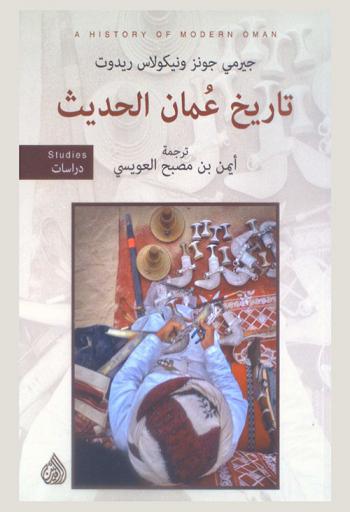
تاريخ عمان الحديث
يستعرض هذا الكتاب الذي بين أيديكم تاريخ عمان الحديث بدءا من القرن الثامن عشر وحتى يومنا هذا ويضم بين جنباته أحدث الدراسات العلمية التي كتبت عن عمان يتخللها بعض التحليلات التي استقاها الكاتبان من قراءتهما للسياسات التي تنتهجها عمان الحديثة فضلا عن علاقاتها الدولية في الوقت الراهن وينتهج كل من جيرمي جونز ونيكولاس ريدوت نهجا مميزا وجديدا في دراسة التاريخ العماني ؛ إذ بنى الكاتبان دراستهما على فكرة ما بعد الاستعمار ومزجا بين الدراسات السياسية والثقافية. يتناول هذا الكتاب جملة من المواضيع المهمة حول عمان من بينها (الكوزموبوليتانية التاريخية) العمانية والدور المميز للإسلام العماني في الحياة الثقافية والسياسية في البلاد ودور عمان في الاقتصاد العالمي في القرن العشرين ودور السلطان قابوس في عصر النفط والمواقف الإقليمية والدبلوماسية الفريدة التي تتبناها عمان إزاء القضايا المعاصرة.
BOOK

Rationalizing the development of live attenuated virus vaccines
The design of vaccines against viral disease has evolved considerably over the past 50 years. Live attenuated viruses (LAVs)—those created by passaging a virus in cultured cells—have proven to be an effective means for preventing many viral diseases, including smallpox, polio, measles, mumps and yellow fever. Even so, empirical attenuation is unreliable in some cases and LAVs pose several safety issues. Although inactivated viruses and subunit vaccines alleviate many of these concerns, they have in general been less efficacious than their LAV counterparts. Advances in molecular virology—creating deleterious gene mutations, altering replication fidelity, deoptimizing codons and exerting control by microRNAs or zinc finger nucleases—are providing new ways of controlling viral replication and virulence and renewing interest in LAV vaccines. Whereas these rationally attenuated viruses may lead to a new generation of safer, more widely applicable LAV vaccines, each approach requires further testing before progression to human testing.
Journal Article