
Catalogue Search | MBRL


Are you sure you want to remove the book from the shelf?

{{itemTitle}}
23,941
result(s) for
"Juan Wang"
Sort by:


Unique Roles of Gold Nanoparticles in Drug Delivery, Targeting and Imaging Applications
Nanotechnology has become more and more potentially used in diagnosis or treatment of diseases. Advances in nanotechnology have led to new and improved nanomaterials in biomedical applications. Common nanomaterials applicable in biomedical applications include liposomes, polymeric micelles, graphene, carbon nanotubes, quantum dots, ferroferric oxide nanoparticles, gold nanoparticles (Au NPs), and so on. Among them, Au NPs have been considered as the most interesting nanomaterial because of its unique optical, electronic, sensing and biochemical properties. Au NPs have been potentially applied for medical imaging, drug delivery, and tumor therapy in the early detection, diagnosis, and treatment of diseases. This review focuses on some recent advances in the use of Au NPs as drug carriers for the intracellular delivery of therapeutics and as molecular nanoprobes for the detection and monitoring of target molecules.
Journal Article


ANXA2 promotes esophageal cancer progression by activating MYC-HIF1A-VEGF axis
Background
ANXA2 (Annexin A2) is a pleiotropic calcium-dependent phospholipid binding protein that is abnormally expressed in various cancers. We previously found that ANXA2 is upregulated in esophageal squamous cell carcinoma (ESCC). This study was designed to investigate the functional significance of ANXA2 dysregulation and underlying mechanism in ESCC.
Methods
Proliferation, migration, invasion and metastasis assay were performed to examine the functional roles of ANXA2 in ESCC cells in vitro and in vivo. Real-time RT-PCR, immunoblotting, ChIP, reporter assay, confocal-immunofluorescence staining, co-immunoprecipitation and ubiquitination assay were used to explore the molecular mechanism underlying the actions of deregulated ANXA2 in ESCC cells.
Results
Overexpression of ANXA2 promoted ESCC cells migration and invasion in vitro and metastasis in vivo through activation of the MYC-HIF1A-VEGF cascade. Notably, ANXA2 phosphorylation at Tyr23 by SRC led to its translocation into the nucleus and enhanced the metastatic potential of ESCC cells. Phosphorylated ANXA2 (Tyr23) interacted with MYC and inhibited ubiquitin-dependent proteasomal degradation of MYC protein. Accumulated MYC directly potentiated HIF1A transcription and then activated VEGF expression. Correlation between these molecules were also found in ESCC tissues
.
Moreover, dasatinib in combination with bevacizumab or ANXA2-siRNA produced potent inhibitory effects on the growth of ESCC xenograft tumors in vivo.
Conclusions
This study provides evidence that highly expressed p-ANXA2 (Tyr23) contributes to ESCC progression by promoting migration, invasion and metastasis, and suggests that targeting the SRC-ANXA2-MYC-HIF1A-MYC axis may be an efficient strategy for ESCC treatment.
Journal Article


Safety, tolerability, and immunogenicity of a recombinant adenovirus type-5 vectored COVID-19 vaccine: a dose-escalation, open-label, non-randomised, first-in-human trial
A vaccine to protect against COVID-19 is urgently needed. We aimed to assess the safety, tolerability, and immunogenicity of a recombinant adenovirus type-5 (Ad5) vectored COVID-19 vaccine expressing the spike glycoprotein of a severe acute respiratory syndrome coronavirus 2 (SARS-CoV-2) strain.
We did a dose-escalation, single-centre, open-label, non-randomised, phase 1 trial of an Ad5 vectored COVID-19 vaccine in Wuhan, China. Healthy adults aged between 18 and 60 years were sequentially enrolled and allocated to one of three dose groups (5 × 10¹⁰, 1 × 10¹¹, and 1·5 × 1011 viral particles) to receive an intramuscular injection of vaccine. The primary outcome was adverse events in the 7 days post-vaccination. Safety was assessed over 28 days post-vaccination. Specific antibodies were measured with ELISA, and the neutralising antibody responses induced by vaccination were detected with SARS-CoV-2 virus neutralisation and pseudovirus neutralisation tests. T-cell responses were assessed by enzyme-linked immunospot and flow-cytometry assays. This study is registered with ClinicalTrials.gov, NCT04313127.
Between March 16 and March 27, 2020, we screened 195 individuals for eligibility. Of them, 108 participants (51% male, 49% female; mean age 36·3 years) were recruited and received the low dose (n=36), middle dose (n=36), or high dose (n=36) of the vaccine. All enrolled participants were included in the analysis. At least one adverse reaction within the first 7 days after the vaccination was reported in 30 (83%) participants in the low dose group, 30 (83%) participants in the middle dose group, and 27 (75%) participants in the high dose group. The most common injection site adverse reaction was pain, which was reported in 58 (54%) vaccine recipients, and the most commonly reported systematic adverse reactions were fever (50 [46%]), fatigue (47 [44%]), headache (42 [39%]), and muscle pain (18 [17%]. Most adverse reactions that were reported in all dose groups were mild or moderate in severity. No serious adverse event was noted within 28 days post-vaccination. ELISA antibodies and neutralising antibodies increased significantly at day 14, and peaked 28 days post-vaccination. Specific T-cell response peaked at day 14 post-vaccination.
The Ad5 vectored COVID-19 vaccine is tolerable and immunogenic at 28 days post-vaccination. Humoral responses against SARS-CoV-2 peaked at day 28 post-vaccination in healthy adults, and rapid specific T-cell responses were noted from day 14 post-vaccination. Our findings suggest that the Ad5 vectored COVID-19 vaccine warrants further investigation.
National Key R&D Program of China, National Science and Technology Major Project, and CanSino Biologics.
Journal Article
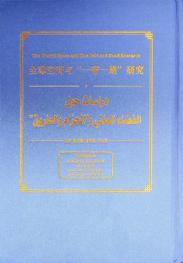
دراسات حول الفضاء العالمي و\الحزام والطريق\ : (مجلد الموانئ البحرية)
ينقسم الكتاب إلى خمسة فصول، يقدم الفصل الأول نظام الموانئ العالمي والعلاقات بين المدن الساحلية والتعاون في مجال الموانئ، ويناقش الفصل الثاني الخدمات اللوجستية البحرية العالمية وتطوير لوجستيات الموانئ الرئيسية، ويتناول الفصل الثالث نظام الموانئ في الصين وخصائصه. الاستجابة العالمية: يحلل الفصل الرابع بشكل رئيسي مؤشر البلطيق، وهو مؤشر تقييم مراكز الشحن الدولية، ويناقش الفصل الخامس نمط الموانئ العالمية وتغيرات النظام وتطور النقل البحري بناءً على منظور عالمي.
BOOK
Immunogenicity and safety of a recombinant adenovirus type-5-vectored COVID-19 vaccine in healthy adults aged 18 years or older: a randomised, double-blind, placebo-controlled, phase 2 trial
This is the first randomised controlled trial for assessment of the immunogenicity and safety of a candidate non-replicating adenovirus type-5 (Ad5)-vectored COVID-19 vaccine, aiming to determine an appropriate dose of the candidate vaccine for an efficacy study.
This randomised, double-blind, placebo-controlled, phase 2 trial of the Ad5-vectored COVID-19 vaccine was done in a single centre in Wuhan, China. Healthy adults aged 18 years or older, who were HIV-negative and previous severe acute respiratory syndrome coronavirus 2 (SARS-CoV-2) infection-free, were eligible to participate and were randomly assigned to receive the vaccine at a dose of 1 × 10¹¹ viral particles per mL or 5 × 10¹⁰ viral particles per mL, or placebo. Investigators allocated participants at a ratio of 2:1:1 to receive a single injection intramuscularly in the arm. The randomisation list (block size 4) was generated by an independent statistician. Participants, investigators, and staff undertaking laboratory analyses were masked to group allocation. The primary endpoints for immunogenicity were the geometric mean titres (GMTs) of specific ELISA antibody responses to the receptor binding domain (RBD) and neutralising antibody responses at day 28. The primary endpoint for safety evaluation was the incidence of adverse reactions within 14 days. All recruited participants who received at least one dose were included in the primary and safety analyses. This study is registered with ClinicalTrials.gov, NCT04341389.
603 volunteers were recruited and screened for eligibility between April 11 and 16, 2020. 508 eligible participants (50% male; mean age 39·7 years, SD 12·5) consented to participate in the trial and were randomly assigned to receive the vaccine (1 × 10¹¹ viral particles n=253; 5 × 10¹⁰ viral particles n=129) or placebo (n=126). In the 1 × 10¹¹ and 5 × 10¹⁰ viral particles dose groups, the RBD-specific ELISA antibodies peaked at 656·5 (95% CI 575·2–749·2) and 571·0 (467·6–697·3), with seroconversion rates at 96% (95% CI 93–98) and 97% (92–99), respectively, at day 28. Both doses of the vaccine induced significant neutralising antibody responses to live SARS-CoV-2, with GMTs of 19·5 (95% CI 16·8–22·7) and 18·3 (14·4–23·3) in participants receiving 1 × 10¹¹ and 5 × 10¹⁰ viral particles, respectively. Specific interferon γ enzyme-linked immunospot assay responses post vaccination were observed in 227 (90%, 95% CI 85–93) of 253 and 113 (88%, 81–92) of 129 participants in the 1 × 10¹¹ and 5 × 10¹⁰ viral particles dose groups, respectively. Solicited adverse reactions were reported by 183 (72%) of 253 and 96 (74%) of 129 participants in the 1 × 10¹¹ and 5 × 10¹⁰ viral particles dose groups, respectively. Severe adverse reactions were reported by 24 (9%) participants in the 1 × 10¹¹ viral particles dose group and one (1%) participant in the 5 × 10¹⁰ viral particles dose group. No serious adverse reactions were documented.
The Ad5-vectored COVID-19 vaccine at 5 × 10¹⁰ viral particles is safe, and induced significant immune responses in the majority of recipients after a single immunisation.
National Key R&D Programme of China, National Science and Technology Major Project, and CanSino Biologics.
Journal Article
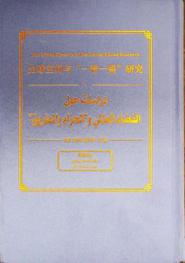
دراسات حول الفضاء العالمي و\الحزام والطريق\ : (مجلد الثقافة)
ينطلق هذا المجلد من العلاقة الهيكلية بين \"الفضاء\" و\"الثقافة\"، ويجمع بين مفهوم \"الفضاء\" في الجغرافيا ومفهوم \"السياق\" في الدراسات الثقافية وغيرهم من المفاهيم الأخرى، ويشرح نماذج ودلالات وأهداف مبادرة \"الحزام والطريق\" في سياق الحضارة الحديثة، ويصف صورة امتداد الحضارة على المحور التاريخي لـ \"الحزام والطريق\"، ويحلل الدلالة الثقافية في كل من اتجاه القيمة وبناء القوة الناعمة وإنشاء السياق الشرقي الخاصين بمبادرة \"الحزام والطريق\"، ويفسر علاقة الارتباط بين الثقافة الوطنية لـ \"الحزام والطريق\" والفضاء الوطني، ويكشف عن السرد عبر الفضاء للرموز الثقافية لـ \"الحزام والطريق\" ويوضح التعبير الرقمي والمرئي لواقع \"الحزام والطريق\"
Book

Emerging role of RNA modification N6-methyladenosine in immune evasion
The innate and adaptive immune cells have complex signaling pathways for sensing and initiating immune responses against disease. These pathways are interrupted at different levels to occur immune evasion, including by N6-methyladenosine (m6A) modification. In this review, we discuss studies revealing the immune evasion mechanism by m6A modification, which underlies the retouching of these signaling networks and the rapid tolerance of innate and adaptive immune molecules during disease. We also focus on the functions of m6A in main chemokines regulation, and their roles in promotive and suppressive immune cell recruitment. We then discuss some of the current challenges in the field and describe future directions for the immunological mechanisms of m6A modification.
Journal Article