
Catalogue Search | MBRL


Are you sure you want to remove the book from the shelf?

{{itemTitle}}
1,771
result(s) for
"Jung, Tae Yong"
Sort by:

Construction of a replication-competent retroviral vector for expression of the VSV-G envelope glycoprotein for cancer gene therapy
Gibbon ape leukemia virus (GALV) can infect a wide variety of cells but fails to infect most cells derived from laboratory mice. Transduction of human hematopoietic stem cells with GALV retroviral vectors is more efficient than with amphotropic vectors. In this study, a Moloney murine leukemia virus-gibbon ape leukemia virus (MoMLV-GALV) vector was constructed by replacing the natural env gene of the full-length Moloney MLV genome with the GALV env gene. To monitor viral transmission by green fluorescent protein (GFP) expression, internal ribosomal entry site-enhanced GFP (IRES-EGFP) was positioned between the GALV env gene and the 3’ untranslated region (3’ UTR) to obtain pMoMLV-GALV-EGFP. The MoMLV-GALV-EGFP vector was able to replicate with high titer in TE671 human rhabdomyosarcoma cells and U-87 human glioma cells. To evaluate the potential of the MoMLV-GALV vector as a therapeutic agent, the gene for the fusogenic envelope G glycoprotein of vesicular stomatitis virus (VSV-G) was incorporated into the vector. Infection with the resulting MoMLV-GALV-VSV-G vector resulted in lysis of the U-87 cells due to syncytium formation. Syncytium formation was also observed in the transfected human prostate cancer cell line LNCaP after extended cultivation of cells. In addition, we deleted the GALV env gene from the MoMLV-GALV-VSV-G vector to improve viral genome stability. This MoMLV-VSV-G vector is also replication competent and induces syncytium formation in 293T, HT1080, TE671 and U-87 cells. These results suggest that replication of the MoMLV-GALV-VSV-G vector or MoMLV-VSV-G vector may directly lead to cytotoxicity. Therefore, the vectors developed in this study are potentially useful tools for cancer gene therapy.
Journal Article
Human-APOBEC3G-dependent restriction of porcine endogenous retrovirus replication is mediated by cytidine deamination and inhibition of DNA strand transfer during reverse transcription
Although human apolipoprotein B mRNA-editing enzyme catalytic polypeptide-like 3G (APOBEC3G, hA3G)-mediated deamination is the major mechanism used to restrict the infectivity of a broad range of retroviruses, it is unclear whether porcine endogenous retrovirus (PERV) is affected by hA3G or porcine A3F (poA3F). To determine whether DNA deamination is required for hA3G- and poA3F-dependent inhibition of PERV transmission, we developed VSV-pseudotype PERV-B expressing hA3G, mutant hA3G-E67Q (encapsidation and RNA binding activity-deficient), mutant hA3G-E259Q (deaminase-deficient), or poA3F. hA3G-E67Q decreased virus infectivity by ~ 93% compared to the ~ 99% decrease of viral infectivity by wild-type hA3G, while hA3G-E259Q decreased the infectivity of PERV-B by ~ 35%. These data suggest that cytidine deamination activity is crucial for efficient restriction of PERV by hA3G, but cytidine deamination cannot fully explain the inactivation of PERV by hA3G. Furthermore, differential DNA denaturation PCR (3D-PCR) products from 293T cells infected with PERV-B expressing hA3G mutants were sequenced. G-to-A hypermutation was detected at a frequency of 4.1% for hA3G, 3.4% for hA3G-E67Q, and 4.7% for poA3F. These results also suggest that hA3G and poA3F inhibit PERV by a deamination-dependent mechanism. To examine the effect of hA3G on the production of PERV DNA, genomic DNA was extracted from 293T cells 12 h after infection with PERV expressing hA3G, and this DNA was used as template for real-time PCR. A 50% decrease in minus strand strong stop (-sss) DNA synthesis/transfer was observed in the presence of hA3G. Based on these results, we conclude that hA3G may restrict PERV by both deamination-dependent mechanisms and inhibition of DNA strand transfer during PERV reverse transcription.
Journal Article

Reactive-oxygen-species-mediated mechanism for photoinduced antibacterial and antiviral activities of Ag3PO4
Cubic-shaped Ag3PO4 crystals with a mean size of 1 μm were synthesized by a precipitation method from a mixed solution of AgNO3, Na2HPO4, and triethanolamine. The antibacterial activities against Escherichia coli, Listeria innocua, and Pseudomonas syringae DC3000 in both the absence and presence of Ag3PO4 under dark conditions and in the presence of Ag3PO4 under red-light (625 nm) and blue-light (460 nm) irradiation were examined. The concentrations of reactive oxygen species (ROS) were also measured in the antibacterial action of the Ag3PO4 against Escherichia coli. The photoinduced enhancement of the Ag3PO4 antibacterial activity under blue-light irradiation is explained by the formation of ROS during the antibacterial action of the Ag3PO4. Moreover, the antiviral activity of Ag3PO4 against amphotropic 10A1 murine leukemia virus enhanced under blue-light irradiation via ROS production. These results provide an insight into extended bio-applications of Ag3PO4.
Journal Article

Renewable Energy Options for a Rural Village in North Korea
The national electrification rate of North Korea is extremely low and the situation in rural areas is even worse. Thus, this study designs a virtual electrification project for a rural village in North Pyongan and compares an off-grid energy system and on-grid system in terms of net present cost (NPC) and levelized cost of energy (LCOE) to define the most cost-effective energy system. Using Hybrid Optimization of Multiple Energy Resources (HOMER), this study designs two off-grid systems that apply different types of batteries—lead–acid and lithium-ion energy storage systems (ESS)—and determines the NPC and LCOE of the most cost-effective system. Then, it calculates the NPC and LCOE of grid extension by adding necessary costs required for generation, transmission, and distribution. The result shows that the hybrid energy system (HES) of solar photovoltaic (PV), wind turbines, lead–acid batteries, and diesel generators is the most cost-effective option for the selected location. The range of breakeven grid-extension distance is from 9.69 km to 20.57 km. The sensitivity analysis based on different discount rates shows that a higher discount rate means a shorter breakeven distance. This analysis suggests that deploying an HES is one way to improve the electrification rate for remote and rural areas in North Korea.
Journal Article
Price and Output Elasticities of Energy Demand for Industrial Sectors in OECD Countries
The price and output elasticities of energy demand continue to be of interest to academia and policy institutions, having been estimated in previous studies. However, the estimated results show some inconsistencies, especially at the sectoral level, across countries. Based on our conjecture that those inconsistencies are mainly due to the effect of contingent energy intensities and partially to different units of analysis, we narrowed the analysis to the industry level and classified 16 industries into energy-intensive and less energy-intensive groups. The effects of price and output on energy demand were then compared between these two groups using 274 industry panel data across 20 Organization for Economic Cooperation and Development (OECD) countries from 1978 to 2013. The results showed that the price elasticity of energy demand was consistently lower in the energy-intensive group than in the less energy-intensive group, whereas the output elasticity of energy demand was higher in the energy-intensive group than in the less energy-intensive group. Using panel differences and system generalized method of moments estimations, the dynamic elasticities of energy demand were also estimated. Energy demand in reaction to both price and output changes appeared to be more elastic in the long term than in the short term for both energy-intensive and less energy-intensive groups. These findings could be a useful reference for policy makers to deploy separate energy policies for different industries aiming for different temporal effects.
Journal Article
The Impact of Demographic Changes on CO2 Emission Profiles: Cases of East Asian Countries
The demographic changes of East Asian countries have accelerated in recent years. With consideration of the linkage between human behavior and carbon emissions, it is necessary to consider demographic characteristics for the CO2 emission projections of these countries. This study examines how changes in the demographic structure affect the emission projections of three East Asian countries (South Korea, China, and Japan) by comparing two different vintages of population projections. The study constructed a dynamic computable general equilibrium (CGE) model and applied the most up-to-date dataset of population prospects, GTAP 10, and the labor force participation rate. By comparing UN2010 and UN2019 projections, the study examined the impact of demographic changes on CO2 emission profiles of the three East Asian countries. The simulation result showed that GDP, which represents economic activity along with the population, is the direct channel of CO2 emission projections. Moreover, the scenario analysis suggested the population factor as one of the main drivers of the CO2 emission projection and a clear positive relationship between GDP and CO2 emissions, though CO2 emissions are generally inelastic in response to a GDP decrease in the three East Asian countries. The finding indirectly implies that not only the size of the population but also demographic composition should be considered to project CO2 emissions, as the labor participation rate is an important factor to determine the production function.
Journal Article
A Scenario Analysis of Solar Photovoltaic Grid Parity in the Maldives: The Case of Malahini Resort
The Maldives, one of the Small Island Developing States (SIDS) with great solar potential, is keen to promote renewable energy systems to reduce its heavy reliance on imported diesel for power generation. However, adopting renewable energy systems is still burdensome for the Maldives not only because of its high initial costs and insufficient financial resources but also because of a lack of understanding about whether the deployment of a renewable system is economically feasible. Therefore, the concept of grid parity is explored as an important concept in this paper to examine the possible timeframe for reaching it. A distinctive feature of the paper is that the paper used actual cost and technical information to analyze the levelized cost of energy (LCOEs) of the independent renewable system in a remote island and examined its timeframe for reaching the grid parity condition. Based on economic and technical information from a project for replacing existing diesel generator to photovoltaic (PV) with energy storage system (ESS) in Kuda Bandos Island in the Maldives, the paper considers three different system configurations and evaluates which configuration could result in the most optimal off-grid energy systems in this remote island. With sensitivity analysis on various uncertainties, the paper shows the range of the levelized costs of energy and the periods required for reaching grid parity for deploying solar photovoltaics and ESSs in Kuda Bandos Island, Maldives. The result indicates that the photovoltaic system is an economically feasible option for the resort, and that grid parity can be reached within the project lifetime. However, the result shows that the use of advanced ESSs is still an expensive option and would not be economically reasonable.
Journal Article
Multilevel Analysis of Civic Engagement and Effectiveness of Energy Transition Policy in Seoul: The Seoul Eco-Mileage Program
The Seoul Eco-mileage Program is a representative project of the One Less Nuclear Power Plant (OLNPP) scheme, which addresses the energy transition policy of Seoul aiming to reduce CO2 emissions. Unlike other governmental projects, the success of this program requires the direct participation of citizens. This study investigates the influence of civic engagement in participant towns (Level 1: 423 administrative towns) and districts (Level 2: 25 administrative districts) on CO2 emissions reduction (kg CO2/membership) throughout 2017 in Seoul via multilevel modeling. Our results show that town-level civic engagement, as measured by voter turnout, is positively correlated with the performance of the Eco-mileage Program. Moreover, when civic engagement factors (social trust, volunteer activities, and citizen participation) at Level 1 interact with Level 2 factors (housing prices, motivation of district leaders, and energy-saving practices) in each district, we observed cross-level interactive effects on CO2 reduction. Among Level 2 factors, the representative institutional capacities, such as financial independence and ordinance, showed positive correlations with the performance efficacy of the energy transition policy of Seoul.
Journal Article
Park Accessibility Impacts Housing Prices in Seoul
Housing prices are determined by a variety of factors, including the features of the building and the neighborhood environment, and a potential buyer decides to buy a house after reviewing these factors and concluding that it is worth the price. We used Hedonic Price Methods to find the relationship between monetary value of house and access conditions to urban parks. Two meaningful results were discovered in this study: first, as the distance from the park increases, the value of the park inherent in the housing price decreases; second, the greater walking accessibility, to the park, the higher the park value inherent in housing prices. Despite presenting shorter distances to walk and more entrances, poorly accessible zones were deemed as such due to the necessity of crossing an arterial road. This indicates that the results can define accessibility not as the Euclidian distance but as the shortest walking distance while considering crossroads and park entrances. The results of this study have significant implications for urban park economic impact analyses in Seoul. Also, the increase in housing prices closer to parks supports the idea that access is dependent on the residents’ socioeconomic status. Lastly, the results of this study can improve walking accessibility to the park.
Journal Article
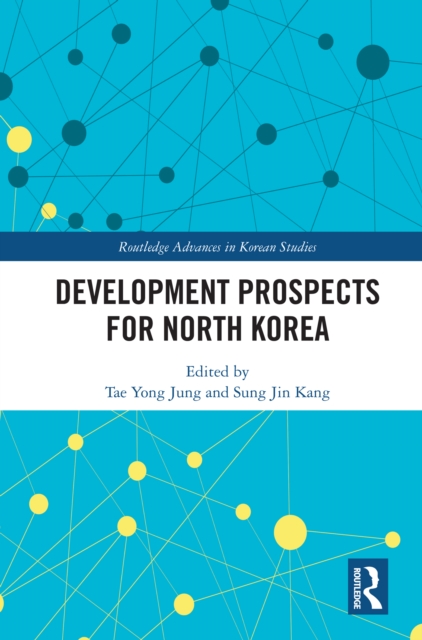
Development Prospects for North Korea
The contributors to this book explore the current situation of North Korea in various aspects and provide policy suggestions for North Korea to become part of the international community and achieve sustainable development.
Focusing on three key areas of economic development, namely, international sectors, agriculture and urban development, and energy and environment, this book lays out recommendations and prospects for North Korea. Authors assess the current situation of North Korea, explore preconditions for becoming a member of the international community, and suggest policies necessary for the sustainable development of North Korea. They cover a wide range of areas including reforestation, WTO accession, and the potential for economic integration with South Korea. These evaluations draw on both what is understood about the current situation in North Korea and comparisons with other countries and territories.
This book will be a valuable resource for scholars and policy planners who focus on North Korea.
eBook