
Catalogue Search | MBRL


Are you sure you want to remove the book from the shelf?

{{itemTitle}}
49
result(s) for
"KAITLIN REED"
Sort by:

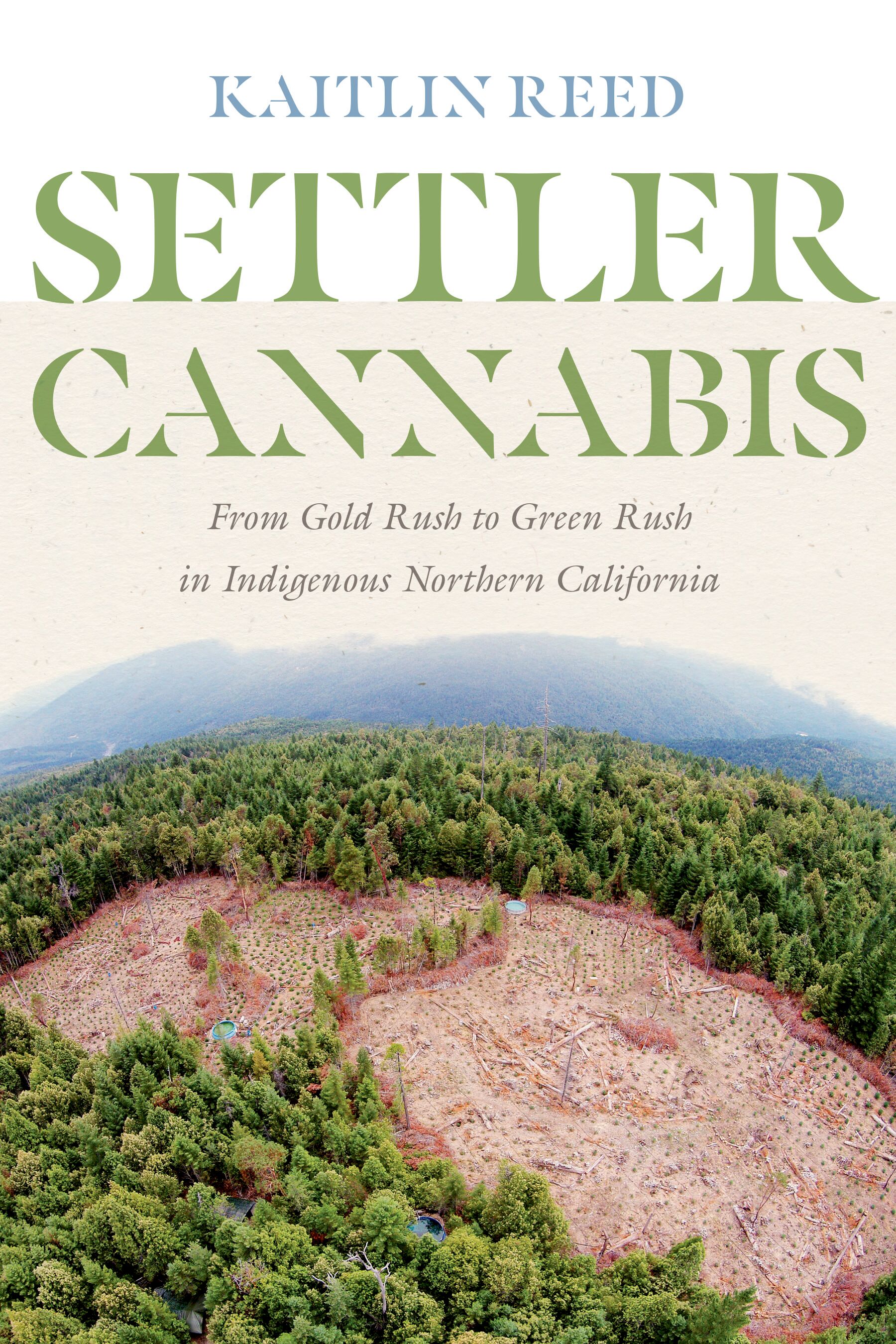
Settler Cannabis
Young countercultural back-to-the-land settlers flocked to
northwestern California beginning in the 1960s, and by the 1970s,
unregulated cannabis production proliferated on Indigenous lands.
As of 2021, the California cannabis economy was valued at $3.5
billion. In Settler Cannabis , Kaitlin Reed demonstrates
how this \"green rush\" is only the most recent example of settler
colonial resource extraction and wealth accumulation. Situating the
cannabis industry within this broader legacy, the author traces
patterns of resource rushing-first gold, then timber, then fish,
and now cannabis-to reveal the ongoing impacts on Indigenous
cultures, lands, waters, and bodies.
Reed shares this history to inform the path toward an
alternative future, one that starts with the return of land to
Indigenous stewardship and rejects the commodification and control
of nature for profit. Combining archival research with testimonies
and interviews with tribal members, tribal employees, and settler
state employees, Settler Cannabis offers a groundbreaking
analysis of the environmental consequences of cannabis cultivation
that foregrounds Indigenous voices, experiences, and histories.
eBook

We Are a Part of the Land and the Land Is Us
This essay proposes that the history of California includes the intended destruction and decimation of native cultures, including their forced removal, illegal land acquisition, slavery, separation of families, and outright murder enacted by the private citizenry and governmental agencies during European contact can be defined as genocide as outlined by the United Nations Geneva Convention, 1948. The lasting legacy of contact on aboriginal lifeways and tradition, as well as the recent resurgence of native traditions and culture is addressed to suggest that the health and healing of native communities lies in reconciling the past to make passage into the future.
Journal Article

INTRODUCTION
Before time began, some say from time immemorial, California Indians have stewarded and cared for their places. Many of us believe that we were created in our place-worlds, that we came from the land. In his book California through Native Eyes, historian William Bauer Jr. (Wailaki/Concow) demonstrates the ways by which California Indian creation stories ground us in our places, provide the foundations of our identity, and help explain the differences between Peoples. Bauer (2016) suggests that “if the Creator made the land specifically for the People, then the Creator made a People expressly for that land” (14). While the
Book Chapter
CONCLUSION
We have entered an ecological crisis. As fires engulf the western United States and water shortages impair habitats, we will be forced to reckon with the unsustainable nature of settler-colonial orientations to land.
Together, colonialism and capitalism then laid key parts of the groundwork for industrialization and militarization—or carbon-intensive economics—which produce the drivers of anthropogenic climate change, from massive deforestation for commodity agriculture to petrochemical technologies that burn fossil fuels for energy. The colonial invasion that began centuries ago caused anthropogenic environmental changes that rapidly disrupted many Indigenous peoples, including deforestation, pollution, modification of hydrological cycles, and the
Book Chapter
CANNABIS AND WATER
Two weeks after the Karuk Tribe declared a state of emergency on the Klamath River in response to drought conditions and a looming fish kill, on June 16, 2021, the Wiyot Tribe issued a press release that declared a state of emergency on its ancestral Rivers—the Wiya’t (Eel River), Hikshari’ (Elk River), Baduwa’t (Mad River), and Gidughurralilh (Van Duzen River)—due to extremely low flows and drought conditions.¹ Low rainfall and above-average temperatures caused by anthropogenic climate change, coupled with water diversions associated with large-scale agriculture and excessive nutrient runoff, have impeded water quantity and quality, especially for small
Book Chapter
NO JUSTICE ON STOLEN LAND
In April 2019 I participated in a panel discussion titled “The Social, Economic, and Ecological Sustainability of Cannabis Production in Northern California.” As one might have expected, I was asked the question, What does a socially and/or environmentally just cannabis industry look like to you? While perhaps I should have anticipated this question, I was baffled. The idea that any just industry rooted in capitalist logics of property and commodification could be built on stolen territory requires a strong dose of historical amnesia. The very territory on which the cannabis industry is built was acquired through violent force. Settler-colonial violence
Book Chapter
WEED GREED
The summer of 2014, the third year of an extreme drought in Northern California, was especially concerning for tribal nations. Rivers and streams were running dangerously low and water temperatures were high due to the dams and water diversions into the Central Valley Water Project for industrial agriculture farther south. In the summer of 2014, and in most summers since, tribal nations had to petition the Bureau of Reclamation for water releases. That summer I was an intern at the Yurok Tribe Environmental Program and, because instream flows were so low and water temperatures were so high, concern arose that
Book Chapter
BACK TO WHOSE LAND?
The origin story of the green rush in Northern California begins with the back-to-the-land movement. Often associated with peace and harmony, the movement constructs a particular ideological relationship to land of “free land for free people”—the unofficial motto of the Black Bear Ranch commune in Northern California (see Monkerud, Terence, and Keese 2000). Notions of “free land” erase Indigenous presence and continue the long legacy of colonial dispossession. The mass movement of young people into Northern California in the late 1960s and into the 1970s was a continuation of the settler-colonial occupation lived by their ancestors before them. Dina
Book Chapter