
Catalogue Search | MBRL


Are you sure you want to remove the book from the shelf?

{{itemTitle}}
30
result(s) for
"KROEZE, RONALD"
Sort by:

مكافحة الفساد عبر التاريخ من العصور القديمة إلى العصر الحديث
الكتاب بجزأيه هو أول دراسة مقارنة كبرى لكيفية تعريف المجتمعات والسلطات في التاريخ الأوروبي وخارجه للسلطة الشرعية من حيث مكافحة الفساد وتصميم آليات محددة لتنفيذ جدول الأعمال هذا، وينظر إلى الفساد اليوم على نطاق واسع باعتباره إحدى أكثر المشكلات التي نواجهها إلحاحا کمجتمع عالمي، حيث يقوض الثقة بالمؤسسات الحكومية والمالية، والكفاءة الاقتصادية، ومبدأ المساواة أمام القانون ورفاهية البشر بوجه عام، ويمثل الفساد عقبة رئيسة أمام «الطريق إلى الدنمارك»وهو مخطط أولي لبناء الدولة المستقر والناجح، وعلى رغم أن موضوع الفساد ومكافحة الفساد قد جذب انتباه السياسيين والعلماء والمنظمات غير الحكومية ووسائل الإعلام العالمية، فقد أولي اهتمام ضئيل للعلاقة بين الفساد ووضع وتغيير وتنفيذ سياسات مكافحة الفساد عبر الزمان والمكان، مع التنوع المصاحب لذلك في كيفية تعريف الفساد واکتشافه ومكافحته.
Book
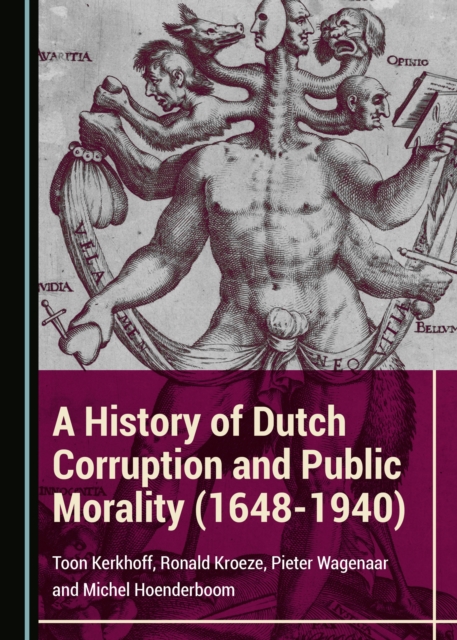
A History of Dutch Corruption and Public Morality (1648-1940)
This book represents the first extensive discussion of 300 years of change, continuity and diversity in Dutch corruption and public morality between 1648 and 1940. A collection of rich historical case studies on public and political debates surrounding supposedly corrupt acts of administrators and politicians is set against the backdrop of the major political and socio-economic developments of the time. As the book moves from early modern beginnings of the Dutch Republic to the age of Enlightenment and into \"modern\" politics, it tells the story of how, when and why Dutch political-administrative thought and practice concerning \"good\" and \"bad\" government actually evolved. It provides the reader with an understanding of past and present ideas on Dutch corruption and public morality, and places these within a wider European historical context. The book will primarily appeal to those interested in European and Dutch political-administrative history, the history of corruption, anti-corruption, public values, and ethics and integrity.
eBook


The Rise of Neoliberalism and the Termination of Keynesian Policies: A Multilevel Governance Analysis of the Closure of the Amsterdam Shipyards, 1968–1986
By looking at the policy termination of state aid to shipbuilders in Amsterdam, this article illustrates how a major policy paradigm shift within recent history, and the change from Keynesian to neoliberal policies, can be explained. The article is informed by a multilevel governance approach to policy change analysis and is based on different types of sources. It presents an in-depth case study of the closing of the Amsterdam shipyards and analyzes the role of policy change at different governance levels (i.e., city government, national Parliament, national government, and the European Commission). In doing so, we are able to illustrate how new actors—in this case the European Commission and the Commissioner for Competition—were able to terminate long-existing policies of state aid to shipbuilders under the auspices of improving competition and the free market at the start of the 1980s.
Journal Article

European Commission as a driver of change
By analysing the case of the closure of the Amsterdam shipyards in the 1980s, this article shows how the European Commission (EC) actively promoted a neoliberal turn in policies on state support for economic sectors in Western Europe. In addition to the EC, leading civil servants within the Dutch ministries of Economic Affairs and Finance emerged clearly as embracing neoliberal ideas early on as an answer to tackle the economic crisis of the 1970s. A third, often neglected factor in explanations for the rise of neoliberalism were management consultants – in this case from management consultancy firm McKinsey – who wrote alarming reports about the shipbuilding industry and promoted ideas that emphasized the importance of business principles and individual managers as key for improvement, thereby offering an alternative to macroeconomic Keynesian models of growth.
Journal Article
The European Commission as a driver of change
By analysing the case of the closure of the Amsterdam shipyards in the 1980s, this article shows how the European Commission (EC) actively promoted a neoliberal turn in policies on state support for economic sectors in Western Europe. In addition to the EC, leading civil servants within the Dutch ministries of Economic Affairs and Finance emerged clearly as embracing neoliberal ideas early on as an answer to tackle the economic crisis of the 1970s. A third, often neglected factor in explanations for the rise of neoliberalism were management consultants – in this case from management consultancy firm McKinsey – who wrote alarming reports about the shipbuilding industry and promoted ideas that emphasized the importance of business principles and individual managers as key for improvement, thereby offering an alternative to macroeconomic Keynesian models of growth.
Journal Article
Europese Commissie als motor van verandering.: Staatssteun, neoliberalisme en de sluiting van de Amsterdamse scheepswerven, 1976-1986
No English abstract available.
By analyzing the case of the closure of the Amsterdam shipyards in the 1980s, this article shows how the European Commission actively promoted a neoliberal turn in policies towards state support for economic sectors in Western-Europe. Besides the EC, the article also makes clear that quite early on leading civil servants within the Dutch ministries of Economic Affairs and of Finance embraced neoliberal ideas as an answer to tackle the economic crisis of the 1970s. A third, often neglected actor in explanations on the rise of neoliberalism were management consultants – in this case from management consultancy firm McKinsey – who wrote alarming reports about the shipbuilding industry and promoted ideas that emphasized the importance of business principles and individual managers as key for improvement, thereby offering an alternative to macroeconomic Keynesian models of growth.
Journal Article
A Life at the Company: Oral History and Sense Making
This article explores the ways that oral history can help business historians to better understand how employees experience and make sense of their life at the company in relation to a company’s identity. The research is based on two case studies. The first concentrates on Heineken. Specifically, it focuses on the closing of the Heineken brewery in Amsterdam in 1988. The second case was a commissioned project to write a book for the eightieth anniversary of the Amsterdam-based consultancy firm Van de Bunt Adviseurs. This project was concluded in 2016 with a publication that, like the research itself, was inspired by a cultural history approach and thus paid attention to founder narratives, sensemaking, and corporate identity construction. The article shows that oral history can broaden knowledge, especially of how employees experienced life at the company and how they made sense of it while referring to the (changing) company’s identity. Through the oral history method, employees were given a voice that showed how the same events were (differently) experienced. Moreover, the oral histories made the personal impact of abstract developments more concrete, notably issues such as internationalization, mergers and acquisitions, changing workings conditions, scaling up or down, or closure. Stories about the founders and the ample use of the family metaphor, which stood out in both cases, expressed employees’ feelings of being part of a company with a specific identity, as well as a longing for it. The article concludes with several suggestions that should be taken into account when conducting oral history research.
Journal Article