
Catalogue Search | MBRL


Are you sure you want to remove the book from the shelf?

{{itemTitle}}
5
result(s) for
"Kagan, Richard L., 1943-"
Sort by:


Clio & the crown : the politics of history in medieval and early modern Spain
Monarchs throughout the ages have commissioned official histories that cast their reigns in a favorable light for future generations. These accounts, sanctioned and supported by the ruling government, often gloss over the more controversial aspects of a king's or queen's time on the throne. Instead, they present highly selective and positive readings of a monarch's contribution to national identity and global affairs. In Clio and the Crown, Richard L. Kagan examines the official histories of Spanish monarchs from medieval times to the middle of the 18th century. He expertly guides readers through the different kinds of official histories commissioned: those whose primary focus was the monarch; those that centered on the Spanish kingdom as a whole; and those that celebrated Spain's conquest of the New World. In doing so, Kagan also documents the life and work of individual court chroniclers, examines changes in the practice of official history, and highlights the political machinations that influenced the redaction of such histories. Just as world leaders today rely on fast-talking press officers to explain their sometimes questionable actions to the public, so too did the kings and queens of medieval and early modern Spain. Monarchs often went to great lengths to exert complete control over the official history of their reign, physically intimidating historians, destroying and seizing manuscripts and books, rewriting past histories, and restricting history writing to authorized persons. Still, the larger practice of history writing—as conducted by nonroyalist historians, various scholars and writers, and even church historians—provided a corrective to official histories. Kagan concludes that despite its blemishes, the writing of official histories contributed, however imperfectly, to the practice of historiography itself.
eBook

The Spanish craze : America's fascination with the Hispanic world, 1779-1939
\"The Spanish Craze: America's Fascination with the Hispanic World, 1779-1939 examines the centuries-long fascination with the history, art, culture, and architecture of Spain in the United States from the Early Republic to the New Deal\"-- Provided by publisher.
Book
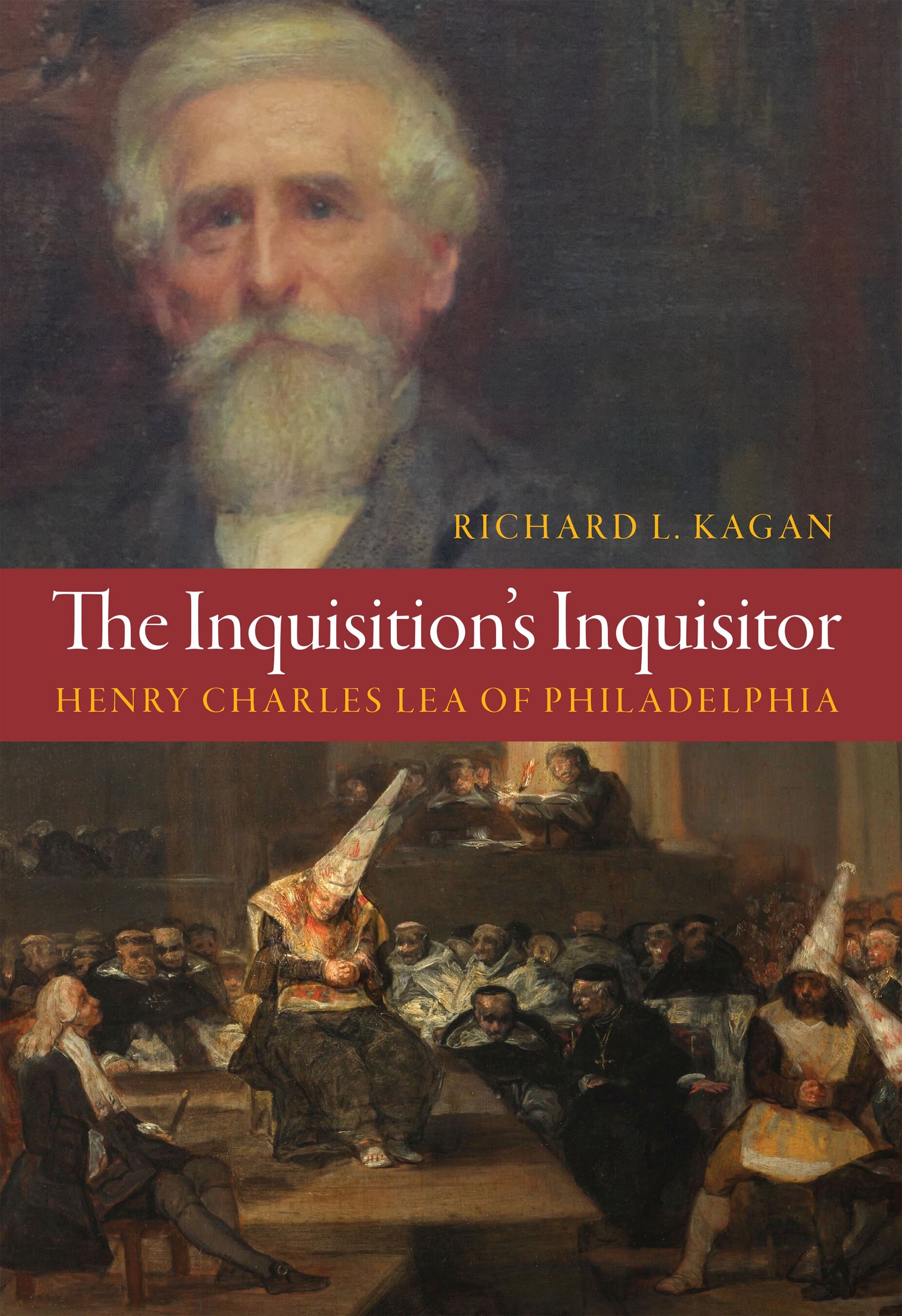
The Inquisition's Inquisitor
The first comprehensive biography of Philadelphia's Henry C. Lea (1825–1909): historian, publisher, political activist, and reformer Writing in 1868, the Philadelphia publisher-cum-historian Henry Charles Lea informed a friend, \"I am trying to collect the materials for a history of the Inquisition.\" The collecting of these materials—books, manuscripts, and copies of thousands of pages of documents housed in musty European archives and libraries—would occupy Lea (1825–1909) for the remainder of his life. It also led to publication of A History of the Inquisition of the Middle Ages (1884–87) and his acknowledged masterpiece, A History of the Inquisition of Spain (1906–7). Regarded as classics, these path-breaking books inaugurated better understanding of the history of an institution whose aims and methods troubled Lea and remain subjects of heated debate. The first biography of Lea since 1931, The Inquisition's Inquisitor offers the most comprehensive review to date of his writing on the history of the Catholic Church. Though Lea is generally regarded as a leading practitioner of \"scientific\" history, Richard L. Kagan examines the extent to which Lea's religious convictions compromised the ostensibly objective character of his work. Lea's extensive surviving correspondence also enables Kagan to examine other aspects of Lea's long and productive career as one of Philadelphia's most prominent citizens. Lea appears here a young literary critic; a businessman who skillfully transformed his family's publishing firm into the country's leading producer of medical books; a dogged political reformer; and a philanthropist whose largesse benefitted many of Philadelphia's cultural institutions. Newly discovered sources also allow for insights into Lea's private life, notably his controversial infatuation with his first cousin and future wife, Anna C. Jaudon, and the periodic breakdowns that required abandonment of his beloved \"intellectual pursuits.\" The Inquisition's Inquisitor concludes with a survey of Lea's legacy with respect to current understanding of the Inquisition and to Philadelphia, where reminders of his accomplishments include an eponymous library at the University of Pennsylvania and public elementary school in nearby West Philadelphia.
eBook

Alonso Berruguete : first sculptor of Renaissance Spain
\"Alonso Berruguete (c. 1488-1561) revolutionized the arts of Renaissance Spain with a dramatic style of sculpture that reflected the decade or more he had spent in Italy while young. Trained as a painter, he traveled to Italy around 1506, where he interacted with Michelangelo and other leading artists. In 1518, he returned to Spain and was appointed court painter to the new king, Charles I. Eventually, he made his way to Valladolid, where he shifted his focus to sculpture, opening a large workshop that produced breathtaking multistory altarpieces (retablos) decorated with sculptures in painted wood. This handsomely illustrated catalogue is the first in English to treat Berruguete's art and career comprehensively. It follows his career from his beginnings in Castile to his final years in Toledo, where he produced his last great work, the marble tomb of Cardinal Juan de Tavera. Enriching the chronological narrative are discussions of important aspects of Berruguete's life and practice: his complicated relationship with social status and wealth; his activity as a draftsman and use of prints; how he worked with his many assistants to create his wood sculptures; and his legacy as an artist\"-- Provided by publisher.
Book