
Catalogue Search | MBRL


Are you sure you want to remove the book from the shelf?

{{itemTitle}}
308
result(s) for
"Kahn, Douglas"
Sort by:


GLD360 Performance Relative to TRMM LIS
This study evaluates the performance of the operational and reprocessed Global Lightning Dataset 360 (GLD360) data relative to the Tropical Rainfall Measuring Mission (TRMM) Lightning Imaging Sensor (LIS) during 2012–14. The analysis compares ground- and space-based lightning observations to better characterize the pre- and postupgrade GLD360. The reprocessed, postupgrade data increase the fraction of LIS flashes detected by the GLD360 [i.e., relative detection efficiency (DE)]. The relative DE improves during each year in every region, and year-over-year improvement appears in both datasets. The reprocessed relative DE exceeds 40% throughout large portions of the study domain with relative maxima over the western Atlantic, eastern Pacific, and the Gulf of Mexico. The upgrade results in shorter distances between matched LIS and GLD360 locations, indicating improved location accuracy. On average, the matched LIS flashes last longer (18.6 ms) and are larger (379.3 km 2 ) than the unmatched LIS flashes (6.1 ms, 251.0 km 2 ). For each LIS characteristic examined, the greater the value, the more likely the GLD360 detects the flash. Of the matched LIS flashes, 44.3% have multiple GLD360 strokes, and the mean LIS characteristics increase with increasing stroke count. LIS flashes with four-plus related GLD360 strokes are longest (61.1 ms) and largest (492.7 km 2 ). Of the multistroke flashes, 57.3% contain subsequent strokes that are stronger than the initial stroke. The vast majority of multistroke flashes with a first stroke estimated with a peak current of <10 kA have stronger subsequent strokes, suggesting that the GLD360 sometimes detects the initial cloud pulses associated with ground flashes.
Journal Article

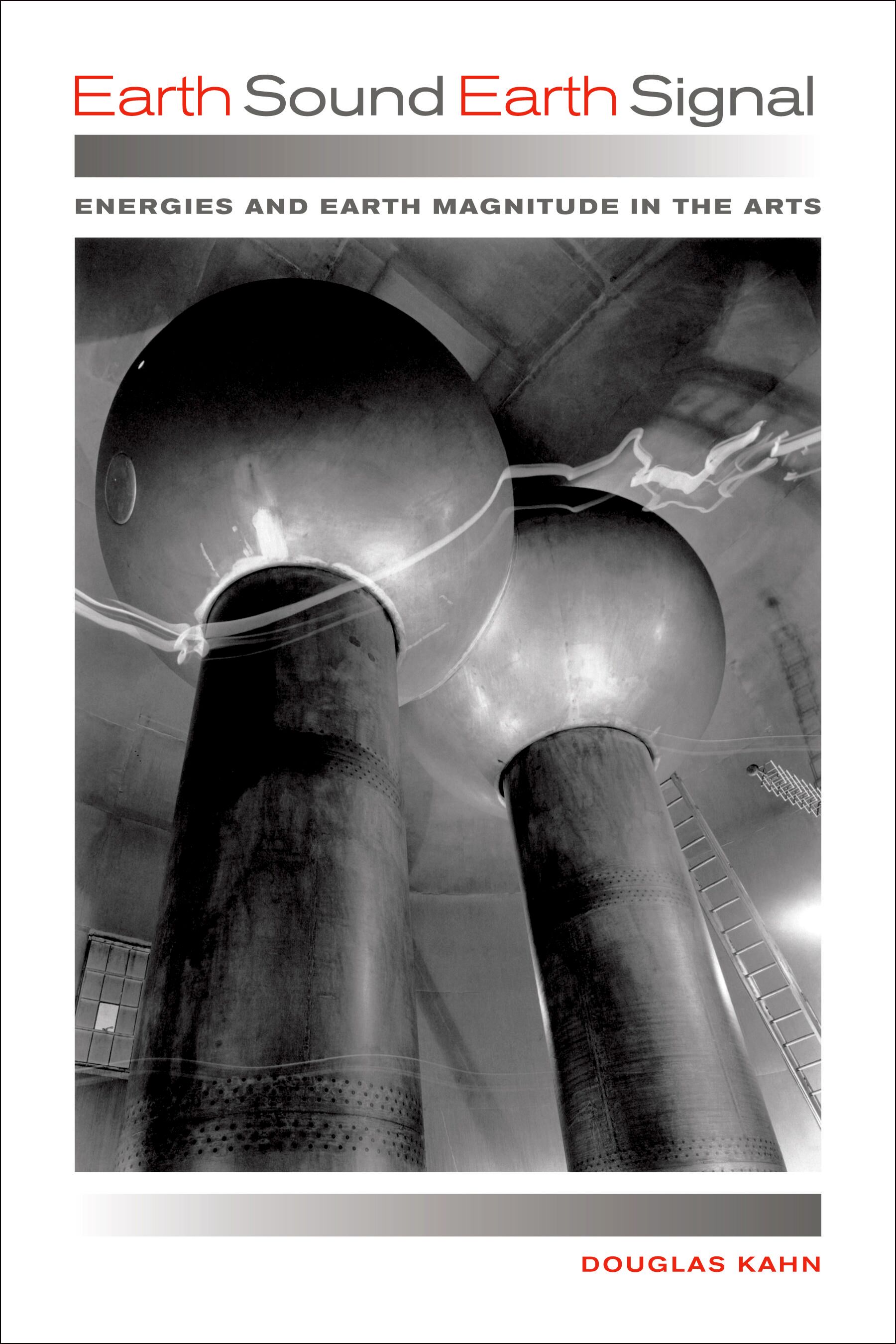
Earth sound earth signal
Earth Sound Earth Signal is a study of energies in aesthetics and the arts, from the birth of modern communications in the nineteenth century to the global transmissions of the present day. Douglas Kahn begins by evoking the Aeolian sphere music that Henry David Thoreau heard blowing along telegraph lines and the Aelectrosonic sounds of natural radio that Thomas Watson heard through the first telephone; he then traces the histories of science, media, music, and the arts to the 1960s and beyond. Earth Sound Earth Signal rethinks energy at a global scale, from brainwaves to outer space, through detailed discussions of musicians, artists and scientists such as Alvin Lucier, Edmond Dewan, Pauline Oliveros, John Cage, James Turrell, Robert Barry, Joyce Hinterding, and many others.
eBook

MEDICAL MARIJUANA, TAXATION, AND INTERNAL REVENUE CODE SECTION 280E
Congress enacted § 280E of the Internal Revenue Code in 1982 to punish businesses engaged in illegal drug trafficking, including marijuana. Section 280E denies all credits and deductions, including ordinary business expenses, from gross income of businesses illegally trafficking in a Schedule I or II controlled substance. This provision violates the principle that the tax code should foster a consistent treatment of income, regardless of source; and that the income tax is ill-used for punitive measures. Now that marijuana has been legalized in some form in at least 46 states for therapeutic purposes, this federal tax penalty transgresses principles of federalism. Recent scientific studies that have established the medical effectiveness of marijuana for certain conditions, further demonstrates that § 280E serves little legitimate purpose.
Journal Article

Tax and Cross-Collateralized Nonrecourse Liability
This Article explores the tax treatment of cross-collateral nonrecourse debt. When using the term cross-collateral debt, we are referring to nonrecourse debt that is connected with more than one piece of property. While tax issues concerning cross-collateralized properties can arise in several circumstances, the focus of this Article is on the tax treatment of a transfer of property subject to a cross-collateralizednonrecourse liability to a controlled corporation in exchange for stock that qualifies for some or all nonrecognition under § 351. The Article also discusses two other tax issues involving cross-collateralizednonrecourse liability—namely, cancellation of debt and determination of basis issues.
Journal Article

Don't Think About It
More importantly, I had already changed direction from studying sound to energies to develop a different heuristic given the arts in the last dozen decades and the present climate catastrophe. Not long ago I was asked to write about sound art theory. Constricted meanings coming through this one door were not interesting enough to compete with the sanctity of the hall or the music inside and, by extension, inside the inner sanctum of a person listening to the innermost sanctum of the music itself, like Russian dolls or an onion, perhaps an artichoke. Since you never know when school is in session self-examination may already be too late.
Journal Article
Compensatory and Punitive Damages for a Personal Injury: To Tax or Not to Tax?
Since the adoption in 1919 of the Revenue Act of 1918, damages received on account of personal injuries or sickness have been excluded by statute from gross income. This exclusion, which does not apply to reimbursements for medical expenses for which the taxpayer was previously allowed a tax deduction, is presently set forth in section 104(a)(2). One might expect that a provision having recently attained the ripe age of 75 years without change in its basic language would have a settled meaning. However, recent litigation under section 104(a)(2) bristles with unsettled issues. Does the exclusion apply to punitive damages? To prejudgment interest included in a personal injury recovery? To recoveries under various antidiscrimination statutes?The Supreme Court entered the fray in 1992 with its decision in United States v. Burke, dealing with the application of section 104(a)(2) to recoveries in employment discrimination cases. The Court followed a regulation stating that the exclusion applies only to amounts received, through suit or settlement, \"based upon tort or tort-type rights,\" and held that a claim is tort or tort-type only if it can be redressed by a broad range of damages, such as those traditionally allowed in tort cases. Specifically, the Court found that a recovery under Title VII of the Civil Rights Act of 1984 was not within the section 104(a)(2) exclusion because Title VII, as it existed when the facts of the case arose, allowed only equitable relief and recoveries of backpay.
Journal Article
The Constitutionality of Taxing Compensatory Damages for Mental Distress When There Was No Accompanying Physical Injury
Since 1919, statutory tax law has excluded from gross income compensatory damages received on account of a personal injury or sickness. The current version of that exclusion is set forth in section 104(a)(2) of the Internal Revenue Code of 1986. The construction of that exclusion, both by the courts and by the Commissioner, underwent significant alterations over the 80-year period that the provision has existed. The statute itself was amended several times, most recently in 1996. It is the 1996 amendment that has raised a constitutional issue concerning the validity of a portion of the statute.As a consequence of the 1996 amendment, damages received for a personal injury will not be excluded from gross income unless the victim suffered a physical injury. For this purpose, the emotional distress that a victim suffers because of a tortious act does not constitute a physical injury. The House Report to the 1996 amendment states that \"emotional distress includes physical symptoms (e.g., insomnia, headaches, stomach disorders) which may result from such emotional distress.\" Consequently, damages received for the emotional and mental distress suffered because of defamatory statements or because of discriminatory acts are excludible only to the extent that the victim incurred medical expenses thereby. Defamation and discriminatory acts do not cause physical injuries.
Journal Article
Is the Report of Lazarus's Death Premature? A Reply yo Cameron and Postlewaite
Over a year ago, Ms. Faith Cuenin and I wrote an article in this Review (which I hereafter refer to as the “2004 Article”) about the tax treatment of guaranteed payments under section 707(c) that are made in kind. We concluded that a partnership does not recognize gain or loss on the making of a guaranteed payment with appreciated or depreciated property. We also concluded that the partner’s basis in the property received will equal its fair market value at the time of payment, and that the payment does not affect the partner’s outside basis in his partnership interest except to the extent of the partner’s share of any deduction that the partnership obtained by making the payment. Professors Cameron and Postlewaite strongly disagree with one of the conclusions we reached in our Article (i.e., our conclusion that the partnership does not recognize gain or loss) and with all of our reasoning. They are publishing in this issue of the Florida Tax Review (in what I will refer to as their “Lazarus Effect” Article) their analysis for rejecting our treatment of the topic. While I find their arguments well reasoned and documented, for reasons that I will explain in this response, I continue to hold to the conclusions that Ms. Cuenin and I reached in the 2004 Article. I will not reiterate in this response all of the analysis that is set forth in the 2004 Article, and I hope that an interested reader will turn to that piece. I will, however, respond to many of the points that are made in Cameron and Postlewaite’s Lazarus Effect Article.The Lazarus Effect Article can be divided into two principal parts. One is the contention that section 707(c) was impliedly or effectively repealed by the adoption of section 707(a)(2) as part of the Tax Reform Act of 1984.3 The second is a contention that, even if section 707(c) is still viable, the conclusion concerning the partnership’s nonrecognition of income that Ms. Cuenin and I reached in the 2004 Article, and our reasons for reaching that conclusion, are wrong. I will address both contentions.
Journal Article