
Catalogue Search | MBRL


Are you sure you want to remove the book from the shelf?

{{itemTitle}}
1,769
result(s) for
"Kaiser, F"
Sort by:
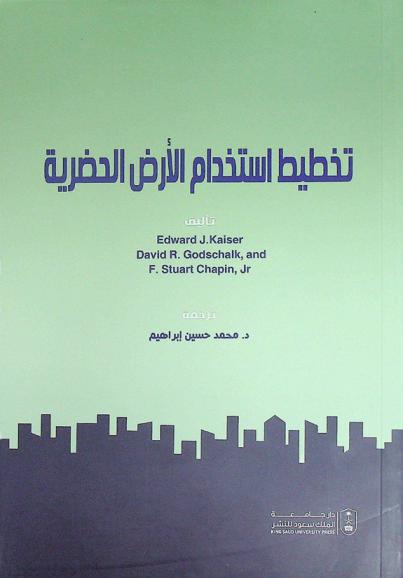
تخطيط استخدام الأرض الحضرية
يسعى هذا الكتاب إلى تقديم اطار شامل لفهم وتطبيق تخطيط استخدام الأرض الحضرية من تأليف Edward J. Kaiser وDavid R. Godschalk، يستعرض تطور التخطيط الحضري في الولايات المتحدة على مدى القرن العشرين وانعكاساته الحديثة في التصميم والسياسات والإدارة المجتمعية. يعرض الفصول الأولى الأسس النظرية لمفاهيم التخطيط والإدارة المحلية لاستخدام الأراضي ثم ينتقل إلى أهمية نظم المعلومات التخطيطية المتعلقة بالسكان والاقتصاد والبيئة والبنية التحتية والأراضي والخدمات المشتركة. يشرح الكتاب بالتفصيل كيفية صياغة الخطط المسبقة التي تحدد الاتجاهات المستقبلية مثل تصنيف الأراضي، وتصميم المناطق السكنية والتجارية وخطط المرافق، وصولاً إلى إدارة النمو وتقييم الآثار والتطبيق العملي. ويؤكد على دمج التنمية المستدامة من خلال مراعاة الاقتصاد والبيئة والعدالة الاجتماعية في تصميم السياسات وتوظيف تقنيات الدعم الرقمي والمشاركة المجتمعية في صنع الرؤية. والهدف هو توفير دليل عملي ونظري موجه للمهنيين وصناع القرار لتصميم وتنفيذ خطط حضرية فعالة مستدامة تراعي أولويات مختلف الجهات المعنية.
BOOK

Intraclonal heterogeneity is a critical early event in the development of myeloma and precedes the development of clinical symptoms
The mechanisms involved in the progression from monoclonal gammopathy of undetermined significance (MGUS) and smoldering myeloma (SMM) to malignant multiple myeloma (MM) and plasma cell leukemia (PCL) are poorly understood but believed to involve the sequential acquisition of genetic hits. We performed exome and whole-genome sequencing on a series of MGUS (
n
=4), high-risk (HR)SMM (
n
=4), MM (
n
=26) and PCL (
n
=2) samples, including four cases who transformed from HR-SMM to MM, to determine the genetic factors that drive progression of disease. The pattern and number of non-synonymous mutations show that the MGUS disease stage is less genetically complex than MM, and HR-SMM is similar to presenting MM. Intraclonal heterogeneity is present at all stages and using cases of HR-SMM, which transformed to MM, we show that intraclonal heterogeneity is a typical feature of the disease. At the HR-SMM stage of disease, the majority of the genetic changes necessary to give rise to MM are already present. These data suggest that clonal progression is the key feature of transformation of HR-SMM to MM and as such the invasive clinically predominant clone typical of MM is already present at the SMM stage and would be amenable to therapeutic intervention at that stage.
Journal Article
Prediction of outcome in newly diagnosed myeloma: a meta-analysis of the molecular profiles of 1905 trial patients
Robust establishment of survival in multiple myeloma (MM) and its relationship to recurrent genetic aberrations is required as outcomes are variable despite apparent similar staging. We assayed copy number alterations (CNA) and translocations in 1036 patients from the NCRI Myeloma XI trial and linked these to overall survival (OS) and progression-free survival. Through a meta-anlysis of these data with data from MRC Myeloma IX trial, totalling 1905 newly diagnosed MM patients (NDMM), we confirm the association of t(4;14), t(14;16), t(14;20), del(17p) and gain(1q21) with poor prognosis with hazard ratios (HRs) for OS of 1.60 (P=4.77 × 10⁻⁷ ), 1.74 (P=0.0005), 1.90 (P=0.0089), 2.10 (P=8.86 × 10⁻¹⁴ ) and 1.68 (P=2.18 × 10⁻¹⁴ ), respectively. Patients with 'double-hit' defined by co-occurrence of at least two adverse lesions have an especially poor prognosis with HRs for OS of 2.67 (P=8.13 × 10⁻²⁷ ) for all patients and 3.19 (P=1.23 × 10⁻¹⁸ ) for intensively treated patients. Using comprehensive CNA and translocation profiling in Myeloma XI we also demonstrate a strong association between t(4;14) and BIRC2/BIRC3 deletion (P=8.7 × 10⁻¹⁵ ), including homozygous deletion. Finally, we define distinct sub-groups of hyperdiploid MM, with either gain(1q21) and CCND2 overexpression (P<0.0001) or gain(11q25) and CCND1 overexpression (P<0.0001). Profiling multiple genetic lesions can identify MM patients likely to relapse early allowing stratification of treatment.
Journal Article
Single-cell genetic analysis reveals the composition of initiating clones and phylogenetic patterns of branching and parallel evolution in myeloma
Although intratumor heterogeneity has been inferred in multiple myeloma (MM), little is known about its subclonal phylogeny. To describe such phylogenetic trees in a series of patients with MM, we perform whole-exome sequencing and single-cell genetic analysis. Our results demonstrate that at presentation myeloma is composed of two to six different major clones, which are related by linear and branching phylogenies. Remarkably, the earliest myeloma-initiating clones, some of which only had the initiating t(11;14), were still present at low frequencies at the time of diagnosis. For the first time in myeloma, we demonstrate parallel evolution whereby two independent clones activate the RAS/MAPK pathway through
RAS
mutations and give rise subsequently to distinct subclonal lineages. We also report the co-occurrence of
RAS
and interferon regulatory factor 4 (
IRF4
) p.K123R mutations in 4% of myeloma patients. Lastly, we describe the fluctuations of myeloma subclonal architecture in a patient analyzed at presentation and relapse and in NOD/SCID-IL2Rγ
null
xenografts, revealing clonal extinction and the emergence of new clones that acquire additional mutations. This study confirms that myeloma subclones exhibit different survival properties during treatment or mouse engraftment. We conclude that clonal diversity combined with varying selective pressures is the essential foundation for tumor progression and treatment resistance in myeloma.
Journal Article

Challenging local realism with human choices
A Bell test is a randomized trial that compares experimental observations against the philosophical worldview of local realism
1
, in which the properties of the physical world are independent of our observation of them and no signal travels faster than light. A Bell test requires spatially distributed entanglement, fast and high-efficiency detection and unpredictable measurement settings
2
,
3
. Although technology can satisfy the first two of these requirements
4
–
7
, the use of physical devices to choose settings in a Bell test involves making assumptions about the physics that one aims to test. Bell himself noted this weakness in using physical setting choices and argued that human ‘free will’ could be used rigorously to ensure unpredictability in Bell tests
8
. Here we report a set of local-realism tests using human choices, which avoids assumptions about predictability in physics. We recruited about 100,000 human participants to play an online video game that incentivizes fast, sustained input of unpredictable selections and illustrates Bell-test methodology
9
. The participants generated 97,347,490 binary choices, which were directed via a scalable web platform to 12 laboratories on five continents, where 13 experiments tested local realism using photons
5
,
6
, single atoms
7
, atomic ensembles
10
and superconducting devices
11
. Over a 12-hour period on 30 November 2016, participants worldwide provided a sustained data flow of over 1,000 bits per second to the experiments, which used different human-generated data to choose each measurement setting. The observed correlations strongly contradict local realism and other realistic positions in bipartite and tripartite
12
scenarios. Project outcomes include closing the ‘freedom-of-choice loophole’ (the possibility that the setting choices are influenced by ‘hidden variables’ to correlate with the particle properties
13
), the utilization of video-game methods
14
for rapid collection of human-generated randomness, and the use of networking techniques for global participation in experimental science.
The BIG Bell Test, which used an online video game with 100,000 participants worldwide to provide random bits to 13 quantum physics experiments, contradicts the Einstein–Podolsky–Rosen worldview of local realism.
Journal Article


Carfilzomib, lenalidomide, dexamethasone, and cyclophosphamide (KRdc) as induction therapy for transplant-eligible, newly diagnosed multiple myeloma patients (Myeloma XI+): Interim analysis of an open-label randomised controlled trial
Carfilzomib is a second-generation irreversible proteasome inhibitor that is efficacious in the treatment of myeloma and carries less risk of peripheral neuropathy than first-generation proteasome inhibitors, making it more amenable to combination therapy.
The Myeloma XI+ trial recruited patients from 88 sites across the UK between 5 December 2013 and 20 April 2016. Patients with newly diagnosed multiple myeloma eligible for transplantation were randomly assigned to receive the combination carfilzomib, lenalidomide, dexamethasone, and cyclophosphamide (KRdc) or a triplet of lenalidomide, dexamethasone, and cyclophosphamide (Rdc) or thalidomide, dexamethasone, and cyclophosphamide (Tdc). All patients were planned to receive an autologous stem cell transplantation (ASCT) prior to a randomisation between lenalidomide maintenance and observation. Eligible patients were aged over 18 years and had symptomatic myeloma. The co-primary endpoints for the study were progression-free survival (PFS) and overall survival (OS) for KRdc versus the Tdc/Rdc control group by intention to treat. PFS, response, and safety outcomes are reported following a planned interim analysis. The trial is registered (ISRCTN49407852) and has completed recruitment. In total, 1,056 patients (median age 61 years, range 33 to 75, 39.1% female) underwent induction randomisation to KRdc (n = 526) or control (Tdc/Rdc, n = 530). After a median follow-up of 34.5 months, KRdc was associated with a significantly longer PFS than the triplet control group (hazard ratio 0.63, 95% CI 0.51-0.76). The median PFS for patients receiving KRdc is not yet estimable, versus 36.2 months for the triplet control group (p < 0.001). Improved PFS was consistent across subgroups of patients including those with genetically high-risk disease. At the end of induction, the percentage of patients achieving at least a very good partial response was 82.3% in the KRdc group versus 58.9% in the control group (odds ratio 4.35, 95% CI 3.19-5.94, p < 0.001). Minimal residual disease negativity (cutoff 4 × 10⁻⁵ bone marrow leucocytes) was achieved in 55% of patients tested in the KRdc group at the end of induction, increasing to 75% of those tested after ASCT. The most common adverse events were haematological, with a low incidence of cardiac events. The trial continues to follow up patients to the co-primary endpoint of OS and for planned long-term follow-up analysis. Limitations of the study include a lack of blinding to treatment regimen and that the triplet control regimen did not include a proteasome inhibitor for all patients, which would be considered a current standard of care in many parts of the world.
The KRdc combination was well tolerated and was associated with both an increased percentage of patients achieving at least a very good partial response and a significant PFS benefit compared to immunomodulatory-agent-based triplet therapy.
ClinicalTrials.gov ISRCTN49407852.
Journal Article

Study protocol of the FIRE-8 (AIO-KRK/YMO-0519) trial: a prospective, randomized, open-label, multicenter phase II trial investigating the efficacy of trifluridine/tipiracil plus panitumumab versus trifluridine/tipiracil plus bevacizumab as first-line treatment in patients with metastatic colorectal cancer
Background
Initial systemic therapy for patients with metastatic colorectal cancer (mCRC) is usually based on two- or three-drug chemotherapy regimens with fluoropyrimidine (5-fluorouracil (5-FU) or capecitabine), oxaliplatin and/or irinotecan, combined with either anti-VEGF (bevacizumab) or, for RAS wild-type (WT) tumors, anti-EGFR antibodies (panitumumab or cetuximab). Recommendations for patients who are not eligible for intensive combination therapies are limited and include fluoropyrimidine plus bevacizumab or single agent anti-EGFR antibody treatment. The use of a monochemotherapy concept of trifluridine/ tipiracil in combination with monoclonal antibodies is not approved for first-line therapy, yet. Results from the phase II TASCO trial evaluating trifluridine/ tipiracil plus bevacicumab in first-line treatment of mCRC patients and from the phase I/II APOLLON trial investigating trifluridine/ tipiracil plus panitumumab in pre-treated mCRC patients suggest favourable activity and tolerability of these new therapeutic approaches.
Methods
FIRE-8 (
NCT05007132
) is a prospective, randomized, open-label, multicenter phase II study which aims to evaluate the efficacy of first-line treatment with trifluridine/tipiracil (35 mg/m
2
body surface area (BSA), orally twice daily on days 1–5 and 8–12, q28 days) plus either the anti-EGFR antibody panitumumab (6 mg/kg body weight, intravenously on day 1 and 15, q28 days) [arm A] or (as control arm) the anti-VEGF antibody bevacizumab (5 mg/kg body weight, intravenously on day 1 and 15, q28 days) [arm B] in
RAS
WT mCRC patients. The primary objective is to demonstrate an improved objective response rate (ORR) according to RECIST 1.1 from 30% (control arm) to 55% with panitumumab. With a power of 80% and a two-sided significance level of 0.05, 138 evaluable patients are needed. Given an estimated drop-out rate of 10%, 153 patients will be enrolled.
Discussion
To the best of our knowledge, this is the first phase II trial to evaluate the efficacy of trifluridine/tipiracil plus panitumumab in first-line treatment of
RAS
WT mCRC patients. The administration of anti-EGFR antibodies rather than anti-VEGF antibodies in combination with trifluridine/tipiracil may result in an increased initial efficacy.
Trial registration
EU Clinical Trials Register (EudraCT)
2019-004223-20
. Registered October 22, 2019,
ClinicalTrials.gov
NCT05007132
. Registered on August 12, 2021.
Journal Article

Exploiting gene dependency to inform drug development for multiple myeloma
Despite recent advances in therapy, multiple myeloma essentially remains an incurable malignancy. Targeting tumour-specific essential genes, which constitute a druggable dependency, potentially offers a strategy for developing new therapeutic agents to treat MM and overcome drug resistance. To explore this possibility, we analysed DepMap project data identifying 23 MM essential genes and examined the relationship between their expression and patient outcome in three independent series totalling 1503 cases. The expression of
TCF3
and
FLVCR1
were both significantly associated with progression-free survival.
IKBKB
is already a drug target in other diseases, offering the prospect of repurposing to treat MM, while
PIM2
is currently being investigated as a treatment for the disease. Our analysis supports the rationale of using large-scale genetic perturbation screens to guide the development of new therapeutic agents for MM.
Journal Article

Addressing Single Nuclear Spins Quantum Memories by a Central Electron Spin
Nuclei surrounding single electron spins are valuable resources for quantum technology. For application in this area, one is often interested in weakly coupled nuclei with coupling strength on the order of a few 10–100 kHz. In this paper, we compare methods to address single nuclear spins with this type of hyperfine coupling to a single electron spin. To achieve the required spectral resolution, we specifically focus on two methods, namely dynamical decoupling and correlation spectroscopy. We demonstrate spectroscopy of two single nuclear spins and present a method to derive components of their hyperfine coupling tensor from those measurements.
Journal Article