
Catalogue Search | MBRL


Are you sure you want to remove the book from the shelf?

{{itemTitle}}
189
result(s) for
"Kallendorf, Hilaire"
Sort by:


Conscience on Stage
This study outlines and reiterates the relationship of theatre to casuistry, the Jesuit contributions to Spanish literary theory and practice, and the importance of casuistry for the study of early modern subjectivity.
eBook

Exorcism and Its Texts
Exorcism and demonic possession appear as recurrent motifs in early modern Spanish and English literatures. InExorcism and Its Texts, Hilaire Kallendorf demonstrates how this 'infection' was represented in some thirty works of literature by fifteen different authors, ranging from canonical classics like Shakespeare, Cervantes, Ben Jonson, and Lope de Vega, to obscure works by anonymous writers.
From comic and tragic drama to picaresque narrative and eight other genres, possession worked as a paradigm through which authors could convey extraordinary experience, including not only demonic possession but also madness or even murder. The devil was thought to be able to enter the bodily organs and infect memory, imagination, and reason. Some came to believe that possession was tied to enthusiasm, poetic frenzy, prophecy, and genius. Authors often drew upon sensational details of actual exorcisms. In some cases, such as in Shakespeare, curing the body (and the body politic) meant affirming cultural authority; in others, as with Zamora, it clearly meant subverting it. Drawing on the disciplines of literary theory and history,Exorcism and its Textsis the first comprehensive study of this compelling topic.
eBook

A Companion to the Spanish Renaissance
A Companion to the Spanish Renaissance makes a renewed case for the inclusion of Spain within broader European Renaissance movements. This interdisciplinary volume offers a snapshot of the best new work being done in this area.
eBook
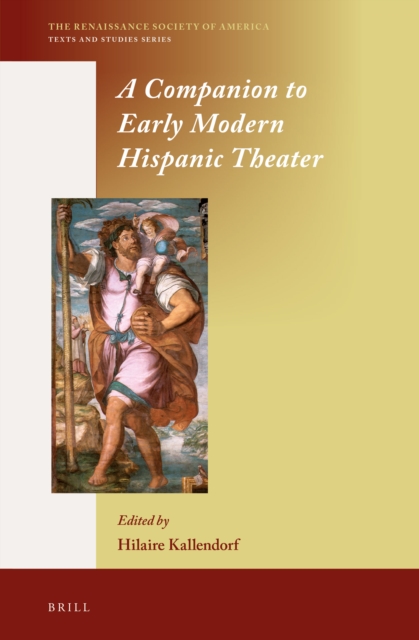
A Companion to Early Modern Hispanic Theater
A panoramic, state-of-the-art handbook in English destined to chart a course for future work in the field of early modern Hispanic theater studies. Contains 18 crucial essays distributed among 4 wide-ranging sections on Origins, Themes, Places, and Intersections.
eBook

Don Quijote in Los Angeles: Daniel Venegas's Don Chipote and its Cervantine Model
Las aventuras de Don Chipote (1928), an immigration novel written by Mexican author Daniel Venegas and inspired by his own life experience as a manual laborer in southern California, has been called the first Chicano novel. Its most obvious intertext is Cervantes's Don Quijote. However, until recently Cervantists have shown little interest in this book, which has been analyzed almost exclusively by Chicano literature specialists. Given the rise of theories such as transnationalism within the field of Cervantine studies--and the growing recognition of the fact that the Quijote itself arose, in its original moment, within a transnational context--it is now appropriate to analyze more carefully this transnational text in juxtaposition to its Cervantine model. The results of this comparative study will be relevant for both fields, as well as for the history of Cervantine reception in other countries in earlier centuries.
Journal Article


