
Catalogue Search | MBRL


Are you sure you want to remove the book from the shelf?

{{itemTitle}}
205
result(s) for
"Kamali, Mohammad Hashim"
Sort by:

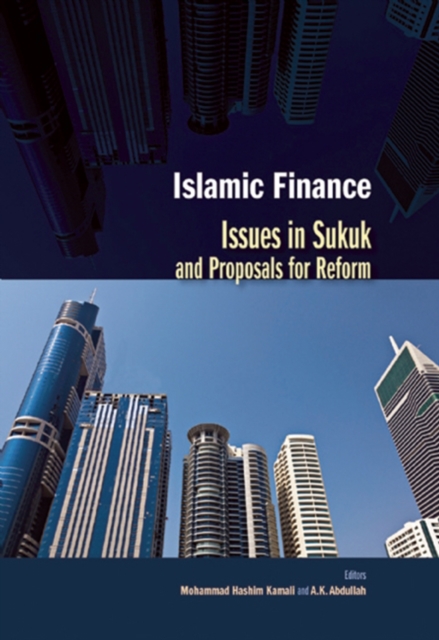
Islamic finance : issues in Ṣukūk and proposals for reform
This collection of essays brings together leading scholars and practitioners to discuss contemporary issues in the rapidly expanding sukuk market, and frankly debates the challenges facing it since the 2008 financial crisis. Highly recommended for practitioners, scholars, and students of Islamic finance. Professor Mohammad Hashim Kamali is the founding chairman and CEO of the International Institute of Advanced Islamic Studies (IAIS) in Malaysia, and is a leading authority in Islamic jurisprudence, Islamic finance, and human rights in Islamic law. A.K. Abdullah is an assistant research fellow at the IAIS.
eBook

Shariah law : questions and answers
\"Shariah law is a subject that is misunderstood and misrepresented by many in the West. More than simply a system of law, it is concerned with a set of values and rules that are essential to the understanding and practice of Islam. In this volume, Mohammad Hashim Kamali, a world-renowned expert on Shariah, adopts a question-and-answer format to provide a clear introduction to its most salient aspects. Extending from the sources of Shariah in the Qur'an, hadith and the legal maxims of Islamic law to the discussion of issues such as freedom of religion, gender equality and human rights, Shariah Law: Questions and Answers connects the theoretical aspects of the law with how it is applied in the world today. At once scholarly and accessible, it is sure to be a vital resource for students, teachers and general readers, addressing as it does a range of contemporary concerns, including jihad, democracy, the environment, genetic engineering, human cloning, euthanasia and abortion.\"--Page 4 of cover.
Book
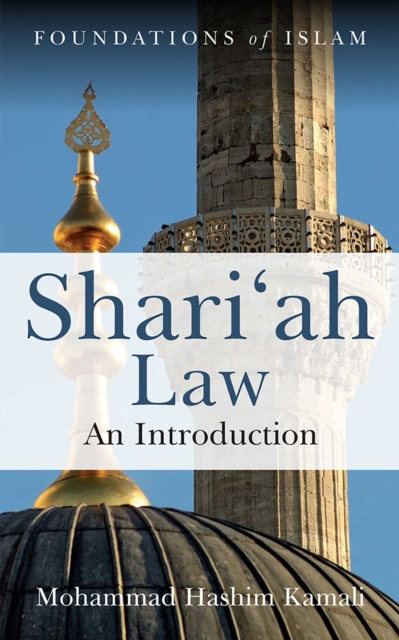
Shariʿah law : an introduction
Providing a comprehensive and accessible examination of Shari'ah Law, this well considered introduction examines the sources, characteristic features and various schools of thought of a system often stereotyped for its severity in the West. In a progressive and graduated fashion, Mohammad Hashim Kamali discusses topics ranging from juristic disagreement to independent reasoning. Also broaching more advanced topics such as the principle of legality and the role and place of Shari'ah-oriented policy, Kamali controversially questions whether Islam is as much of a law-based religion as it has often been made out to be. Complete with a bibliography and glossary, and both a general index and an index of Arabic quotations, this wide-ranging exploration will prove an indispensable resource for Islamic students and scholars, and an informative guide to a complex topic for the general reader. Professor Dr Hashim Mohammad Kamali is the Dean of the International Institute of Islamic Thought and Civilisation (ISTAC) at the International Islamic University, Malaysia.
eBook

History and Jurisprudence of the Maqāṣid
This article, which was originally delivered as a keynote address at the AJIS symposium on “Theory and Uses of Maqāṣid al-Sharī‘a” in May 2021, begins with a review of the Qur’an and Sunna on the maqāṣid, followed by a similar review of the history of maqāṣid and salient contributors to its jurisprudence, while drawing attention to its prolonged marginalization in legal theory. The recent revival of maqāṣid in the latter part of the twentieth century is reviewed next, followed by a note on the special appeal of the maqāṣid, the end of their historical neglect, and a great deal of renewed interest by contemporary Muslim scholars. The relationship of uṣūl al-fiqh to maqāṣid has also been the subject of renewed interest, as to whether it is one of continued domination or one of complementarity between them. Then follows a section on the classification of maqāṣid, how they are appraised and prioritized in relationship to one another; and a review of methodological indicators that can help withthe appraisal and ranking of the maqāṣid and their application to new issues. The article concludes with an account of ijtihād maqāṣidi and its application to contemporary issues.
Journal Article

History and Jurisprudence of the Maqāṣid
This article, which was originally delivered as a keynote address at the AJIS symposium on “Theory and Uses of Maqāṣid al-Sharī‘a” in May 2021, begins with a review of the Qur’an and Sunna on the maqāṣid, followed by a similar review of the history of maqāṣid and salient contributors to its jurisprudence, while drawing attention to its prolonged marginalization in legal theory. The recent revival of maqāṣid in the latter part of the twentieth century is reviewed next, followed by a note on the special appeal of the maqāṣid, the end of their historical neglect, and a great deal of renewed interest by contemporary Muslim scholars. The relationship of uṣūl al-fiqh to maqāṣid has also been the subject of renewed interest, as to whether it is one of continued domination or one of complementarity between them. Then follows a section on the classification of maqāṣid, how they are appraised and prioritized in relationship to one another; and a review of methodological indicators that can help with the appraisal and ranking of the maqāṣid and their application to new issues. The article concludes with an account of ijtihād maqāṣidi and its application to contemporary issues.
Journal Article
Makâsıd’ın Tarihçesi ve Hukuki Gelişimi
Bu makale, Mayıs 2021’de düzenlenen “Makâsıdü’ş-Şerîanın Teorisi ve Kullanım Alanları” başlıklı AJIS sempozyumunda açılış konuşmasıolarak sunulmuştur. Kur’an ve Sünnette makâsıd üzerine incelemelerle başlayan metinde, makâsıdın tarihçesinin yanı sıra hukukigelişimine katkıda bulunanlar ele alınmakta, ayrıca hukuk teorisi içinde epeydir süregelen marjinal konumuna dikkat çekilmektedir.Ardından, yirminci yüzyılın ikinci yarısında yeniden canlanan makâsıdı özellikle dikkat çekici kılan yönler irdelenmekte, makâsıdıngeçmişte göz ardı edilmesine yol açan eğilimlerin bitmesi ve çağdaş Müslüman âlimlerin yeniden bu alanla yakından ilgilenmeye başlaması işlenmektedir. Ayrıca, tekrar ilgi duyulan konulardan birisi olarak, usûl-i fıkıh ile makâsıd arasındaki ilişkinin mahiyeti tahlil edilmekte, birinin diğerine baskın mı geldiği, yoksa birbirlerine bağımlı bir ilişkilerinin mi var olduğu sorgulanmaktadır. Takip eden bölümde makâsıdın tasnifi ve nasıl belirlenip öncelik sırasına konulduğu ele alınmakta, ayrıca bunları belirleme, sıralama ve yeni meselelere uygulama bakımından yardımcı olabilecek metodolojik göstergeler incelenmektedir. Makalenin sonunda, içtihat makâsıdı konusuna ilişkin açıklamalara ve uygulamalı güncel örneklere yer verilmektedir.
Journal Article
Makâsıd’ın Tarihçesi ve Hukuki Gelişimi
Bu makale, Mayıs 2021’de düzenlenen “Makâsıdü’ş-Şerîanın Teorisi ve Kullanım Alanları” başlıklı AJIS sempozyumunda açılış konuşması olarak sunulmuştur. Kur’an ve Sünnette makâsıd üzerine incelemelerle başlayan metinde, makâsıdın tarihçesinin yanı sıra hukuki gelişimine katkıda bulunanlar ele alınmakta, ayrıca hukuk teorisi içinde epeydir süregelen marjinal konumuna dikkat çekilmektedir. Ardından, yirminci yüzyılın ikinci yarısında yeniden canlanan makâsıdı özellikle dikkat çekici kılan yönler irdelenmekte, makâsıdın geçmişte göz ardı edilmesine yol açan eğilimlerin bitmesi ve çağdaş Müslüman âlimlerin yeniden bu alanla yakından ilgilenmeye başlaması işlenmektedir. Ayrıca, tekrar ilgi duyulan konulardan birisi olarak, usûl-i fıkıh ile makâsıd arasındaki ilişkinin mahiyeti tahlil edilmekte, birinin diğerine baskın mı geldiği, yoksa birbirlerine bağımlı bir ilişkilerinin mi var olduğu sorgulanmaktadır. Takip eden bölümde makâsıdın tasnifi ve nasıl belirlenip öncelik sırasına konulduğu ele alınmakta, ayrıca bunları belirleme, sıralama ve yeni meselelere uygulama bakımından yardımcı olabilecek metodolojik göstergeler incelenmektedir. Makalenin sonunda, içtihat makâsıdı konusuna ilişkin açıklamalara ve uygulamalı güncel örneklere yer verilmektedir.
Journal Article