
Catalogue Search | MBRL


Are you sure you want to remove the book from the shelf?

{{itemTitle}}
659
result(s) for
"Kane, G. L"
Sort by:

Supersymmetry and beyond : from the Higgs boson to the new physics
\"The epic story of the quest to uncover a fully unified theory of physics, revised to reflect the possible discovery of the Higgs Boson\"-- Provided by publisher.
Book

String theory and the real world
This book attempts to explain why string theory may provide the comprehensive underlying theory that describes and explains our world. It is an enthusiastic view of how compactified string/M-theories, plus data that may be reachable, seem to have the possibilities of leading to a comprehensive underlying theory of particle physics and cosmology, perhaps soon. We are living in a hugely exciting era for science, one during which it may be possible to achieve a real and true understanding of our physical world. Founded on three decades of research, this second edition covers the Planck scale, Higgs physics, supersymmetry and supersymmetry breaking, the Hierarchy problem, dark matter, inflation, hidden sectors, future colliders, testing theories in physics, possible limits to understanding, and more.
eBook
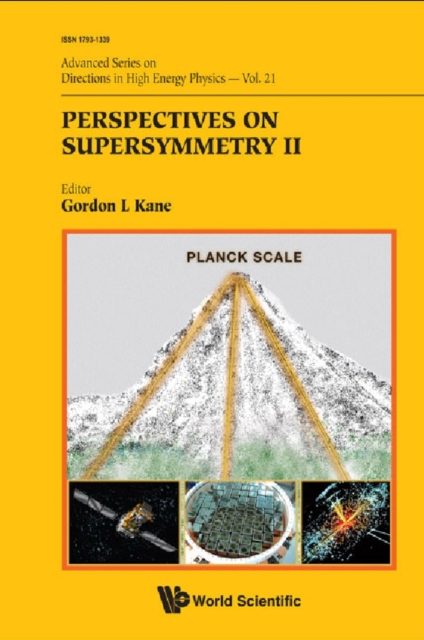
Perspectives on supersymmetry II
Supersymmetry is at an exciting stage of development. It extends the Standard Model of particle physics into a more powerful theory that both explains more and allows more questions to be addressed. Most importantly, it opens a window for studying and testing fundamental theories at the Planck scale. Experimentally we are finally entering the intensity and energy and sensitivity regions where superpartners and supersymmetric dark matter candidates are likely to be detected, and then studied. There has been progress in understanding the remarkable physics implications of supersymmetry, including the derivation of the Higgs mechanism, the unification of the Standard Model forces, cosmological connections such as a candidate for the cold dark matter of the universe and consequences for understanding the cosmological history of the universe, and more.
eBook


Peer Training to Facilitate Social Interaction for Elementary Students with Autism and Their Peers
There is increasing evidence that peer-mediated interventions for students with autism are effective in increasing participation in natural settings. Still unknown are the contributions peers make to the generalization of social behaviors. Results from two investigations of this issue are reported. In Study 1, social interaction with peers increased during interventions compared to controls; however, students in cooperative learning control groups showed higher levels of generalization than those in social groups. In Study 2, videotaped probes of 34 students indicated greater generalization of skills from groups with trained peers, and less from groups with untrained and stranger peers. Implications are discussed regarding the value of ongoing peer training and structured groups to establish relationships and generalization of skills over time.
Journal Article

The Origins of U.S. Safety Standards for Microwave Radiation
An analysis is made of the scientific research and values influencing the policy decisions that led to the adoption of the 1966 U.S. standard for exposure to microwave radiation. This analysis is used as a tool for understanding the problems faced by those who set standards. An effort is made to unravel the complex motivations that lay behind the adoption of the microwave standard. Based on the past record, it is suggested that standard setting remain distinct from basic scientific research and that adversary procedures be used only as a last resort in seeking consensus over a proposed standard.
Journal Article
Connecting String Theory and Phenomenology
To make progress in learning the underlying fundamental theory, it will be necessary to combine bottom-up phenomenology and top-down analysis -- in particular, top-down is unlikely to succeed alone. Here I elaborate on the role of both, and describe obstacles that need to be overcome to help data point toward the underlying theory, as well as approaches that might help to bypass full systematic treatments. I also summarize arguments that superpartners are probably being produced at the Tevatron Collider.
Paper
Introduction to \The Supersymmetric World: The Beginnings of The Theory\
This is the foreword to the book we edited on the origins and early development of supersymmetry, which has been just issued by World Scientific. This book presents a view on the discovery of supersymmetry and pioneering investigations before summer 1976, mainly in the words of people who participated. It combines anecdotal descriptions and personal reminiscences with more technical summaries of the trailblazers, covering the birth of the theory and its first years -- origin of the idea, four-dimensional field theory realization, and supergravity. The eyewitnesses convey to us the drama of one of the deepest discoveries in theoretical physics in the 20-th century. Contributors: V. Akulov, R. Di Stefano, P. Fayet, S. Ferrara, G.-L. Gervais, N. Koretz-Golfand, E. Likhtman, M. Marinov, A. Neveu, L. O'Raifeartaigh, P. Ramond, B. Sakita, J. Schwarz, M. Sohnius, V. Soroka, J. Strathdee, D. Volkov, J. Wess, P. West.
Paper