
Catalogue Search | MBRL


Are you sure you want to remove the book from the shelf?

{{itemTitle}}
4,917
result(s) for
"Kara, M"
Sort by:
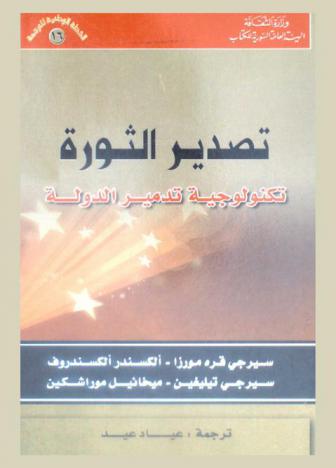
تصدير الثورة : تكنولوجية تدمير الدولة
يتحدث الكتاب عن اكتساب السلطة السياسية منذ الألف الثاني قبل الميلاد في مجتمعات الحضارات القديمة ملامح الدولة. وصارت الدولة منذ ذلك الوقت حتى زمننا الحاضر المؤسسة الأساسية التي تحقق إدارة المجتمع وحماية بنيته الاقتصادية والاجتماعية من الأخطار ذات الطابعين الداخلي والخارجي معا. يلقي هذا الكتاب الذي نضعه بين أيدي القراء بعض الضوء على حقيقة ما جرى ويجري عندنا ومن حولنا وقد يسهم في رسم صورة العالم المتشابك ويخرج خيوطه إلى العلن. الصراع اليوم يجري في الفناء الخلفي الذي أغفلناه عقودا، وربما قرونا. إنه مجال الثقافة والمعرفة والوعي.
BOOK

Dynamic ride-sharing and fleet sizing for a system of shared autonomous vehicles in Austin, Texas
Shared autonomous (fully-automated) vehicles (SAVs) represent an emerging transportation mode for driverless and on-demand transport. Early actors include Google and Europe’s CityMobil2, who seek pilot deployments in low-speed settings. This work investigates SAVs’ potential for U.S. urban areas via multiple applications across the Austin, Texas, network. This work describes advances to existing agent- and network-based SAV simulations by enabling dynamic ride-sharing (DRS, which pools multiple travelers with similar origins, destinations and departure times in the same vehicle), optimizing fleet sizing, and anticipating profitability for operators in settings with no speed limitations on the vehicles and at adoption levels below 10 % of all personal trip-making in the region. Results suggest that DRS reduces average service times (wait times plus in-vehicle travel times) and travel costs for SAV users, even after accounting for extra passenger pick-ups, drop-offs and non-direct routings. While the base-case scenario (serving 56,324 person-trips per day, on average) suggest that a fleet of SAVs allowing for DRS may result in vehicle-miles traveled (VMT) that exceed person-trip miles demanded (due to anticipatory relocations of empty vehicles, between trip calls), it is possible to reduce overall VMT as trip-making intensity (SAV membership) rises and/or DRS users become more flexible in their trip timing and routing. Indeed, DRS appears critical to avoiding new congestion problems, since VMT may increase by over 8 % without any ride-sharing. Finally, these simulation results suggest that a private fleet operator paying $70,000 per new SAV could earn a 19 % annual (long-term) return on investment while offering SAV services at $1.00 per mile for a non-shared trip (which is less than a third of Austin’s average taxi cab fare).
Journal Article
Are we ready to embrace connected and self-driving vehicles? A case study of Texans
While connected, highly automated, and autonomous vehicles (CAVs) will eventually hit the roads, their success and market penetration rates depend largely on public opinions regarding benefits, concerns, and adoption of these technologies. Additionally, the introduction of these technologies is accompanied by uncertainties in their effects on the carsharing market and land use patterns, and raises the need for tolling policies to appease the travel demand induced due to the increased convenience. To these ends, this study surveyed 1088 respondents across Texas to understand their opinions about smart vehicle technologies and related decisions. The key summary statistics indicate that Texans are willing to pay (WTP) $2910, $4607, $7589, and $127 for Level 2, Level 3, and Level 4 automation and connectivity, respectively, on average. Moreover, affordability and equipment failure are Texans’ top two concerns regarding AVs. This study also estimates interval regression and ordered probit models to understand the multivariate correlation between explanatory variables, such as demographics, built-environment attributes, travel patterns, and crash histories, and response variables, including willingness to pay for CAV technologies, adoption rates of shared AVs at different pricing points, home location shift decisions, adoption timing of automation technologies, and opinions about various tolling policies. The practically significant relationships indicate that more experienced licensed drivers and older people associate lower WTP values with all new vehicle technologies. Such parameter estimates help not only in forecasting long-term adoption of CAV technologies, but also help transportation planners in understanding the characteristics of regions with high or low future-year CAV adoption levels, and subsequently, develop smart strategies in respective regions.
Journal Article

The Hemocompatibility of Nanoparticles: A Review of Cell–Nanoparticle Interactions and Hemostasis
Understanding cell–nanoparticle interactions is critical to developing effective nanosized drug delivery systems. Nanoparticles have already advanced the treatment of several challenging conditions including cancer and human immunodeficiency virus (HIV), yet still hold the potential to improve drug delivery to elusive target sites. Even though most nanoparticles will encounter blood at a certain stage of their transport through the body, the interactions between nanoparticles and blood cells is still poorly understood and the importance of evaluating nanoparticle hemocompatibility is vastly understated. In contrast to most review articles that look at the interference of nanoparticles with the intricate coagulation cascade, this review will explore nanoparticle hemocompatibility from a cellular angle. The most important functions of the three cellular components of blood, namely erythrocytes, platelets and leukocytes, in hemostasis are highlighted. The potential deleterious effects that nanoparticles can have on these cells are discussed and insight is provided into some of the complex mechanisms involved in nanoparticle–blood cell interactions. Throughout the review, emphasis is placed on the importance of undertaking thorough, all-inclusive hemocompatibility studies on newly engineered nanoparticles to facilitate their translation into clinical application.
Journal Article

Colony-stimulating factor 1 receptor inhibition prevents microglial plaque association and improves cognition in 3xTg-AD mice
Background
Microglia are dependent upon colony-stimulating factor 1 receptor (CSF1R) signaling for their survival in the adult brain, with administration of the dual CSF1R/c-kit inhibitor PLX3397 leading to the near-complete elimination of all microglia brainwide. Here, we determined the dose-dependent effects of a specific CSF1R inhibitor (PLX5622) on microglia in both wild-type and the 3xTg-AD mouse model of Alzheimer’s disease.
Methods
Wild-type mice were treated with PLX5622 for up to 21 days, and the effects on microglial numbers were assessed. 3xTg-AD mice were treated with PLX5622 for 6 or 12 weeks and effects on microglial numbers and pathology subsequently assessed.
Results
High doses of CSF1R inhibitor eliminate most microglia from the brain, but a 75 % lower-dose results in sustained elimination of ~30 % of microglia in both wild-type and 3xTg-AD mice. No behavioral or cognitive deficits were found in mice either depleted of microglia or treated with lower CSF1R inhibitor concentrations. Aged 3xTg-AD mice treated for 6 or 12 weeks with lower levels of PLX5622 resulted in improved learning and memory. Aβ levels and plaque loads were not altered, but microglia in treated mice no longer associated with plaques, revealing a role for the CSF1R in the microglial reaction to plaques, as well as in mediating cognitive deficits.
Conclusions
We find that inhibition of CSF1R alone is sufficient to eliminate microglia and that sustained microglial elimination is concentration-dependent. Inhibition of the CSF1R at lower levels in 3xTg-AD mice prevents microglial association with plaques and improves cognition.
Journal Article

Costs and Benefits of Electrifying and Automating Bus Transit Fleets
Diesel-powered, human-driven buses currently dominate public transit options in most U.S. cities, yet they produce health, environmental, and cost concerns. Emerging technologies may improve fleet operations by cost-effectively reducing emissions. This study analyzes both battery-electric buses and self-driving (autonomous) buses from both cost and qualitative perspectives, using the Capital Metropolitan Transportation Authority’s bus fleet in Austin, Texas. The study predicts battery-electric buses, including the required charging infrastructure, will become lifecycle cost-competitive in or before the year 2030 at existing U.S. fuel prices ( $2.00/gallon), with the specific year depending on the actual rate of cost decline and the diesel bus purchase prices. Rising diesel prices would result in immediate cost savings before reaching $ 3.30 per gallon. Self-driving buses will reduce or eliminate the need for human drivers, one of the highest current operating costs of transit agencies. Finally, this study develops adoption schedules for these technologies. Recognizing bus lifespans and driver contracts, and assuming battery-electric bus adoption beginning in year-2020, cumulative break-even (neglecting extrinsic benefits, such as respiratory health) occurs somewhere between 2030 and 2037 depending on the rate of battery cost decline and diesel-bus purchase prices. This range changes to 2028 if self-driving technology is available for simultaneous adoption on new electric bus purchases beginning in 2020. The results inform fleet operators and manufacturers of the budgetary implications of converting a bus fleet to electric power, and what cost parameters allow electric buses to provide budgetary benefits over their diesel counterparts.
Journal Article

Is there a “price that’s right” for at-home COVID tests?
The COVID-19 pandemic has impacted the daily lives of individuals across the world as multiple variants continue introducing new complexities. In December 2021, which is when we conducted our study, pressure to resume the normalcy of daily life was mounting as a new variant, Omicron, was rapidly spreading. A variety of at-home tests detecting SARS-CoV-2, known to the general public as “COVID tests,” were available for consumers to purchase. In this study, we conducted conjoint analysis utilizing an internet-based survey by presenting consumers (n = 583) with 12 different hypothetical at-home COVID test concepts that varied on five attributes (price, accuracy, time, where-to-buy, and method). Price was identified as the most important attribute, because participants were very price sensitive. Quick turnaround time and high accuracy were also identified as important. Additionally, although 64% of respondents were willing to take an at-home COVID test, only 22% reported they had previously taken the test. On December 21, 2021, President Biden announced the U.S. government would purchase 500 million at-home rapid tests and distribute them for free to Americans. Given the importance of price to participants, this policy of providing free at-home COVID tests was directionally appropriate.
Journal Article
Tracking a system of shared autonomous vehicles across the Austin, Texas network using agent-based simulation
This study provides a large-scale micro-simulation of transportation patterns in a metropolitan area when relying on a system of shared autonomous vehicles (SAVs). The six-county region of Austin, Texas is used for its land development patterns, demographics, networks, and trip tables. The agent-based MATSim toolkit allows modelers to track individual travelers and individual vehicles, with great temporal and spatial detail. MATSim’s algorithms help improve individual travel plans (by changing tour and trip start times, destinations, modes, and routes). Here, the SAV mode requests were simulated through a stochastic process for four possible fare levels: $0.50, $0.75, $1, and $1.25 per trip-mile. These fares resulted in mode splits of 50.9, 12.9, 10.5, and 9.2% of the region’s person-trips, respectively. Mode choice results show longer-distance travelers preferring SAVs to private, human-driven vehicles (HVs)—thanks to the reduced burden of SAV travel (since one does not have to drive the vehicle). For travelers whose households do not own an HV, SAVs (rather than transit, walking and biking) appear preferable for trips under 10 miles, which is the majority of those travelers’ trip-making. It may be difficult for traditional transit services and operators to survive once SAVs become available in regions like Austin, where dedicated rail lines and bus lanes are few. Simulation of SAV fleet operations suggest that higher fare rates allow for greater vehicle replacement (ranging from 5.6 to 7.7 HVs per SAV, assuming that the average SAV serves 17–20 person-trips per day); when fares rise, travel demands shift away from longer trip distances. Empty vehicle miles traveled by the fleet of SAVs ranged from 7.8 to 14.2%, across the scenarios in this study. Implications of mobility and sustainability benefits of SAVs are also discussed in the paper.
Journal Article

Brentuximab Vedotin with Chemotherapy in Pediatric High-Risk Hodgkin’s Lymphoma
A regimen substituting brentuximab vedotin for bleomycin improved 3-year event-free survival among children and adolescents with Hodgkin’s lymphoma by nearly 10 percentage points without a major increase in toxic effects.
Journal Article

Large-scale quantum-emitter arrays in atomically thin semiconductors
Quantum light emitters have been observed in atomically thin layers of transition metal dichalcogenides. However, they are found at random locations within the host material and usually in low densities, hindering experiments aiming to investigate this new class of emitters. Here, we create deterministic arrays of hundreds of quantum emitters in tungsten diselenide and tungsten disulphide monolayers, emitting across a range of wavelengths in the visible spectrum (610–680 nm and 740–820 nm), with a greater spectral stability than their randomly occurring counterparts. This is achieved by depositing monolayers onto silica substrates nanopatterned with arrays of 150-nm-diameter pillars ranging from 60 to 190 nm in height. The nanopillars create localized deformations in the material resulting in the quantum confinement of excitons. Our method may enable the placement of emitters in photonic structures such as optical waveguides in a scalable way, where precise and accurate positioning is paramount.
Quantum emitters have been recently isolated in 2D materials, yet their spatial controllability remains an open challenge. Here, the authors devise a method to create arrays of quantum emitters in WSe
2
and WS
2
, by taking advantage of the strain distribution induced by a nanopatterned silica substrate.
Journal Article