
Catalogue Search | MBRL


Are you sure you want to remove the book from the shelf?

{{itemTitle}}
77
result(s) for
"Kaufman, Joyce P"
Sort by:


Community Partner Guide to Campus Collaborations
Based on years of field experience, this guide is addressed to you, whether your non-profit has experience working with university interns or volunteers but wants to deepen and increase the effectiveness of the relationship; whether your agency is starting to explore how to improve client services through a campus collaboration; or whether you work for an NGO interested in partnering with universities across borders to effect positive change and draw attention to the challenges, resources, and needs of your community.
Recognizing both the possibilities and the pitfalls of community-campus collaborations, this guide demystifies the often confusing terminology of education, explains how to locate the right individuals on campus, and addresses issues of mission and expectations for roles, tasks, training, supervision, and evaluation that can be fraught with miscommunication and misunderstanding.
This guide is also available in sets of 6 or 12, at reduced prices, to facilitate its use for planning, and for the training of leaders engaged in partnerships.
eBook

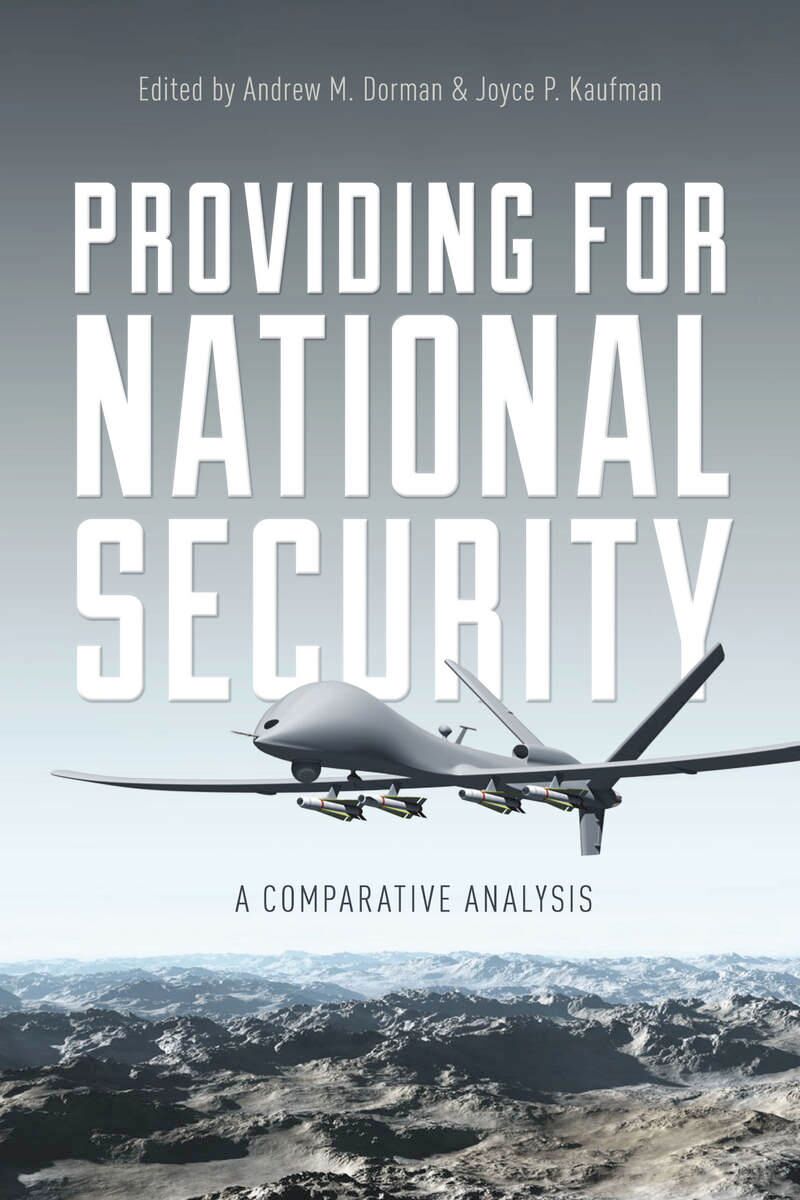
Providing for national security : a comparative analysis
Providing for National Security: A Comparative Analysis argues that the provision of national security has changed in the 21st century as a result of a variety of different pressures and threats. In this timely volume experts from both the academic and policy worlds present 13 different country case studies drawn from across the globe—including established and newer states, large and smaller states, those on the rise and those in apparent decline—to identify what these key players consider to be their national security priorities, how they go about providing national security, how they manage national security, and what role they see for their armed forces now and in the future. The book concludes that relative standing and the balance of power remains important to each state, and that all see an important role for armed forces in the future.
eBook

The future of transatlantic relations : perceptions, policy and practice
Since the end of the Cold War, and especially following the US decision to invade Iraq, the once strong partnership between the US, Canada, and the European allies has faced the serious possibility of significant change, or even dissolution. At the very least, fundamental differences have emerged in the ways that many of the partners, perceive the issues that are most important to them—from perceptions of the threat of terrorism and attitudes to the use of force, to expectation about the future nature of the NATO Alliance—and in the ways in which those perceptions have become translated into policy decisions.
In this book, experts from both sides of the Atlantic seek to explain why there has been so much divergence in the approach the various countries have taken. And it seeks to raise questions about what those divergent paths might mean for the future of transatlantic relations.
eBook


The US perspective on NATO under Trump
As a new and unpredictable administration takes power in Washington, the relationship that the United States will have with its European allies remains unclear. There is understandably concern on both sides of the Atlantic about what this change will mean for the US relationship with NATO and the security guarantees that have been in place for almost 70 years. These concerns are not without foundation: just days before his inauguration, President-elect Trump once again described NATO as ‘obsolete’. Contradictory statements made by Trump and his candidates for Secretary of Defense and State raise further questions about the direction of US security policy, as well as the country’s priorities. The Harmel Report was precipitated in part by the approaching 20th anniversary of the alliance in 1969 which caused NATO to rethink and redefine itself in light of changing realities. The incoming Trump administration is raising questions that are again exposing divisions among members of the Alliance which could prompt re-evaluation that could strengthen the institution by reaffirming its relevance in light of a resurgent Russia. Or the result could be to further the pattern whereby the United States pursues policies deemed to be in its own national interest at the expense of Europe, while simultaneously, the European countries develop their own policies, both individually and collectively, that minimize or exclude the United States. This article takes a historical perspective to explore the evolution of the trans-Atlantic relationship to the present and to speculate on what the past might tell us about the future.
Journal Article

A Challenge to European Security and Alliance Unity
Kaufman argues that the conflict in Bosnia and NATO's inability to arrive at a strategy to address that conflict in a timely fashion helped set in motion politics and processes that contributed both to the alliance's lack of direction in the post-Cold War period and to the schisms that have become more apparent.
Journal Article