
Catalogue Search | MBRL


Are you sure you want to remove the book from the shelf?

{{itemTitle}}
94
result(s) for
"Keene, Judith"
Sort by:

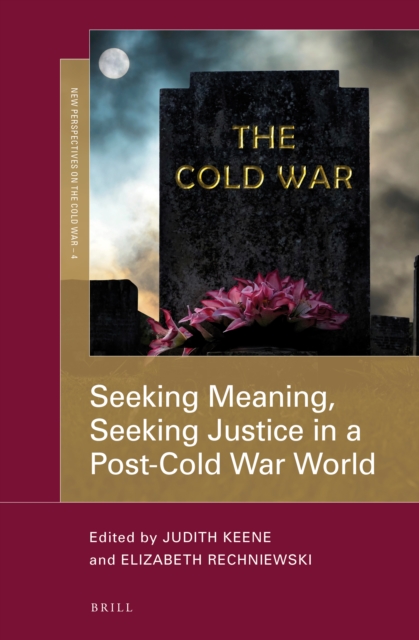
Seeking Meaning, Seeking Justice in a Post-Cold War World
Seeking Meaning, Seeking Justice in the Post-Cold War World, edited by Judith Keene and Elizabeth Rechniewski, addresses the diverse modes by which the Cold War is being re-assessed, with major focus on countries on the periphery of Cold War confrontation.
eBook

The Spanish International Brigadier as Veteran and Foreign Fighter
At the time of the Spanish Civil War much contemporary commentary about the International Brigades was consistent with the view that what was taking place on the Iberian Peninsula was part of a larger struggle between democracy and fascism. Sympathetic reporting highlighted their positive military contribution and the selfless sacrifices in what later was tagged as the ‘curtain-raiser’ to the Second World War. From the 1980s scholarship about these foreign fighters for the republic was framed quite differently. In these cases the volunteers’ war experiences tended to be placed within the contextual narratives of their own national groupings or were applied in relation to the impact of the returned veterans from Spain on the post-war politics in their own home states. In several current analyses of the civil wars in Afghanistan, Iraq and Syria, the unexamined historical figure of the Spanish International Brigadier has been utilised as a foil against which to catalogue the pernicious and destabilising role of foreign fighters in these on-going civil wars.
Journal Article


Cinema and Prosthetic Memory: The Case of the Korean War
This paper assesses the explanatory possibilities of the concept of prosthetic memory, with cinema as the enabler of popular understanding, when applied to the Korean War. The essay examines why it was that the conflict in Korea for many decades occupied a memory void and whether the explanations that have been offered for other similar “forgotten “wars are useful in relation to Korea. The analysis sugggests that cinema may be important in the formation of popular understanding but that there are serious analytical drawbacks in assuming that cinema can provide a window into popular mentalities.
Journal Article


Bodily Matters Above and Below Ground: The Treatment of American Remains from the Korean War
Throughout most of the twentieth century, depending on the capabilities of the military mortuary services and the time limits set by government, the bodies of the American fallen in foreign wars have been repatriated home to their families. In the Korean War the conditions of combat posed large challenges to the recovery and return of bodily remains. Almost half a century after that conflict, the American missing in Korea have become significant players within the government's expanding efforts that were prompted in answer to demands to locate American soldiers who remain unaccounted for from the Vietnam War. The essay traces the background to U.S. military mortuary services and the operation in the Korean War and in the subsequent joint expeditions in North Korea. The analysis concludes that in most of these ventures the outlay of resources has produced few remains.
Journal Article

LOST TO PUBLIC COMMEMORATION: AMERICAN VETERANS OF THE \FORGOTTEN\ KOREAN WAR
Although the Korean War is an important part of contemporary history, the American veterans of that conflict, until recently, have been rendered invisible in the national pantheon of war commemoration. This analysis identifies the conjunction of factors that caused those who supported the memorialization of the contribution of American veterans in other foreign conflicts to remain silent when confronted with the war in Korea. This essay argues that experience of these Korean War veterans offers a case study that can shed an important light on the paradigms that underpin current memory studies.
Journal Article


Fighting for Franco : international volunteers in nationalist Spain during the Spanish Civil War, 1936-39
One of the enduring myths of the Franco state was that the Nationalist forces that won the Civil War consisted of patriotic Spaniards while the Republic was defended by a rag tag army of foreign 'reds.' During the Spanish Civil War, however, many groups on the European right were galvanised by the Nationalist cause. European fascists, conservative Catholics and those uneasy with liberal democracy in general rallied to the figure of Franco, who appeared to be holding the line against secularism, modernism and Bolshevism. This book recounts the experiences of a number of foreign volunteers, including the brigades of White Russians, Romanians, Irish and the French volunteers in the Jeanne d'Arc battalion, all of whom saw their engagement in Spain as a means of promoting their own political causes at home. There were also individual women and men, from the New World and the Old, who were moved by religion, politics or simply adventurism to join up with Franco. The book reconstructs their motivation and the mindset which took them to Spain. It thus casts a new light on Nationalist Spain and on the specific concerns of a wide variety of right-wing movements between the wars.
eBook