
Catalogue Search | MBRL


Are you sure you want to remove the book from the shelf?

{{itemTitle}}
49
result(s) for
"Keens, Thomas G."
Sort by:
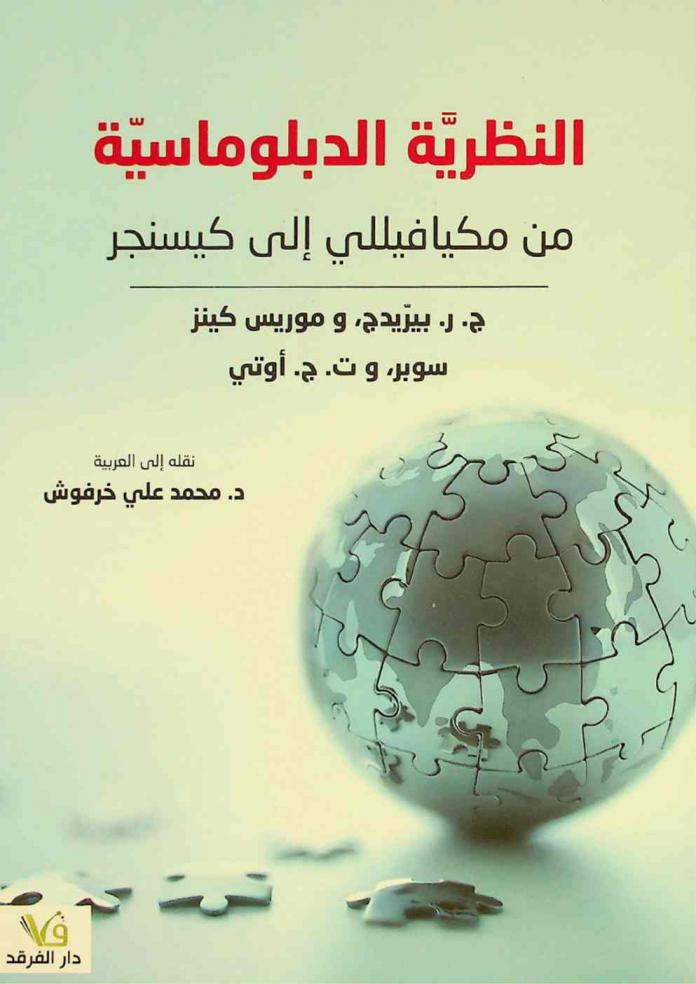
النظرية الدبلوماسية من مكيافيللي إلى كيسنجر
لقد كرست الدبلوماسية الرسمية تقاليد عمل وأعراف وأفكار ومفاهيم ونظريات غنية، وعرفت مفكرين في هذا الحقل تركوا بصماتهم على هذا الفن في إدارة العلاقات بين الدول. يؤرخ هذا الكتاب للمفكرين في هذا الحقل بدءا ب مكيافيللي مرورا بـ جوتشيارديني وغروتيوس ورتشيليو وويكيفورت وغالييه وساتاو ونيكلسون، وانتهاء ب كيسينجر. مرحلة تشغل نحو ست مئة عام ربما هي الأغنى في تاريخ البشرية.
Book

Benign and Deleterious Cystic Fibrosis Transmembrane Conductance Regulator Mutations Identified by Sequencing in Positive Cystic Fibrosis Newborn Screen Children from California
Of the 2007 Cystic Fibrosis Transmembrane Conductance Regulator (CFTR) mutations, 202 have been assigned disease liability. California's racially diverse population, along with CFTR sequencing as part of newborn screening model, provides the opportunity to examine the phenotypes of children with uncategorized mutations to help inform disease liability and penetrance.
We conducted a retrospective cohort study based on children screened from 2007 to 2011 and followed for two to six years. Newborns that screened positive were divided into three genotype groups: those with two CF-causing mutations (CF-C); those with one mutation of varying clinic consequence (VCC); and those with one mutation of unknown disease liability (Unknown). Sweat chloride tests, pancreatic sufficiency status, and Pseudomonas aeruginosa colonization were compared.
Children with two CF-causing mutations had a classical CF phenotype, while 5% of VCC (4/78) and 11% of Unknown (27/244) met diagnostic criteria of CF. Children carrying Unknown mutations 2215insG with D836Y, and T1036N had early and classical CF phenotype, while others carrying 1525-42G>A, L320V, L967S, R170H, and 296+28A>G had a benign clinical presentation, suggesting that these are non-CF causing.
While most infants with VCC and Unknown CFTR mutations do not meet diagnostic criteria for CF, a small proportion do. These findings highlight the range of genotypes and phenotypes in the first few years of life following CF newborn screening when CFTR sequencing is performed.
Journal Article

An Official ATS Clinical Policy Statement: Congenital Central Hypoventilation Syndrome
Congenital central hypoventilation syndrome (CCHS) is characterized by alveolar hypoventilation and autonomic dysregulation.
(1) To demonstrate the importance of PHOX2B testing in diagnosing and treating patients with CCHS, (2) to summarize recent advances in understanding how mutations in the PHOX2B gene lead to the CCHS phenotype, and (3) to provide an update on recommendations for diagnosis and treatment of patients with CCHS.
Committee members were invited on the basis of their expertise in CCHS and asked to review the current state of the science by independently completing literature searches. Consensus on recommendations was reached by agreement among members of the Committee.
A review of pertinent literature allowed for the development of a document that summarizes recent advances in understanding CCHS and expert interpretation of the evidence for management of affected patients.
A PHOX2B mutation is required to confirm the diagnosis of CCHS. Knowledge of the specific PHOX2B mutation aids in anticipating the CCHS phenotype severity. Parents of patients with CCHS should be tested for PHOX2B mutations. Maintaining a high index of suspicion in cases of unexplained alveolar hypoventilation will likely identify a higher incidence of milder cases of CCHS. Recommended management options aimed toward maximizing safety and optimizing neurocognitive outcome include: (1) biannual then annual in-hospital comprehensive evaluation with (i) physiologic studies during awake and asleep states to assess ventilatory needs during varying levels of activity and concentration, in all stages of sleep, with spontaneous breathing, and with artificial ventilation, and to assess ventilatory responsiveness to physiologic challenges while awake and asleep, (ii) 72-hour Holter monitoring, (iii) echocardiogram, (iv) evaluation of ANS dysregulation across all organ systems affected by the ANS, and (v) formal neurocognitive assessment; (2) barium enema or manometry and/or full thickness rectal biopsy for patients with a history of constipation; and (3) imaging for neural crest tumors in individuals at greatest risk based on PHOX2B mutation.
Journal Article

Life-threatening cardiac arrhythmias in congenital central hypoventilation syndrome
Congenital central hypoventilation syndrome (CCHS) patients are at risk for life-threatening cardiac arrhythmias, and presentation is dependent on their PHOX2B gene mutation. We describe the presentation of life-threatening arrhythmias in our cohort of CCHS patients. We reviewed the records of 72 CCHS patients seen at CHLA from 2004 to 2018. Data collected included demographics, PHOX2B genotype, ventilatory support, clinical symptoms, ambulatory cardiac monitoring results, and presence of cardiac pacemaker. Sixteen of 72 patients had evidence of potential life-threatening cardiac arrhythmias. PHOX2B genotypes were 20/25 polyalanine repeat expansion mutation (PARM), 20/26 PARM, 20/27 PARM, 20/32 PARM, and c.245C > T non-polyalanine repeat mutation. 11/16 patients were ventilated during sleep only. Symptoms included syncope, dizziness, chest pain, tingling in the left arm, and palpitations. 15/16 patients had recorded ambulatory cardiac monitoring. 5/16 patients were symptomatic without significant sinus pauses. 12/16 patients had implantation of cardiac pacemakers. 9/12 had significant sinus pauses on ambulatory monitoring, and 7/12 patients were symptomatic.Conclusion: CCHS patients have potential life-threatening arrhythmias requiring cardiac pacemaker implantation. Many of these patients are symptomatic with significant sinus pauses on ambulatory monitoring. However, some symptomatic patients with no significant pauses on ambulatory monitoring may still require cardiac pacemaker implantation.What is Known:• CCHS patients are at risk for life-threatening sinus pauses and require cardiac pacemaker implantation.What is New:• CCHS patients regardless of PHOX2B genotype are at risk for significant sinus pauses. Many CCHS patients with significant sinus pause on ambulatory cardiac monitoring are symptomatic and most present with syncope. Some symptomatic patients do not have significant sinus pauses but may still require cardiac pacemaker implantation.
Journal Article
Hirschsprung disease and other gastrointestinal motility disorders in patients with CCHS
Congenital central hypoventilation syndrome (CCHS) is an autonomic nervous system dysfunction due to PHOX2B gene mutation. Little is known about gastrointestinal motility disorders in CCHS patients. This study aims to describe the spectrum of gastrointestinal motility disorders in CCHS and provide PHOX2B genotype-phenotype correlation with Hirschsprung Disease (HD). We reviewed the records of 72 CCHS patients seen at Children’s Hospital Los Angeles from 1999 to 2019. Data collected included demographics, PHOX2B genotype, ventilator dependence, medical and surgical history, and gastrointestinal motility studies. Of the 72 patients, 31% had HD, 50% females, and 60% had 20/27 PARM. Rectosigmoid HD formed 73% of the cases whereas long segment (up to splenic flexure involvement) forms represented 23%. Four patients had total colonic aganglionosis, including one patient with 20/25 PARM genotype. One HD patient was identified with colonic myopathy in the residual segment. One patient was found to have achalasia type 1.Conclusion: Nearly one third of our CCHS patients had HD. Although most had 20/27 PARM, 2 patients had 20/25 PARM. Thus, CCHS patients with constipation are at risk for HD regardless of genotype. Colonic myopathy may coexist in treated HD with refractory constipation. Achalasia may occur in patients with CCHS.What is Known:• Patients with CCHS have motility disorders and present with esophageal dysmotility and constipation as a manifestation of their autonomic nervous system dysfunction.• About 20% of patients with CCHS have Hirschsprung disease and previously described to be associated with NPARM and 20/27 PARM genotype.What is New:• Thirty-one percent of CCHS patients in our series have Hirschsprung disease (HD).• HD, including the more severe total colonic aganglionosis was found in a patient with 20/25 PARM genotype suggesting that CCHS patients with constipation should be screened for HD regardless of genotype.
Journal Article

The genetics of congenital central hypoventilation syndrome: clinical implications
Congenital central hypoventilation syndrome (CCHS) is a rare genetic disorder of the autonomic nervous system (ANS) and respiratory control. This disorder, formerly referred to as Ondine's curse, is due to a mutation in the
gene that affects the development of the neural crest cells. CCHS has an autosomal dominant pattern of inheritance. Majority of the patients have a polyalanine repeat mutation (PARM) of the
, while a small group has non-PARM (NPARM). Knowledge of the patient's
gene mutation helps predict a patient's clinical presentation and outcome and aids in anticipatory management of the respiratory and ANS dysfunction.
Journal Article
Sleep in Infants
How should my baby be sleeping? * Think S.A.F.E! (Supine-Alone-Firm Mattress-Empty Crib) * It is recommended that all infants younger than 12 months of age sleep on their back (supine) to decrease the risk of Sudden Infant Death Syndrome (SIDS). Supervised tummy time while awake is recommended to help motor development and decrease the chance of a flat spot on the head. * Babies should sleep alone in a crib or bassinette in their parents' room. * Babies should sleep on a firm surface. Avoid loose blankets in the crib. * Avoid head coverings such as hats to prevent overheating. * Do not use sitting devices such as car seats or strollers for routine sleep. Healthcare Provider's Contact Number: Resources American Thoracic Society www.thoracic.org/patients Healthy Children.org from the American Academy of Pediatrics (AAP) www.healthychildren.org Sleep Education-American Academy of Sleep Medicine www.sleepeducation.org This information is a public service of the American Thoracic Society.
Journal Article
Correction to: Life-threatening cardiac arrhythmias in congenital central hypoventilation syndrome
The publisher regrets that in the original published version of this article, one of the author’s name was incorrectly presented as “Yaniv Bar Cohen”. The correct presentation should have been “Yaniv Bar-Cohen” and is now presented correctly in this article.
Journal Article

Children with Congenital Central Hypoventilation Syndrome Do Not Wake up to Ventilator Alarms
PurposeCongenital Central Hypoventilation Syndrome (CCHS) requires lifelong ventilatory support during sleep. Subjects with CCHS are vulnerable to sleep disturbances associated with treatments, monitoring alarms, and care they receive. We hypothesized that sleep would be disrupted in patients with CCHS due to ventilatory support and other treatments at night.MethodsAn anonymous survey of patients with CCHS, age up to 17 years was conducted through REDCAP. Subjects were recruited in person, by flyer, email, and social media. Data collected included demographics, PHOX2B genotype, ventilatory support, treatments, nursing, and sleep parameters.ResultsWe received 23 responses (35% female, 8.1 years ± 5.6). PHOX2B genotypes were 20/24 PARM (2), 20/25 PARM (4), 20/26 PARM (2), 20/27 PARM (9), ≥ 20/28 PARM (2), and NPARM (2). Two subjects did not indicate the PHOX2B genotype. 13/23 were ventilated by PPV via tracheostomy, 7 by NIPPV, 2 by diaphragm pacing, and 1 did not indicate. Additional treatments received at night included suctioning (9), aerosol (1), G-tube feeding (2), and none (11). Only 9 received nursing at night. 13 used pulse oximetry for monitoring, and 9 used both pulse oximetry and end tidal CO2 monitor. 17/23 rarely woke up due to ventilator or monitor alarms. 11/23 usually or sometimes woke up at least once a night; only 2/11 woke up due to alarms. 5/17 who rarely woke up to the alarms had night nursing.ConclusionMost subjects with CCHS did not awaken to ventilator or monitoring alarms and a majority of these patients did not have nighttime nursing. (Mathur et al. in Sleep 43(Supplement_1):A333, 2020)
Journal Article

Transitional care and clinical management of adolescents, young adults, and suspected new adult patients with congenital central hypoventilation syndrome
Purpose
With contemporaneous advances in congenital central hypoventilation syndrome (CCHS), recognition, confirmatory diagnostics with
PHOX2B
genetic testing, and conservative management to reduce the risk of early morbidity and mortality, the prevalence of identified adolescents and young adults with CCHS and later-onset (LO-) CCHS has increased. Accordingly, there is heightened awareness and need for transitional care of these patients from pediatric medicine into a multidisciplinary adult medical team. Hence, this review summarizes key clinical and management considerations for patients with CCHS and LO-CCHS and emphasizes topics of particular importance for this demographic.
Methods
We performed a systematic review of literature on diagnostics, pathophysiology, and clinical management in CCHS and LO-CCHS, and supplemented the review with anecdotal but extensive experiences from large academic pediatric centers with expertise in CCHS.
Results
We summarized our findings topically for an overview of the medical care in CCHS and LO-CCHS specifically applicable to adolescents and adults. Care topics include genetic and embryologic basis of the disease, clinical presentation, management, variability in autonomic nervous system dysfunction, and clarity regarding transitional care with unique considerations such as living independently, family planning, exposure to anesthesia, and alcohol and drug use.
Conclusions
While a lack of experience and evidence exists in the care of adults with CCHS and LO-CCHS, a review of the relevant literature and expert consensus provides guidance for transitional care areas.
Journal Article