
Catalogue Search | MBRL


Are you sure you want to remove the book from the shelf?

{{itemTitle}}
32,283
result(s) for
"Kelleher, A"
Sort by:

Customer experience for dummies
You know that creating an engaging customer experience is essential to keep your company relevant and top of mind. Barnes and Kelleher offer practical, easy-to-implement solutions for incorporating customer engagement into your business plans to attract loyal, happy customers.
Book

Monthly river temperature trends across the US confound annual changes
Climate variations and human modifications of the water cycle continue to alter the Earth’s surface water and energy exchanges. It is therefore critical to ascertain how these changes impact water quality and aquatic ecosystem habitat metrics such as river temperatures. Though river temperature trend analyses exist in the literature, studies on seasonal trends in river temperatures across large spatial extents, e.g. the contiguous United States (US), are limited. As we show through both annual and monthly trend analyses for 20 year (
n
= 138 sites) and 40 year (
n
= 40 sites) periods, annual temperature trends across the US mask extensive monthly variability. While most sites exhibited annual warming trends, these annual trends obscured sub-annual cooling trends at many sites. Monthly trend anomalies were spatially organized, with persistent regional patterns at both reference and human-impacted sites. The largest warming and cooling anomalies happened at human impacted sites and during summer months. Though our analysis points to coherence in trends as well as the overall impact of human activity in driving these patterns, we did not investigate the impact of river temperature observation accuracy on reported trends, an area needed for future work. Overall, these patterns emphasize the need to consider sub-annual behavior when managing the ecological impacts of river temperature throughout lotic networks.
Journal Article
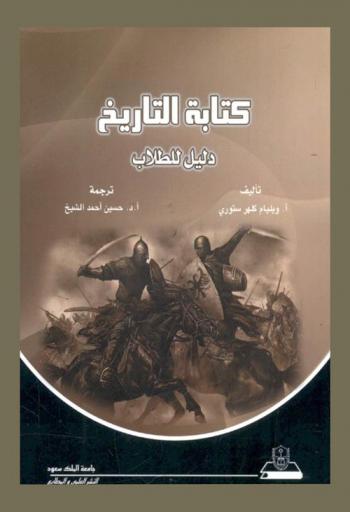
كتابة التاريخ : دليل للطلاب
يقدم لنا الكتاب الذي بين يدينا تحديات حول كتابة التاريخ، إنه يتجاوز مجرد الإرشادات فقط وينطلق ليوضح لك كيف يختار المؤرخ الموضوعات التاريخية التي يكتبها ؟ وكيف يحلل مصادره ؟ ويكيف يشكل أطروحته ؟ يمكنك أن تقول أن هذا الكتاب يقدم لك بالخطوات التفصيلية طريقة عمل المؤرخين والمراحل التي يمرون بها والمحاور التي يركزون عليها، من أبرز المحاور التي يركز الكتاب عليها : تفسير المصادر المرجعية، كتابة التاريخ بإخلاص، استخدام المصادر لتكوين الاستنتاجات، بداية الكتابة، صناعة الحجة، تفنية السرد عند المؤرخين، كتابة الجمل التاريخية، اختيار كلمات دقيقة، المراجعة والتحرير.
BOOK

Impact of rising temperatures on the bacterial communities of Aphaenogaster ants
Studies have shown that biodiversity will be impacted by global climate change, with the effect on ants just beginning to be documented. The influence on ant symbiotic bacterial communities remains understudied. Aphaenogaster Mayr, 1853, are seed-dispersing ants in deciduous forests and their bacterial communities have just been uncovered; however, much is unknown. We aim to determine the impact that warming temperatures will have on Aphaenogaster survival and on their bacterial communities. Ants from four colonies were collected from West Chester, PA, USA and entire colonies were subjected to a control temperature (22°C). After 6-12 months, the same colonies were subjected to an experimental temperature (32°C). DNA was then extracted from ants of all development stages and the 16S rRNA gene was amplified and sequenced following the NGS amplicon approach. The findings revealed that Aphaenogaster ant mortality rates increased, and their symbiotic bacterial communities changed in warmer temperatures. This resulted in a decrease in the presence of Wolbachia spp. and an increase in the presence of Corynebacterium sp. This study reveals important information about the impact of warming temperature on Aphaenogaster ants, and we suggest methods to help protect these ants and other insects in the future.
Journal Article

Effects of a Telephone- and Web-based Coping Skills Training Program Compared with an Education Program for Survivors of Critical Illness and Their Family Members. A Randomized Clinical Trial
Many survivors of critical illness and their family members experience significant psychological distress after patient discharge.
To compare the effects of a coping skills training (CST) program with an education program on patient and family psychological distress.
In this five-center clinical trial, adult patients who received mechanical ventilation for more than 48 hours and one family member of each patient were randomized to six weekly CST telephone sessions plus access to a study website or a critical illness education program.
The primary outcome was the patient Hospital Anxiety and Depression Scale (HADS) score at 3 months. Secondary outcomes included 3- and 6-month HADS subscales and the Impact of Events Scale-Revised. Among the 175 patients randomized to CST (n = 86) or education (n = 89), there was no significant difference between CST and education in either 3-month HADS scores (difference, 1.3; 95% confidence interval [CI], -0.9 to 3.4; P = 0.24) or secondary patient and family outcomes. In prespecified analyses, among patients with high baseline distress (n = 60), CST recipients had greater improvement in 6-month HADS score (difference, -4.6; 95% CI, -8.6 to -0.6; P = 0.02) than the education group. Among patients ventilated longer than 7 days (n = 47), education recipients had greater improvement in 3-month HADS score (difference, -4.0; 95% CI, -8.1 to -0.05; P = 0.047) than the CST group.
CST did not improve psychological distress symptoms compared with an education program. However, CST improved symptoms of distress at 6 months among patients with high baseline distress, whereas the education program improved distress at 3 months among those ventilated for more than 7 days. Future efforts to address psychological distress among critical illness survivors should target high-risk populations. Clinical trial registered with www.clinicaltrials.gov (NCT01983254).
Journal Article

Membrane inflammasome activation by choriodecidual Ureaplasma parvum infection without intra-amniotic infection in a Non-Human Primate model
Intrauterine infection is a significant cause of neonatal morbidity and mortality. Ureaplasma parvum is a microorganism commonly isolated from cases of preterm birth and preterm premature rupture of membranes (pPROM). However, the mechanisms of early stage ascending reproductive tract infection remain poorly understood. To examine inflammation in fetal (chorioamnionic) membranes we utilized a non-human primate (NHP) model of choriodecidual U. parvum infection. Eight chronically catheterized pregnant rhesus macaques underwent maternal–fetal catheterization surgery at ∼105–112 days gestation and choriodecidual inoculation with U. parvum (105 CFU/mL, n=4) or sterile media (controls; n= 4) starting at 115–119 days, repeated at 5-day intervals until C-section at 136–140 days (term=167 days). The average inoculation to delivery interval was 21 days, and Ureaplasma infection of the amniotic fluid (AF) was undetectable in all animals. Choriodecidual Ureaplasma infection resulted in increased fetal membrane expression of MMP-9 and PTGS2, but did not result in preterm labor or increased concentrations of AF pro-inflammatory cytokines. However, membrane expression of inflammasome sensors, NLRP3, NLRC4, AIM2, and NOD2, and adaptor ASC (PYCARD) gene expression were significantly increased. Gene expression of IL-1β, IL-18, IL-18R1, CASPASE-1, and pro-CASPASE-1 protein increased with Ureaplasma infection. Downstream inflammatory genes MYD88 and NFκB (Nuclear factor kappa-light-chain-enhancer of activated B cells) were also significantly upregulated. These results demonstrate that choriodecidual Ureaplasma infection, can cause activation of inflammasome complexes and pathways associated with pPROM and preterm labor prior to microbes being detectable in the AF. Summary Sentence Choriodecidual Ureaplasma infection results in activation of inflammasome signaling and pathways associated with preterm labor and pPROM prior to microbial invasion of the amniotic cavity.
Journal Article

Resist diabetes: A randomized clinical trial for resistance training maintenance in adults with prediabetes
To determine whether a social cognitive theory (SCT)-based intervention improves resistance training (RT) maintenance and strength, and reduces prediabetes prevalence.
Sedentary, overweight/obese (BMI: 25-39.9 kg/m2) adults aged 50-69 (N = 170) with prediabetes participated in the 15-month trial. Participants completed a supervised 3-month RT (2×/wk) phase and were randomly assigned (N = 159) to one of two 6-month maintenance conditions: SCT or standard care. Participants continued RT at a self-selected facility. The final 6-month period involved no contact. Assessments occurred at baseline and months 3, 9, and 15. The SCT faded-contact intervention consisted of nine tailored transition (i.e., supervised training to training alone) and nine follow-up sessions. Standard care involved six generic follow-up sessions. Primary outcomes were prevalence of normoglycemia and muscular strength.
The retention rate was 76%. Four serious adverse events were reported. After 3 months of RT, 34% of participants were no longer prediabetic. This prevalence of normoglycemia was maintained through month 15 (30%), with no group difference. There was an 18% increase in the odds of being normoglycemic for each % increase in fat-free mass. Increases in muscular strength were evident at month 3 and maintained through month 15 (P<0.001), which represented improvements of 21% and 14% for chest and leg press, respectively. Results did not demonstrate a greater reduction in prediabetes prevalence in the SCT condition.
Resistance training is an effective, maintainable strategy for reducing prediabetes prevalence and increasing muscular strength. Future research which promotes RT initiation and maintenance in clinical and community settings is warranted.
ClinicalTrials.gov NCT01112709.
Journal Article

An mHealth Pain Coping Skills Training Intervention for Hematopoietic Stem Cell Transplantation Patients: Development and Pilot Randomized Controlled Trial
Pain is a challenge for patients following hematopoietic stem cell transplantation (HCT).
This study aimed to develop and test the feasibility, acceptability, and initial efficacy of a Web-based mobile pain coping skills training (mPCST) protocol designed to address the needs of HCT patients.
Participants had undergone HCT and reported pain following transplant (N=68). To guide intervention development, qualitative data were collected from focus group participants (n=25) and participants who completed user testing (n=7). After their input was integrated into the mPCST intervention, a pilot randomized controlled trial (RCT, n=36) was conducted to examine the feasibility, acceptability, and initial efficacy of the intervention. Measures of acceptability, pain severity, pain disability, pain self-efficacy, fatigue, and physical disability (self-report and 2-min walk test [2MWT]) were collected.
Participants in the focus groups and user testing provided qualitative data that were used to iteratively refine the mPCST protocol. Focus group qualitative data included participants' experiences with pain following transplant, perspectives on ways to cope with pain, and suggestions for pain management for other HCT patients. User testing participants provided feedback on the HCT protocol and information on the use of videoconferencing. The final version of the mPCST intervention was designed to bridge the intensive outpatient (1 in-person session) and home settings (5 videoconferencing sessions). A key component of the intervention was a website that provided personalized messages based on daily assessments of pain and activity. The website also provided intervention materials (ie, electronic handouts, short videos, and audio files). The intervention content included pain coping advice from other transplant patients and instructions on how to apply pain coping skills while engaging in meaningful and leisure activities. In the RCT phase of this research, HCT patients (n=36) were randomized to receive the mPCST intervention or to proceed with the treatment as usual. Results revealed that the mPCST participants completed an average of 5 out of 6 sessions. The participants reported that the intervention was highly acceptable (mean 3/4), and they found the sessions to be helpful (mean 8/10) and easy to understand (mean 7/7). The mPCST participants demonstrated significant improvements in pre- to post-treatment pain, self-efficacy (P=.03, d=0.61), and on the 2MWT (P=.03, d=0.66), whereas the patients in the treatment-as-usual group did not report any such improvements. Significant changes in pain disability and fatigue were found in both groups (multiple P<.02); the magnitudes of the effect sizes were larger for the mPCST group than for the control group (pain disability: d=0.79 vs 0.69; fatigue: d=0.94 vs 0.81). There were no significant changes in pain severity in either group.
Using focus groups and user testing, we developed an mPCST protocol that was feasible, acceptable, and beneficial for HCT patients with pain.
ClinicalTrials.gov NCT01984671; https://clinicaltrials.gov/ct2/show/NCT01984671 (Archived by WebCite at http://www.webcitation.org/6xbpx3clZ).
Journal Article

Mucosal IL-4R antagonist HIV vaccination with SOSIP-gp140 booster can induce high-quality cytotoxic CD4+/CD8+ T cells and humoral responses in macaques
Inducing humoral, cellular and mucosal immunity is likely to improve the effectiveness of HIV-1 vaccine strategies. Here, we tested a vaccine regimen in pigtail macaques using an intranasal (i.n.) recombinant Fowl Pox Virus (FPV)-
gag pol env
-IL-4R antagonist prime, intramuscular (i.m.) recombinant Modified Vaccinia Ankara Virus (MVA)-
gag pol
-IL-4R antagonist boost followed by an i.m SOSIP-gp140 boost. The viral vector—expressed IL-4R antagonist transiently inhibited IL-4/IL-13 signalling at the vaccination site. The SOSIP booster not only induced gp140-specific IgG, ADCC (antibody-dependent cellular cytotoxicity) and some neutralisation activity, but also bolstered the HIV-specific cellular and humoral responses. Specifically, superior sustained systemic and mucosal HIV Gag-specific poly-functional/cytotoxic CD4
+
and CD8
+
T cells were detected with the IL-4R antagonist adjuvanted strategy compared to the unadjuvanted control. In the systemic compartment elevated Granzyme K expression was linked to CD4
+
T cells, whilst Granzyme B/TIA-1 to CD8
+
T cells. In contrast, the cytotoxic marker expression by mucosal CD4
+
and CD8
+
T cells differed according to the mucosal compartment. This vector-based mucosal IL-4R antagonist/SOSIP booster strategy, which promotes cytotoxic mucosal CD4
+
T cells at the first line of defence, and cytotoxic CD4
+
and CD8
+
T cells plus functional antibodies in the blood, may prove valuable in combating mucosal infection with HIV-1 and warrants further investigation.
Journal Article

Proton spin structure and generalized polarizabilities in the strong quantum chromodynamics regime
The strong interaction is not well understood at low energies or for interactions with low momentum transfer. Chiral perturbation theory gives testable predictions for the nucleonic generalized polarizabilities, which are fundamental quantities describing the nucleon’s response to an external field. We report a measurement of the proton’s generalized spin polarizabilities extracted with a polarized electron beam and a polarized solid ammonia target in the region where chiral perturbation theory is expected to be valid. The investigated structure function
g
2
characterizes the internal spin structure of the proton. From its moments, we extract the longitudinal–transverse spin polarizability
δ
LT
and twist-3 matrix element and polarizability
d
2
¯
. Our results provide discriminating power between existing chiral perturbation theory calculations and will help provide a better understanding of this strong quantum chromodynamics regime.
Measurements of the proton’s generalized spin polarizabilities provide discriminating power between effective descriptions of the strong interaction at low energy.
Journal Article