
Catalogue Search | MBRL


Are you sure you want to remove the book from the shelf?

{{itemTitle}}
44
result(s) for
"Kelly, Michael, editor"
Sort by:


In from the Cold
Open hostilities in the Korean War ended on the 27th of July 1953. The armistice that was signed at that time remains the poignant symbol of an incomplete conclusion – of a war that retains a distinct possibility of resuming at short notice. So what did Australia contribute to the Korean War from June 1950 to July 1953? What were the Australians doing there? How significant was the contribution and what difference did it make? What has that meant for Australia since then, and what might that mean for Australia into the future? Australians served at sea, on land and in the air alongside their United Nations partners during the war. They fought with distinction, from bitterly cold mountain tops, to the frozen decks of aircraft carriers and in dogfights overhead. This book includes the perspectives of leading academics, practitioners and veterans contributing fresh ideas on the conduct and legacy of the Korean War. International perspectives from allies and adversaries provide contrasting counterpoints that help create a more nuanced understanding of Australia’s relatively small but nonetheless important contribution of forces in the Korean War. The book finishes with some reflections on implications that the Korean War still carries for Australia and the world to this day.
eBook

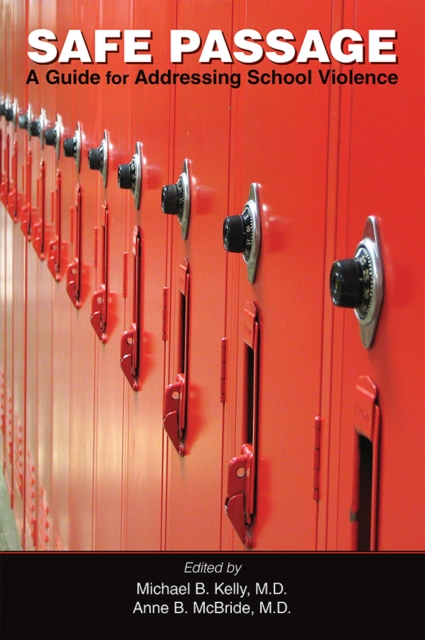
Safe Passage
Safe Passage: A Guide to Addressing School Violence offers expert perspectives and guidance in understanding, assessing, and addressing school violence. Although the book is designed for child and adolescent forensic psychiatrists and psychologists seeking proficiency in youth violence risk assessment, educators, school administrators, mental health clinicians, other health care professionals who work with children, and interested laypersons will also find the book both practical and illuminating. The editors' approach to school violence is informed by their educational, scholarly, clinical, and forensic work with children and adults who have been disenfranchised through the cumulative effects of poverty, trauma, untreated mental illness, and inadequate access to education. This background has fostered a sensitivity to and understanding of critically important developmental factors that can be passed on generationally, which are explored in depth in the volume. Case vignettes and follow-ups are used liberally to illustrate and illuminate the range of violent situations (e.g., bullying, cyberbullying, gang violence, sexual violence) likely to be encountered, as well as the advantages and disadvantages inherent in various interventions. The authors stress that threat assessment must take individual, school, and community variables into account, a complex but necessary task for mental health professionals and educators who wish to safeguard individuals and society from harm. This book provides a road map for understanding and addressing violence of all kinds in the school environment: • The subtyping of aggression is thoroughly explored, with special focus on reward-seeking behaviors and the development of impulse control in adolescents. • Identifying students at risk for violence or abuse at home is of critical importance. The chapter on danger at home teaches the reader to recognize trauma symptoms and examines the necessary steps toward establishing a trauma-informed or trauma-sensitive school environment.• In violence risk assessment, every student is evaluated in relation to static risk factors (historical variables that cannot be changed), dynamic risk factors (risk factors that are amenable to change) and protective factors. The authors emphasize that violence risk is characterized along a continuum rather than in binary fashion.• Case law is cited where relevant throughout the book, providing context for the evolution of school policies toward violence.• Key points and clinical pearls at the end of each chapter provide convenient summaries of information and help the reader focus on the most important ideas. Compassionate and comprehensive, Safe Passage: A Guide to Addressing School Violence introduces readers to important concepts pertaining to school violence and serves as a practical guide for mitigating and preventing violence in our schools.
eBook

The Cuba-U.S. bilateral relationship : new pathways and policy choices
\"This book brings together experts from across three disciplines--politics, economics, and law--to address the key issues that affect Cuba-U.S. bilateral relations today. The chapters identify the opportunities and challenges presented to both nations in each of their respective disciplines while staking out what the future may hold\"-- Provided by publisher.
Book

Youth Sport and Spirituality
A collection of essays on the spiritually formative aspects of youth sports, that blends history, theology, spiritual reflection, and cultural commentary to examine how playing sports can foster personal growth for young people.
eBook


Justice Outsourced
Nonjudicial officers (NJOs) permeate the criminal justice and the forensic mental health systems in hidden ways. But what are the impact and consequences of non-lawyers and non- \"real judges\" hearing cases? Across the nation, numerous cases are outsourced to administrative and other NJOs to decide issues ranging from family court cases involving custody disputes and foster care, to alcohol, substance abuse, as well as mental health and institutionalization issues. Moreover, NJOs may also deal with probation sentencing, conditions of confinement, release restrictions, and even capital punishment. The editors and contributors to the indispensable Justice Outsourced examine the hidden role of these non-judicial officers in the courtroom and administrative settings, as well as the ethical and practical considerations of using NJOs. Written from the perspective of therapeutic jurisprudence by judges, criminologists, lawyers, law professors, psychologists, and sociologists, this volume provides a much-needed wake-up call that emphasizes why the removal of a judge weakens a defendant's rights and dignity and corrupts the administration of justice. However, Justice Outsourced also suggests effective employments of NJOs, revealing the potential of therapeutic principles and procedures to enhance the practical knowledge supplied by nonjudicial decision-makers.
eBook

Medieval warfare : a reader
\"Medieval Warfare: A Reader examines how armed conflict was experienced in the Middle Ages both on the field of battle and at home. This comprehensive collection of primary source materials some translated here for the first time traces over one thousand years of military developments including the fall of Rome, the fight for Jerusalem, the building of castles and other fortifications, the rise of gunpowder, and the negotiation of treaties. Curated by two of the leading experts in medieval military history, the readings in Medieval Warfare tell a story of terrors and tragedies, triumphs and technologies in the Middle Ages. Chronicles, poems, songs, and letters provide a comprehensive look not just at the waging of war but at the impact war had on society. By reclaiming the voices of victims and veterans that have previously been ignored, the editors stake out a powerful new perspective on the long history of military conflict and suffering.\"-- Provided by publisher.
Book
Democracy and National Identity in Thailand
This book seeks to illuminate how Thai elites have used democracy as an instrument for order and discipline. Drawing on interviews, numerous Thai language sources, and critical theory, the author reveals a remarkable adaptation of the idea of democracy in the Thai context. Connors shows how elites have drawn on Western political theory to design projects to create modern citizens. He argues that it is possible to see the idea and practice of elite liberal democracy in Thailand, and elsewhere, as a key ideological resource in the project of securing hegemony over undisciplined populations. In this perspective the ideas of civil society, civic virtue, social capital and democracy itself are all part of the weaponry deployed in an effort to create 'good citizens', who act as guardians of the elite defined common good.
eBook