
Catalogue Search | MBRL


Are you sure you want to remove the book from the shelf?

{{itemTitle}}
4
result(s) for
"Kennedy, Paul M., 1945- author"
Sort by:

Victory at Sea
A sweeping, lavishly illustrated one-volume history of the
rise of American naval power during World War II
\"A brilliant and gripping book by a master historian
working at the top of his powers.\"-Fredrik Logevall, Harvard
University \"Paul Kennedy has written a classic in
this sweeping narrative account of the desperate struggle to
command the seas and America's rise as a superpower during the
Second World War.\"-John H. Maurer, U.S. Naval War College
In this engaging narrative, brought to life by marine artist Ian
Marshall's beautiful full‑color paintings, historian Paul Kennedy
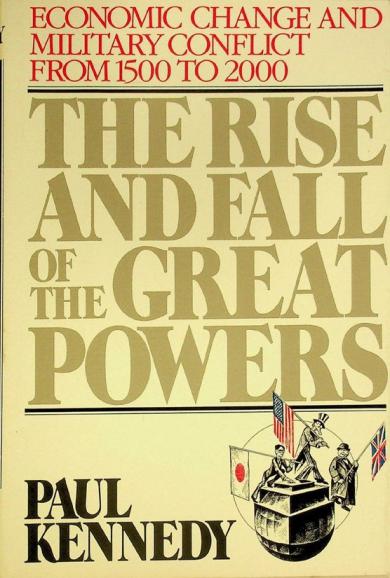
grapples with the rise and fall of the Great Powers during World
War II. Tracking the movements of the six major navies of the
Second World War-the allied navies of Britain, France, and the
United States and the Axis navies of Germany, Italy, and
Japan-Kennedy tells a story of naval battles, maritime campaigns,
convoys, amphibious landings, and strikes from the sea. From the
elimination of the Italian, German, and Japanese fleets and almost
all of the French fleet, to the end of the era of the big‑gunned
surface vessel, the advent of the atomic bomb, and the rise of an
American economic and military power larger than anything the world
had ever seen, Kennedy shows how the strategic landscape for naval
affairs was completely altered between 1936 and 1946.
eBook


The Samoan tangle : a study in Anglo-German-American relations, 1878-1900
When Hugh Laracy reviewed this book in The Journal of Pacific History in 1978 he rightly described it as the 'product of monumental research'. Exploring the diplomatic negotiations that led to the division of the Samoan Islands between Germany, Great Britain and the USA in 1899, it is a significant study of international relations between the three late nineteenth century super powers. The Pacific Islands were pawns in an international diplomatic chess game that involved Britain's early, but often unwilling, acquisition of Pacific territory; Germany's scramble to get its share to bolster its prestige and trading interests; and the USA's late, but insistent, demands for its place in the Pacific. What emerges in The Samoan Tangle is a detailed study of late nineteenth century international relations that reminds us how often the Pacific Islands have been used to satisfy great power plays on the other side of the globe.
eBook