
Catalogue Search | MBRL


Are you sure you want to remove the book from the shelf?

{{itemTitle}}
453
result(s) for
"Kenneth Pollack"
Sort by:

Armies of sand : the past, present, and future of Arab military effectiveness
Armies of Sand asks, 'why have Arab militaries fought so poorly in the modern era?' It examines the performance of over two-dozen Arab militaries from 1948 to 2017, and compares them to a half-dozen non-Arab militaries, to conclude that politics, economics, and culture all contributed to the past weakness of Arab armies.
Book

The Oil Thief of Baghdad: Understanding Saddam's Motives for Invading Iran
This article argues that Iraqi president Saddam Husayn's primary motive for invading Iran in 1980 was to seize the oil of Khuzestan Province. I look at all the evidence, much of which was either overlooked in previous treatments of the subject or was unavailable: Iraq's military moves,
Ba'th Party regime records, tapes of Saddam's conversations, declassified United States government documents, and interviews with Iraqi generals. Reasons previously offered, like the desire to spark a counterrevolution in Tehran or regain full control of the Shatt al-'Arab waterway, were secondary
or tertiary considerations, though played up for propaganda purposes.
Journal Article

Things Fall Apart: Containing the Spillover from an Iraqi Civil War
\"Iraq is rapidly descending into all-out civil war. Unfortunately, the United States probably will not be able to just walk away from the chaos. Even setting aside the humanitarian nightmare that will ensue, a full-scale civil war would likely consume more than Iraq: historically, such massive conflicts have often had highly deleterious effects on neighboring countries and other outside states. Spillover from an Iraq civil war could be disastrous.\" Thus begins this sobering analysis of what the near future of Iraq could look like, and what America can do to reduce the threat of wider conflict. Preventing spillover of the Iraqi conflict into neighboring states must be a top priority. In explaining how that can be accomplished, Daniel Byman and Kenneth Pollack draw on their own considerable expertise as well as relevant precedents. The authors scrutinize several recent civil wars, including Lebanon, Chechnya, Afghanistan, Kosovo, and Bosnia. After synthesizing those experiences into lessons on how civil wars affect other nations, Byman and Pollack draw from them to produce recommendations for U.S. policy. Even while the Bush Administration attempts to prevent further deterioration of the situation in Iraq, it needs to be planning how to deal with a full-scale civil war if one develops.
eBook


Let Us Now Praise Great Men: Bringing the Statesman Back In
This article analyzes the roles & impact of individual personalities in international relations. The article discusses how a state or region may be affected by the influence of one leader & what conditions present the greatest influence of an individual. The article dismisses the theories of political scientists who argue that one individual does not have the power to influence the history of the nation or world. The article discusses five historical situations that are seen in hindsight as resting on the existence & actions of a single individual. E. Miller
Journal Article
The Persian puzzle : the conflict between Iran and America
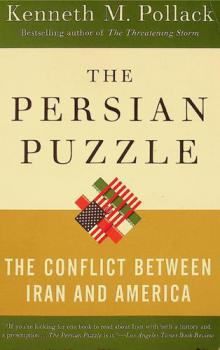
Pollack, a former CIA analyst and National Security Council official, analyzes the long and ongoing clash between the United States and Iran, beginning with the fall of the Shah and the seizure of the American embassy in Tehran in 1979. Pollack examines all the major events in U.S.-Iran relations--including the hostage crisis, the U.S. tilt toward Iraq during the Iran-Iraq war, the Iran-Contra scandal, military tensions in 1987 and 1988, the covert Iranian war against U.S. interests in the Persian Gulf that culminated in the 1996 Khobar Towers terrorist attack in Saudi Arabia, and recent U.S.-Iran skirmishes over Afghanistan and Iraq. He explains the strategies and motives from American and Iranian perspectives and tells how each crisis colored the thinking of both countries' leadership as they shaped and reshaped their policies over time.
Book

Training Better Arab Armies
US security force assistance missions to Arab partner states have had limited success, due in part to a tendency to impose American doctrine, which embodies American cultural values and norms, on Arab armed forces. Accordingly, US security force assistance missions should train Arab partners to fight in a manner better suited to their own cultural preferences and operational requirements.
Journal Article
استعادة التوازن : استراتيجية للشرق الأوسط برسم الرئيس الجديد
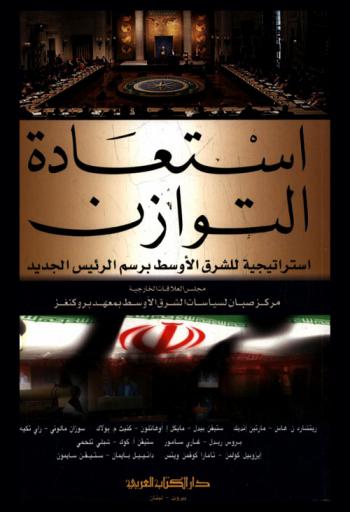
لا شك في أن الرئيس الرابع والأربعين للولايات المتحدة الأميركية سيجد في انتظاره سلسلة من التحديات الحاسمة، المعقدة والمتشابكة في الشرق الأوسط، التي تتطلب إيلاءها اهتماما عاجلا. ذلك أن النموذج الذي اعتمده جورج بدليو بوش القائم على تغيير أنظمة الحكم ونشر الديمقراطية بالقوة لم يعد يتلاءم والظروف المتغيرة التي ستواجه الإدارة الجديدة على الأرجح الحاجة ماسة إذن لأفكار جديدة، وتحليلات غير حزبية، وتوصيات حصيفة. والكتاب الذي بين أيديكم يفي بتلك الحاجة على أفضل وجه. في اتسعادة التوازن، تتضافر جهود الخبراء والمختصين بشؤون الشرق الأوسط من مجلس العلاقات الخارجية ومركز صبان لسياسة الشرق الأوسط بمعهد بروكنغز، لتطرح استراتيجية أميركية جديدة لمنظمة حيوية لكن متفجرة كالشرق الأوسط فبناء على أبحاث ميدانية معنقة، قام هؤلاء الخبراء ببلورة مجموعة من التوصيات السياسية برسم الرئيس الأميركي الجديد وقد قامت بفحصها وتمحيصها ونقدها هيئة من المختصين من كلا الحزبين يتمتعون بخبرة سياسية واسعة ومعرفة غنية بالمنطقة، هذا التمرين في تخطيط السياسات الذي استغرق سنة كاملة هو الأول من نوعه على الإطلاق، الذي يوحد جهود وقدرات العاملين في هاتين المؤسستين المحترمتين بالسياسة الخارجية لتنصب على درس وتحليل واحدة من أخطر وأهم مناطق العالم. وكل فصل من هذا الكتاب يستضيف اثنين أو أكثر من الباحثين في مجلس العلاقات الخارجية ومعهد بروكنغز لمعاينة واستعراض التحديات التي ستواجه الرئيس المقبل.
Book

Which Path to Persia?: Options for a New American Strategy toward Iran
Crafting a new policy toward Iran is a complicated, uncertain, and perilous challenge. Since it is an extremely complex society, with an opaque political system, it is no wonder that the United States has not yet figured out the puzzle that is Iran. With the clock ticking on Iran's pursuit of nuclear capabilities, solving this puzzle is more urgent than ever. In Which Path to Persia? a group of experts with the Saban Center for Middle East Policy at Brookings lays out the courses of action available to the United States. What are the benefits and drawbacks of airstrikes? Can engagement be successful? Is regime change possible? In answering such questions, the authors do not argue for one approach over another. Instead, they present the details of the policies so that readers can understand the complexity of the challenge and decide for themselves which course the United States should take.
eBook