
Catalogue Search | MBRL


Are you sure you want to remove the book from the shelf?

{{itemTitle}}
308
result(s) for
"Keppel, C."
Sort by:
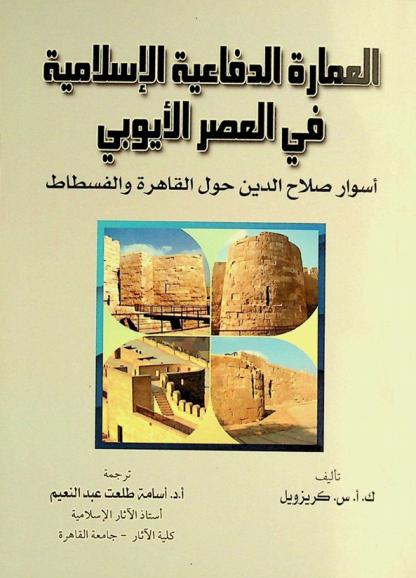
العمارة الدفاعية الإسلامية في العصر الأيوبي : أسوار صلاح الدين حول القاهرة والفسطاط /
هذا الكتاب يعد كتاب العمارة الإسلامية في مصر تأليف الأستاذ كريزويل مرجعا أساسيا للباحثين في العمارة الإسلامية خاصة في مصر، ونظرا لأهميته فقد قام علماء أجلاء بترجمة فصول منه إلى العربية، منهم د. عبدالرحمن فهمي الذي ترجم جزءا كبيرا من الفصل الثاني من الجزء الأول، ونشره تحت عنوان «قصة تأسيس القاهرة»، كما قام د. جمال محمد محرز بترجمة ما يتعلق بتاريخ وعمارة قلعة الجبل الفصل الأول والفصل الثاني بالجزء الثاني من الكتاب، ونشر تحت عنوان وصف قلعة الجبل». ثم نشر د. عبد الوهاب علوب بعد ذلك ترجمة الجزء الأول من الكتاب كاملا. وفي هذا الكتيب أقدم ترجمة للفصل الثالث بالجزء الثاني من هذا الكتاب، والذي جاء به تحت عنوان : أسوار صلاح الدين، وقصدت بهذا الجهد المتواضع أن أتم ترجمة ما جاء بالجزء الثاني من الكتاب المذكور عن العمارة الحربية.
Book

Determining the gluonic gravitational form factors of the proton
The proton is one of the main building blocks of all visible matter in the Universe
1
. Among its intrinsic properties are its electric charge, mass and spin
2
. These properties emerge from the complex dynamics of its fundamental constituents—quarks and gluons—described by the theory of quantum chromodynamics
3
–
5
. The electric charge and spin of protons, which are shared among the quarks, have been investigated previously using electron scattering
2
. An example is the highly precise measurement of the electric charge radius of the proton
6
. By contrast, little is known about the inner mass density of the proton, which is dominated by the energy carried by gluons. Gluons are hard to access using electron scattering because they do not carry an electromagnetic charge. Here we investigated the gravitational density of gluons using a small colour dipole, through the threshold photoproduction of the
J
/
ψ
particle. We determined the gluonic gravitational form factors of the proton
7
,
8
from our measurement. We used a variety of models
9
–
11
and determined, in all cases, a mass radius that is notably smaller than the electric charge radius. In some, but not all cases, depending on the model, the determined radius agrees well with first-principle predictions from lattice quantum chromodynamics
12
. This work paves the way for a deeper understanding of the salient role of gluons in providing gravitational mass to visible matter.
The gluonic gravitational form factor of the proton was determined using various models, and these analyses showed that the mass radius of the proton was smaller than the electric charge radius.
Journal Article
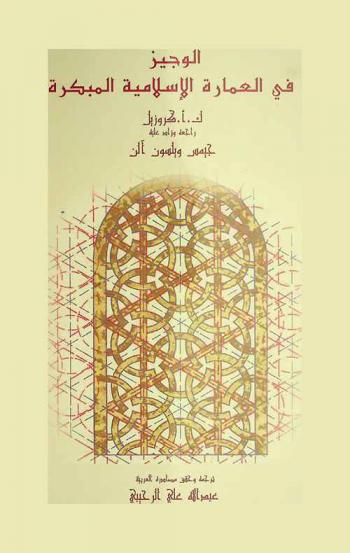
الوجيز في العمارة الإسلامية المبكرة
تناول الكتاب الصادر عن هيئة الشارقة للآثار عام 2016 م، مقبرة مليحة الكبيرة ذات الأبراج مربعة الشكل في الأعلى، خاصة قبر عامود بن جر بن على، مفتش ملك عمان ؛ العناصر المعمارية التي أنشئت على أساسها المستوطنة ؛ العملات المعدنية ؛ اللقى الفخارية التي عثر عليها ؛ الحجر ؛ البرونز ؛ معدات الخيل والجمال، وفي النهاية استعرض الكتاب، الأسلحة الحديدية التي عثر عليها في مليحة.
Book


A glimpse of gluons through deeply virtual compton scattering on the proton
The internal structure of nucleons (protons and neutrons) remains one of the greatest outstanding problems in modern nuclear physics. By scattering high-energy electrons off a proton we are able to resolve its fundamental constituents and probe their momenta and positions. Here we investigate the dynamics of quarks and gluons inside nucleons using deeply virtual Compton scattering (DVCS)—a highly virtual photon scatters off the proton, which subsequently radiates a photon. DVCS interferes with the Bethe-Heitler (BH) process, where the photon is emitted by the electron rather than the proton. We report herein the full determination of the BH-DVCS interference by exploiting the distinct energy dependences of the DVCS and BH amplitudes. In the regime where the scattering is expected to occur off a single quark, measurements show an intriguing sensitivity to gluons, the carriers of the strong interaction.
It remains a challenge to find the structure and the distribution of the constituents of nucleons. Here the authors use a scattering method to get information about the gluons and quarks inside a proton and separate the contribution of Bethe-Heitler from the deeply virtual Compton scattering process.
Journal Article
When Color meets Gravity; Near-Threshold Exclusive $J/\\psi$ Photoproduction on the Proton
The proton is one of the main building blocks of all visible matter in the universe. Among its intrinsic properties are its electric charge, mass, and spin. These emerge from the complex dynamics of its fundamental constituents, quarks and gluons, described by the theory of quantum chromodynamics (QCD). Using electron scattering its electric charge and spin, shared among the quark constituents, have been the topic of active investigation until today. An example is the novel precision measurement of the proton's electric charge radius. In contrast, little is known about the proton's inner mass density, dominated by the energy carried by the gluons, which are hard to access through electron scattering since gluons carry no electromagnetic charge. In the present work we chose to probe this gluonic gravitational density using a small color dipole, the $J/\\psi$ particle, through its threshold photoproduction. From our data we determined, for the first time, the proton's gluonic gravitational form factors, which encode its mass density. We used a variety of methods and determined in all cases a mass radius that is notably smaller than the electric charge radius. In some cases, the determined radius is in excellent agreement with first-principle predictions from lattice QCD. This work paves the way for a deeper understanding of the salient role of gluons in providing gravitational mass to visible matter.
Journal Article
Isovector EMC effect from global QCD analysis with MARATHON data
We report the results of a Monte Carlo global QCD analysis of unpolarized parton distribution functions (PDFs), including for the first time constraints from ratios of \\(^3\\)He to \\(^3\\)H structure functions recently obtained by the MARATHON experiment at Jefferson Lab. Our simultaneous analysis of nucleon PDFs and nuclear effects in \\(A=2\\) and \\(A=3\\) nuclei reveals the first indication for an isovector nuclear EMC effect in light nuclei. We find that while the MARATHON data yield relatively weak constraints on the \\(F_2^n/F_2^p\\) neutron to proton structure function ratio and on the \\(d/u\\) PDF ratio, they suggest an enhanced nuclear effect on the \\(d\\)-quark PDF in the bound proton, questioning the assumptions commonly made in nuclear PDF analyses.
Paper

The Continuous Electron Beam Accelerator Facility at 12 GeV
This review paper describes the energy-upgraded Continuous Electron Beam Accelerator Facility (CEBAF) accelerator. This superconducting linac has achieved 12 GeV beam energy by adding 11 new high-performance cryomodules containing 88 superconducting cavities that have operated cw at an average accelerating gradient of 20 MV / m . After reviewing the attributes and performance of the previous 6 GeV CEBAF accelerator, we discuss the upgraded CEBAF accelerator system in detail with particular attention paid to the new beam acceleration systems. In addition to doubling the acceleration in each linac, the upgrade included improving the beam recirculation magnets, adding more helium cooling capacity to allow the newly installed modules to run cold, adding a new experimental hall, and improving numerous other accelerator components. We review several of the techniques deployed to operate and analyze the accelerator performance and document system operating experience and performance. In the final portion of the document, we present much of the current planning regarding projects to improve accelerator performance and enhance operating margins, and our plans for ensuring CEBAF operates reliably into the future. For the benefit of potential users of CEBAF, the performance and quality measures for the beam delivered to each of the experimental halls are summarized in the Appendix.
Journal Article

The cross-section measurement for the 3H(e, e′K+)nnΛ reaction
Abstract
The small binding energy of the hypertriton leads to predictions of the non-existence of bound hypernuclei for isotriplet three-body systems such as nnΛ. However, invariant mass spectroscopy at GSI has reported events that may be interpreted as the bound nnΛ state. The nnΛ state was sought by missing-mass spectroscopy via the (e, e′K+) reaction at Jefferson Lab’s experimental Hall A. The present experiment has higher sensitivity to the nnΛ-state investigation in terms of better precision by a factor of about three. The analysis shown in this article focuses on the derivation of the reaction cross-section for the 3H(γ*, K+)X reaction. Events that were detected in an acceptance, where a Monte Carlo simulation could reproduce the data well ($|\\delta p/p| \\lt 4\\%$), were analyzed to minimize the systematic uncertainty. No significant structures were observed with the acceptance cuts, and the upper limits of the production cross-section of the nnΛ state were obtained to be 21 and $31 \\, \\rm {nb} \\, \\rm {sr}^{-1}$ at the $90\\%$ confidence level when theoretical predictions of (−BΛ, Γ) = (0.25, 0.8) MeV and (0.55, 4.7) MeV, respectively, were assumed. The cross-section result provides valuable information for examining the existence of nnΛ.
Journal Article