
Catalogue Search | MBRL


Are you sure you want to remove the book from the shelf?

{{itemTitle}}
43
result(s) for
"Kerchy, Anna"
Sort by:

Child-Shaped Cats, Talking Hats, Jiggly Wurrms: The Joys of Un/doing Language and the Comfort of Interpretive Communities in Hungarian Nonsense Children's Literature
This article explores Hungarian nonsense children's literature through key works by Ervin Lázár, István Csukás, and András Dániel. It argues that these tales draw from a uniquely Hungarian nonsense tradition rooted in the nineteenth-century language reform movement and twentieth-century halandzsa (gibberish constructed language) experiments, characterized by inventive neologisms, playful subversions of meaning, and linguistic ingenuity. Through psycholinguistically informed narratological lenses, the article reveals how nonsense offers a means to resist authority by allowing freedom of expression and imaginative identity play, while also fostering empathy, solidarity, and critical literacy. It highlights how absurd characters and storyworlds may create interpretive communities, offering readers joyful linguistic engagement, a sense of democratic liberation, and therapeutic responses to alienation—thereby framing nonsense as a socially transformative and philosophically rich genre.
Journal Article

Beau-oootiful Soo-oop! The Magic of Sound and the Melodies of Nonsense in Lewis Carroll’s Wonderland
Lewis Carroll's Alice's Adventures in Wonderland is a very Victorian text that nevertheless holds a timeless appeal. Alice's disoriented wanderings both reflect everyman's journey on an age-old quest for meaning lost in a fundamentally incomprehensible world and resonate with anxieties of the postmodern Zeitgeist. Yet people's relentless meta-imaginative scholarly curiosity remains preoccupied with speculations about the way the nineteenth century collective imagination may have conceptualiszed Wonderland's oddities, and the way Alice's dreams--which strategically elude all rationalizing interpretations--may have actually looked, sounded, and felt like for Carroll's contemporary Victorian audiences.
Journal Article

The Secret Life of Things: Queering the Museal Gaze in Angela Carter's Postmodern Curiosity Cabinets
The essay focuses on the proto-museum as a major leitmotif and narrative engine of Angela Carter's fiction. I explore how hybrid collections of uncategorizable, monstrous–marvelous objects take a variety of forms, from the Renaissance cabinet of curiosities to the Victorian freak show or surrealist exhibitions of found object composites—each fictionalized in Carter's oeuvre. My contention is that Carter's interest in proto-museal assemblages reveals her curiosity about the secret life of things. Her agenda is to represent human subjects and inanimate objects enmeshed on equal planes of reciprocal interactions that hijack the ideologically invested male gaze that aims at a possessive, tyrannical ownership over the objectified othered. The “queering of the look” implied in this radically democratizing revision project ties in with Carter's socialist feminist politics to which she has remained committed throughout her life.
Journal Article
Alice’s Non-Anthropocentric Ethics: Lewis Carroll as a Defender of Animal Rights
Les contes de fées fantastiques victoriens de Lewis Carroll, Les Aventures d'Alice aux Pays des Merveilles (1865) et De l'autre côté du miroir (1871) offrent de nombreuses reformulations fictives de la relation ambigue des Victoriens avec les animaux. Le chat de Cheshire, qui disparaît et réapparaít sans cesse, représente les qualités répressives idéologiques et subversives poétiques du langage qui distingue le sujet humain parlant des animaux (Lecercle 1994) ; la course saugrenue menée par le Dodo est une répétition absurde de la lutte sans merci décrite dans la théorie évolutionniste darwinienne (Lovell-Smith 2007), tandis que le loir de la théiere renvoie a la façon dont la possession de certains animaux pourrait indiquer une appartenance a une classe sociale (Ritvo 1987). Ces animaux incarnent une étrange altérité et semblent incompatibles avec le soi humain picaresque d'Alice qui est progressivement déstabilisée par ses nombreux changements de forme, au point d'etre tantôt méprise pour une fleur, un serpent ou une bete mythique. Malgré cela, Carroll décrit son héroine avec des attributs animaliers a connotation positive - elle \"aime comme un chien\" et elle est \"douce comme un faon\" (1887) - qui font écho au programme éthique présent dans ses romans ou l'on sent émerger une relation solidaire et égalitaire entre les différentes especes. Leur non-différence est ainsi conçue telle que Derrida l'envisage dans sa vision déconstructiviste et post-humaniste (2008). Partant des enjeux politiques et pragmatiques de l'allégorie animale a l'époque victorienne, cet article démontre comment l'on peut détecter, au sein meme des récits d'Alice, des références au soutien de Lewis Carroll en faveur du droit des animaux, y compris a son engagement contre la vivisection explicitement dénoncée dans ses pamphlets et librement transposée dans des écrits du merveilleux en apparence apolitiques. Lewis Carroll's Victorian nonsense fairy-tale fantasies Alice's Adventures in Wonderland (1865) and Through the Looking-Glass, and What Alice Found There (1871) provide plenty of fictional reformulations of the Victorians' ambiguous relationship with animals. The vanishing and reappearing Cheshire Cat represents language that is ideologically manipulative and poetically subversive and distinguishes the speaking human subject from animals (Lecercle 1994); the Caucus Race led by the Dodo Bird is an absurd rehearsal of the Darwinian evolutionary theory's competitive struggle for survival (Lovell-Smith 2007), while the dormouse in the teapot evokes how the ownership of certain animals could indicate class belonging (Ritvo 1987). These animals embody a curious otherness radically incompatible with the picara's human self gradually destabilized by Alice's numerous shape-shiftings which elicit her misidentification as a flower, a serpent, and a mythical beast. Carroll's own description of his heroine with positive animal attributes, 'loving as a dog' and 'gentle as a fawn' (1887) resonates with an ethical agenda outlined in his novels starting out from the multidimensional interspecies relationship that conceives of difference in a non-dualistic, posthumanist deconstructive, Derridean (2008) way. Focusing on pragmatic, political stakes of Victorian animal allegory I unveil in the Alice tales references to Carroll's support of animal rights, including his anti-vivisectionist commitment explicitly spelt out in his pamphlets and gaining fictional manifestations in his seemingly apolitical fantasies.
Journal Article
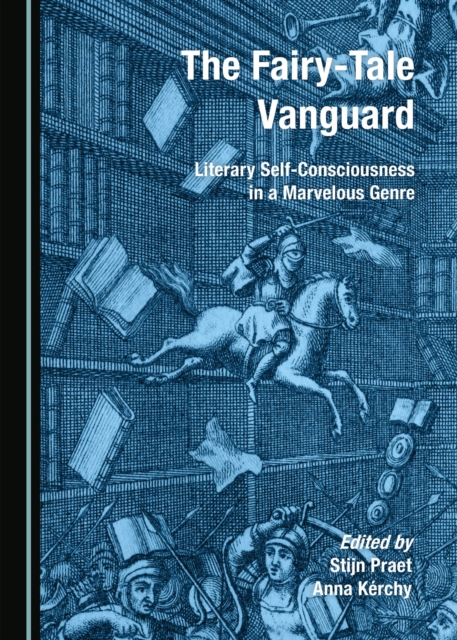
The Fairy-Tale Vanguard
Ever since its early modern inception as a literary genre unto its own, the fairy tale has frequently provided authors with a textual space in which to reflect on the nature, status and function of their own writing and that of literature in general. At the same time, it has served as an ideal laboratory for exploring and experimenting with the boundaries of literary convention and propriety. While scholarship pertaining to these phenomena has focused primarily on the fairy-tale adaptations and deconstructions of postmodern(ist) writers, this essay collection adopts a more diachronic approach. It offers fairy-tale scholars and students a series of theoretical and literary-historical expositions, as well as case studies on English, French, German, Swedish, Danish, and Romanian texts from the seventeenth to the twenty-first century, by authors as diverse as Marie-Catherine d'Aulnoy, Rikki Ducornet, Hans Christian Andersen and Robert Coover.
eBook

Exploring the cultural history of continental European freak shows and 'enfreakment'
This collection offers cultural historical analyses of enfreakment and freak shows, examining the social construction and spectacular display of wondrous, monstrous, or curious Otherness in the formerly relatively neglected region of Continental Europe. Forgotten stories are uncovered about freak-show celebrities, medical specimen, and philosophical fantasies presenting the anatomically unusual in a wide range of sites, including curiosity cabinets, anatomical museums, and traveling circus ac.
eBook
Translation and Transmedia in Children's Literature
Conjoining the methodological apparatuses of new media/adaptation studies and translation studies with those of children’s and young adult literature criticism seems inevitable in a technologically enhanced epoch when young “prosumers” (Manovich 3) of cultural products grow up as native speakers of the digital language of computers, smart phone applications, online social media platforms, video games, and downloadable e-books. Adaptations’ media transition and translations’ language change can be easily put in parallel: with Venuti’s term, both are “creative derivative methods” (“Adaptation, Translation, Critique” 29) reenacting the meaning of a de/recontextualized source text that is inevitably modified in its content and form while remaining a dialogic reference point. Mediation—whether in the form of adaptation, translation, or remediation—allows for the reevaluation of a variety of notions ranging from authenticity, textuality, authorship, audience agency, age appropriateness, storytelling, or imaginativeness, while foregrounding the ideological interests, the educational and ethical responsibilities, and the semiological complexities involved in the trans(pos)ition process.
Journal Article


Bones and All
The contemporary paranormal fantasy romance genre targeting young adult readership has experimented with an impressive variety of interspecies pairings while recycling the trope of impossible/forbidden love as a means of self-discovery. However, after the human-vampire, human-werewolf (Twilight), human-angel (Fallen), human-cyborg (Cinder), and even human-zombie (Warm Bodies) couples, the latest coming-of-age fantasy romance budding between two teenage cannibals unable to control their meat-eating impulses seems to be breaking ultimate taboos, moving towards the abjectification of the subject to showcase ultimate moral dilemmas of our times. I wish to argue that the cannibal romance as a body-genre in Linda Williams’s sense of the term disturbs our ideologically disciplined cultured embodiment to foreground raw flesh, bloody meat, tremulous corporeal intensities which unleash anarchic Dionysian impulses to perform social criticism. The narratological patterns of the heteronormative romance plot are subverted, and the compulsory open ending of “living happily ever after” is mocked in a story about violent deaths and difficult survival, foregrounding precarity, vulnerability, and remorse as formative experience of humankind. I suggest that at the end of the Anthropocene we are likely to interpret the novel as a fictional reformulation of Derrida’s ethics of eating well, an apology of the carnivorous human in the era of the sixth mass extinction and an unredeemable environmental crisis he is responsible for, and also a call for the respectful relation to the other on the plate, or at the table-but also, in a deconstructive sense, “a respect for that which cannot be eaten, cannot be assimilated in a text, that must remain indeterminate, untranslatable, a remainder that cannot be read, that must remain alien.” (AK)
Journal Article