
Catalogue Search | MBRL


Are you sure you want to remove the book from the shelf?

{{itemTitle}}
19,295
result(s) for
"King, M."
Sort by:


Genetics of schizophrenia in the South African Xhosa
Africa, the ancestral home of all modern humans, is the most informative continent for understanding the human genome and its contribution to complex disease. To better understand the genetics of schizophrenia, we studied the illness in the Xhosa population of South Africa, recruiting 909 cases and 917 age-, gender-, and residence-matched controls. Individuals with schizophrenia were significantly more likely than controls to harbor private, severely damaging mutations in genes that are critical to synaptic function, including neural circuitry mediated by the neurotransmitters glutamine, γ-aminobutyric acid, and dopamine. Schizophrenia is genetically highly heterogeneous, involving severe ultrarare mutations in genes that are critical to synaptic plasticity. The depth of genetic variation in Africa revealed this relationship with a moderate sample size and informed our understanding of the genetics of schizophrenia worldwide.
Journal Article


Changes to taxonomy and the International code of virus classification and nomenclature ratified by the International Committee on Taxonomy of Viruses (2017)
This article lists the changes to virus taxonomy approved and ratified by the International Committee on Taxonomy of Viruses (ICTV) in March 2017.This article lists the changes to virus taxonomy approved and ratified by the International Committee on Taxonomy of Viruses (ICTV) in March 2017.
Journal Article

Ratification vote on taxonomic proposals to the International Committee on Taxonomy of Viruses (2016)
This article lists the changes to virus taxonomy approved and ratified by the International Committee on Taxonomy of Viruses (ICTV) in April 2016.Changes to virus taxonomy (the Universal Scheme of Virus Classification of the International Committee on Taxonomy of Viruses [ICTV]) now take place annually and are the result of a multi-stage process. In accordance with the ICTV Statutes (http://www.ictvonline.org/statutes.asp), proposals submitted to the ICTV Executive Committee (EC) undergo a review process that involves input from the ICTV Study Groups (SGs) and Subcommittees (SCs), other interested virologists, and the EC. After final approval by the EC, proposals are then presented for ratification to the full ICTV membership by publication on an ICTV web site (http://www.ictvonline.org/) followed by an electronic vote. The latest set of proposals approved by the EC was made available on the ICTV website by January 2016 (https://talk.ictvonline.org/files/proposals/). A list of these proposals was then emailed on 28 March 2016 to the 148 members of ICTV, namely the EC Members, Life Members, ICTV Subcommittee Members (including the SG chairs) and ICTV National Representatives. Members were then requested to vote on whether to ratify the taxonomic proposals (voting closed on 29 April 2016).
Journal Article
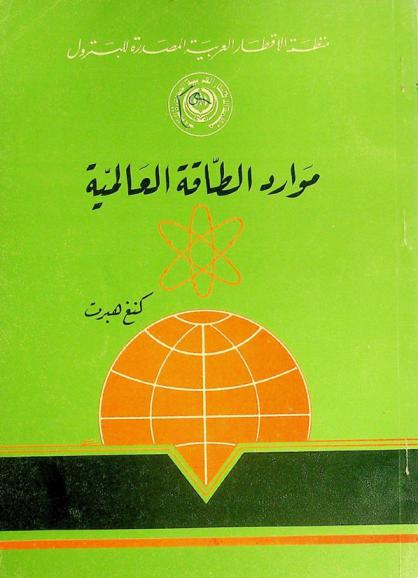
موارد الطاقة العالمية
يتناول كتاب (موارد الطاقة العالمية) والذي قام بتأليفه كنغ هبرت، موضوع (الطاقة) الكتاب يضم بحثا من أنجح الدراسات الهامة التي تستعرض بشكل علمي موارد الطاقة العالمية، وتطور أنماط الاستهلاك، حيث أنه يوضح مجراها على مسيرة الإنسان سابقا ولاحقا. وقد ترجمت الدراسة إلى اللغة العربية ونشرها مساهمة من منظمة الأقطار العربية المصدرة للبترول في إثراء المكتبة العربية بمثل هذا النوع من البحوث.

Barriers and Facilitators for Type-2 Diabetes Management in South Asians: A Systematic Review
Although South Asian populations have among the highest burden of type 2 diabetes in the world, their diabetes management remains poor. We systematically reviewed studies on South Asian patient's perspectives on the barriers and facilitators to diabetes management.
We conducted a literature search using OVID, CINHAL and EMBASE (January, 1990 -February, 2014) evaluating the core components of diabetes management: interactions with health care providers, diet, exercise, and medication adherence. South Asian patients were self-reported as Indian, Pakistani, Malaysian-Indian or Bangladeshi origin. From 208 abstracts reviewed, 20 studies were included (19 qualitative including mixed methods studies, 1 questionnaire). Barriers and facilitators were extracted and combined using qualitative synthesis.
All studies included barriers and few facilitators were identified. Language and communication discordance with the healthcare provider was a significant barrier to receiving and understanding diabetes education. There was inconsistent willingness to partake in self-management with preference for following their physician's guidance. Barriers to adopting a diabetic diet were lack of specific details on South Asian tailored diabetic diet; social responsibilities to continue with a traditional diet, and misconceptions on the components of the diabetic diet. For exercise, South Asian patients were concerned with lack of gender specific exercise facilities and fear of injury or worsening health with exercise. Patients reported a lack of understanding about diabetes medication management, preference for folk and phytotherapy, and concerns about the long-term safety of diabetes medications. Facilitators included trust in care providers, use of culturally appropriate exercise and dietary advice and increasing family involvement. Overall themes for the barriers included lack of knowledge and misperceptions as well as lack of cultural adaptation to diabetes management.
Diabetes programs that focus on improving communication, addressing prevailing misconceptions, and culture specific strategies may be useful for improving diabetes management for South Asians.
Journal Article

50 years of the International Committee on Taxonomy of Viruses: progress and prospects
We mark the 50th anniversary of the International Committee on Taxonomy of Viruses (ICTV) by presenting a brief history of the organization since its foundation, showing how it has adapted to advancements in our knowledge of virus diversity and the methods used to characterize it. We also outline recent developments, supported by a grant from the Wellcome Trust (UK), that are facilitating substantial changes in the operations of the ICTV and promoting dialogue with the virology community. These developments will generate improved online resources, including a freely available and regularly updated ICTV Virus Taxonomy Report. They also include a series of meetings between the ICTV and the broader community focused on some of the major challenges facing virus taxonomy, with the outcomes helping to inform the future policy and practice of the ICTV.
Journal Article