
Catalogue Search | MBRL


Are you sure you want to remove the book from the shelf?

{{itemTitle}}
181
result(s) for
"Kirkham, Richard"
Sort by:

The Immortal Men : the end of forever
\"The superstar creative team of comics legend Jim Lee (Batman, Justice League) and James Tynion IV (Detective Comics) unite to tell the tale of the secret history of heroes who have protected humanity from the shadows since the dawn of time...and who can live forever. There is a secret history to the DC Universe of heroes who have protected humanity from the shadows since the dawn of time...and who can live forever. Enter the Immortal Men! The team, headed by the Immortal Man, has waged a secret war against the House of Conquest for countless years--but Conquest has dealt a devastating blow. When their base of operations, known as the Campus, is savagely attacked, the Immortal Men must seek out their last hope--an emerging metahuman known as Caden Park! With the Batman Who Laughs lurking in the shadows things get serious quickly.\"-- Provided by publisher.
Book

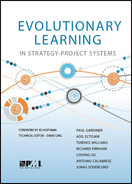
Evolutionary Learning in Strategy-Project Systems
WHAT DOES A SUCCESSFUL KNOWLEDGE MANAGEMENT PRACTITIONER DO? Evolutionary Learning in Strategy-Project Systems explores the gap between the theory and practice of knowledge management in organizations and analyzes how learning happens and how knowledge is created. The authors take a practitioner-driven approach, one that unites organizational strategy with the learning of organizational lessons—the kind of knowledge management that enhances project performance and ultimately business success. Through a survey of the literature and an analysis of original case-study research, Evolutionary Learning in Strategy-Project Systems develops a model of learning capability that proceeds exactly as its title implies, not as a line, but as a cycle—from codifying individual knowledge and putting it into practice within a context that values social relationships and networks. The conclusions offered in this book build on the rethinking of project management literature in today's world—creating a strategy-project learning model that not only improves current knowledge capabilities, but also develops new ones.
eBook

The importance of soft skills in complex projects
Purpose - The purpose of this paper is to facilitate further understanding of project complexity by highlighting the factors contributing to project complexity as reported by the practitioners facing the \"actuality\" of projects.Design methodology approach - A qualitative research approach was undertaken by conducting semi-structured interviews with the primary focus on the aerospace industry. Participants are involved in a variety of project settings, exhibiting different types and levels of complexity.Findings - Analysis of responses highlights \"people\" issues as the main factor contributing to project complexity and the importance of soft skills in managing complex projects.Research limitations implications - The research is based on a limited number of respondents from the aerospace sector. This will be further refined and improved upon by compiling views of additional practitioners involved in multiple aerospace projects.Practical implications - The main research conclusions are that \"hard\" project management skills help to organise, plan and manage, and track changes during the course of the project. However, understanding of project complexity and its contributing factors helps practitioners to understand the dynamic, social and complex contexts of projects, thus highlighting the importance of \"soft\" skills.Originality value - This paper proposes the \"project complexity triangle - people, product and process\", highlighting their importance as the three major areas contributing to project complexity.
Journal Article

The Issues and Considerations Associated with BIM Integration
The management of data, information and knowledge through the project life cycle of buildings and civil infrastructure projects is becoming increasingly complex. As an attempt to drive efficiencies and address this complexity, the United Kingdom Government has mandated that Building Information Modelling (BIM) methods must be adopted in all public sector construction projects in 2016. Emerging from the US Department of Defence, BIM is an approach to the co-ordination of design and production data using object-oriented principles as described in ISO 29481-1:2010. The underlying philosophy of BIM is to ensure the “provision of a single environment to store shared asset data and information, accessible to all individuals who are required to produce, use and maintain it” (PAS 1192-2:2013). A key aspect of BIM lies in the notion of ‘interoperability’ between various software applications used in the design and construction process and a common data format for the efficient exchange of design information and knowledge. Protagonists of BIM argue that this interoperability provides an effective environment for collaboration between actors in the construction process and creates accurate, reliable, repeatable and high-quality information exchange. This UK government mandate presents numerous challenges to the architecture, engineering and construction (AEC) professions; in particular, the characteristics of BIM Level 2 remain explicitly undefined and this created a degree of uncertainty amongst the promoters and those professionals charged with delivering projects. This research casts a critical lens on the current literature in the domains of object-oriented modelling of infrastructure and the associated implications for procurement and project management. A mixed-methods approach using questionnaire analysis and secondary case study analysis was used to enact an inductive research approach that captures a range of data on the practical issues and considerations associated with the integration of BIM in the industry.
Journal Article

Whole life-cycle costing
Whole life-cycle costing (WLCC) is rapidly becoming the standard method for the long-term cost appraisal of buildings and civil infrastructure projects. With clients now demanding buildings that demonstrate value for money over the long term, WLCC has become an essential tool for those involved in the design, construction, operation and risk analysis of construction projects. Whole-life costing: risk and risk responses offers a thorough grounding in both the theory and practical application of WLCC. Part I deals with the fundamentals, providing the general background to appreciate WLCC concept.
eBook

Whole life cycle performance measurement re-engineering for the UK National Health Service estate
Purpose - The measurement of the performance of built assets with the UK National Health Service portfolio is based on simple benchmarking techniques such as £ m2. The purpose of this paper is to examine an alternative approach, which could produce a more informed and balanced approach to performance measurementDesign methodology approach - The existing benchmarking and clustering techniques used within the NHS are examined. These reveal inadequacies in truly representing asset performance. Data envelopment analysis techniques are applied here to map the estate costs against the outputs of the estate (i.e. number of inpatient days). Operational and maintenance cost data was collated from 15 NHS acute teaching trusts outside of London, these were mapped against two outputs (in-patient days and occupied beds per available beds) in order to determine how effectively each NHS Trust translates input resources into inpatient days and occupancy of available beds.Findings - The results from the models generate efficiency improvement scores. The scores disclose that the standard deviation of average efficiency in the cluster was 22.38, thus revealing a significant variance in performance. The efficiency values range between 100 and 33.6 per cent. The results provide useful information on the technical efficiency of building assets and allow NHS Trusts to identify where efficiency improvements are necessary within a continuous efficiency analysis framework.Research limitations implications - Further work is required on the analysis of other types of hospital buildings within the UK to test the validity of the sample used. Other outputs may also be relevant and should be explored.Practical implications - This paper was presented to NHS Estates as part of a commissioned report which is now being considered as part of a process to re-engineer performance measurement within the estate.Originality value - The paper adds value in demonstrating the benefits of an established methodology within a new setting, which is the performance of built assets
Journal Article

The procedural fairness limitations of fitness to practise hearings: a case study into social work
The norm in fitness to practise proceedings (FTPP) is that where sanctions might be imposed procedural fairness requires a court-like hearing. This paper questions that paradigm, using empirical research to focus on the FTPP to which social workers must account. Procedural fairness is a multi-faceted legitimising concept used to justify the design of decision-making processes. With FTPPs, the major justification is an ‘instrumentally’ focused model of procedural fairness which prioritises making decisions that look right, a goal which is delivered in the context of social work. But other justifications for procedural fairness are inadequately fulfilled, with in particular a ‘dignitarian’ respect not achieved due to the high levels of non-attendance by registrant social workers. Further, procedural fairness as ‘public accountability’ is undermined due to the relative lack of engagement of FTPPs with the perspective of the social work community. These findings hint that in the context of a poorly organised and resource-poor profession other hybrid forms of FTPP might have a stronger claim to procedural fairness than the court-like model.
Journal Article
An empirical study of assurance in the UK government major projects portfolio: from data to recommendations, to action or inaction
PurposeEffective and robust governance of major projects and programmes in the public sector is crucial to the accountability of the state and the transparency of state spending. The theoretical discourse on governance, in the context of projects and programmes, is not fully mature, although is now sufficiently well developed to warrant an increased scholarly focus on practice. This paper aims to contribute to the empirical literature through a study of assurance routines in the UK Government Major Projects Portfolio (GMPP).Design/methodology/approachA framework analysis approach to the evaluation of a subset of GMPP database generates original insights into (1) the framing of assurance review recommendations, (2) the treatment of assurance review data and (3) the subsequent tracking of the implementation of actions arising from the assurance review process.FindingsThe analysis reveals that the “delivery confidence” of the major projects and programmes included in this study improves during the time that they are assured on the GMPP. This would suggest that “enhanced” governance routines are desirable in programmes and projects that exhibit high degrees of complexity and scale.Originality/valueThe research findings contribute to the wider conversations in this journal and elsewhere on project governance routines and governance-as-practice in the context of government and public services.
Journal Article
