
Catalogue Search | MBRL


Are you sure you want to remove the book from the shelf?

{{itemTitle}}
2,678
result(s) for
"Klein, Richard"
Sort by:


Explaining and overcoming barriers to climate change adaptation
The development and implementation of measures aimed at climate change adaptation face many obstacles. This Perspective takes stock of current research on barriers to adaptation, and argues that more comparative research is now required to increase our in-depth understanding of barriers and to develop strategies to overcome them.
The concept of barriers is increasingly used to describe the obstacles that hinder the planning and implementation of climate change adaptation. The growing literature on barriers to adaptation reveals not only commonly reported barriers, but also conflicting evidence, and few explanations of why barriers exist and change. There is thus a need for research that focuses on the interdependencies between barriers and considers the dynamic ways in which barriers develop and persist. Such research, which would be actor-centred and comparative, would help to explain barriers to adaptation and provide insights into how to overcome them.
Journal Article
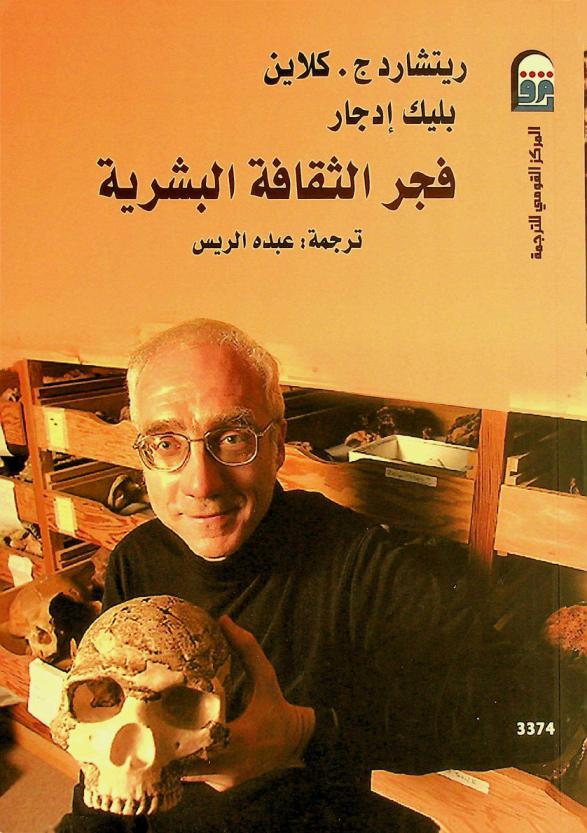
فجر الثقافة البشرية /
في هذا الكتاب، يقدم ريتشارد كلاين وبليك إدجار لعلم الآثار بيانات عن موقعين، كليهما في إفريقيا، مما يشكل نوعا من التباين الذي تبنى عليه برامج البحث، الأول، موقع إينكابون يا موتو في وسط كينيا، يقدم 40 ألف عام متمثلة في خرزات من قشر بيض النعام، تعد هذه الخرزات من بين أقدم الأمثلة على الزخرفة الشخصية في السجل الآثاري وتوثق لجزء من العقل يعتبره كلاين وإدجار إنسانيا فريدا وهو القدرة المعرفية على التواصل وتفسير الرموز. في المقابل، قدمت كهوف نهر كلاسيس دليلا على أن بعض الأشخاص الأوائل لديهم تشريح بشري حديث مثل عدم وجود حاجب ووجود ذقن قوي، يبلغ عمره 100000 عام، لكن هؤلاء القدامى لم يتركوا أي أشياء يمكن الاستدلال عليها بأن لها وظيفة رمزية - فقط الأدوات والعظام التي كانت مهملة في حياتهم اليومية. بناء على هذا التباين، يطرح كلاين وإدجار السؤال، لماذا يجب ألا يترك البشر الأوائل أي دليل على السلوكيات الشائعة جدا اليوم ؟ إن هذا التناقض الواضح هو الذي شرعا في حله، في نهاية المطاف مع الفرضية القائلة بأن معظم السلوك الثقافي البشري كان نتيجة للتغير المفاجئ في الدماغ البشري الذي استحث اللغة الرمزية.
Book

Climate change adaptation and the Least Developed Countries Fund (LDCF): Qualitative insights from policy implementation in the Asia-Pacific
Least developed countries often lack the requisite capacity to implement climate change adaptation projects. The Least Developed Countries Fund (LDCF) is a scheme where industrialized countries have (as of early 2016) disbursed $934.5 million in voluntary contributions, raised more than four times that amount in co-financing, and supported 213 adaptation projects across 51 least developed countries. But what sorts of challenges have arisen during implementation? Based on extensive field research in five least developed countries—Bangladesh, Bhutan, Cambodia, the Maldives, and Vanuatu—and original data collected from almost 150 research interviews, this article qualitatively explores both the benefits and challenges of LDCF projects in the Asia-Pacific. It finds that while LDCF projects do contribute to enhancing multiple types of infrastructural, institutional, and community-based adaptive capacity, they also suffer from uncertainty, a convoluted management structure, and an inability to fully respond to climate risks. Based on these findings, the study concludes that adaptation must be pursued as a multidimensional process; and that LDCF activities have tended to promote marginal rather than more radical or systematic transformations.
Journal Article

Batman by Jeph Loeb & Tim Sale omnibus
\"The Eisner Award-winning team of Jeph Loeb and Tim Sale created some of the most memorable and important Batman stories of all time. Now, for the first time ever, their complete works on the Dark Knight are collected together in one definitive omnibus edition. Haunted Knight The Long Halloween Dark Victory Catwoman: When in Rome With an introduction by creators Jeph Loeb and Tim Sale, a conversation between Academy Award-nominated filmmakers Christopher Nolan and David S. Goyer about The Long Halloween and a treasure trove of behind-the-scenes material, Batman by Jeph Loeb & Tim Sale Omnibus collects the Batman: Legends of the Dark Knight Halloween Special, Batman: Madness--A Legends of the Dark Knight Halloween Special, Batman: Ghosts--A Legends of the Dark Knight Halloween Special, Batman: The Long Halloween #1-13, Batman: Dark Victory #0-13, Catwoman: When in Rome #1-6 and a short story from Superman/Batman Secret Files & Origins 2003\"-- Provided by publisher.
Book
Climate Change Vulnerability Assessments: An Evolution of Conceptual Thinking
Vulnerability is an emerging concept for climate science and policy. Over the past decade, efforts to assess vulnerability to climate change triggered a process of theory development and assessment practice, which is reflected in the reports of the Intergovernmental Panel on Climate Change (IPCC). This paper reviews the historical development of the conceptual ideas underpinning assessments of vulnerability to climate change. We distinguish climate impact assessment, first- and second-generation vulnerability assessment, and adaptation policy assessment. The different generations of assessments are described by means of a conceptual framework that defines key concepts of the assessment and their analytical relationships. The purpose of this conceptual framework is two-fold: first, to present a consistent visual glossary of the main concepts underlying the IPCC approach to vulnerability and its assessment; second, to show the evolution of vulnerability assessments. This evolution is characterized by the progressive inclusion of non-climatic determinants of vulnerability to climate change, including adaptive capacity, and the shift from estimating expected damages to attempting to reduce them. We hope that this paper improves the understanding of the main approaches to climate change vulnerability assessment and their evolution, not only within the climate change community but also among researchers from other scientific communities, who are sometimes puzzled by the unfamiliar use of technical terms in the context of climate change. [PUBLICATION ABSTRACT]
Journal Article

The domestic plane : new perspectives on tabletop art objects
The Aldrich Contemporary Art Museum is pleased to present The Domestic Plane: New Perspectives on Tabletop Art Objects, a meta-group exhibition in five chapters-- organized by five curators, including more than seventy artists--that will feature tabletop art objects from the twentieth and twenty-first centuries. The experience could be likened to theatre, as viewers encounter objects that interact with each other, their audience, their setting, forging relationships to be examined and meanings to be discovered in their adventurous methods of display. The Domestic Plane will be on view at The Aldrich from May 20, 2018 to January 13, 2019.
Book

Batman Knightfall omnibus
\"This classic storyline that led to the birth of a new Batman begins as the Dark Knight's greatest enemies have all simultaneously escaped from Arkham Asylum and are preying on Gotham City. With his city under siege, Batman pushes his body to its physical breaking point as he takes on the Joker, the Mad Hatter, Poison Ivy, Killer Croc, the Riddler and the Scarecrow, one after another. But things get much worse, when Bane, the man behind all of this madness, confronts an exhausted Batman and cripples him by breaking his back.\"-- Provided by publisher.
Book
