
Catalogue Search | MBRL


Are you sure you want to remove the book from the shelf?

{{itemTitle}}
22
result(s) for
"Kobel, Esther"
Sort by:

Immune response and associated factors to Hepatitis B vaccination among children under five attending care at mulago hospital
Background
Hepatitis B is a major global health concern, with chronic infections affecting approximately 296 million people yearly. A 2009 survey in East Africa showed a prevalence rate of 6.5%, with Uganda’s rate at 10.3% and Northern Uganda at 20.7%. Therefore, this study sought to determine the immune response to Hepatitis B vaccination and associated factors among children under five attending outpatient care at Mulago Assessment Centre Pediatrics clinic.
Methods
A cross-sectional study involving 301 children aged 1 to under 5 years at Mulago National Referral’s Pediatrics clinic was conducted in February 2023. Children were consecutively enrolled and screened for Hepatitis B core antibodies, with anti-HBs antibody titers measured. A pretested semi-structured questionnaire was administered to caregivers. Data analysis was conducted using STATA Version 13.0. Logistic regression analysis was done to determine factors associated with immune response, a binary outcome.
Results
All 301 children tested negative for Hepatitis B core antibodies. Children’s ages ranged between 1 and 4 years with most aged 2 years, 89/301(29.6%). The immune response varied from 2 IU/ml to 1000 IU/ml, with a median of 86.2 IU/ml (IQR: 14.5-239.4). The prevalence of good immune response was 77.4% (233/301) (95% CI: 72.3-81.8%), with 58.4% (95% CI: 51.9-64.6%) classified as very good responders. The factors associated with immune response were child age (aOR = 0.40; 95% CI: 0.16–0.97;
p
= 0.044) and caregiver HIV status (aOR = 0.17; 95% CI: 0.04–0.71;
p
= 0.014).
Conclusion
Children had protective antibody levels against the Hepatitis B virus, but it is still below the expected level by the World Health Organization. The child’s age and caregiver’s HIV status were associated with immune response. Emphasis needs to be made on the Hepatitis B birth dose and booster vaccinations, especially for children over 1 year and at-risk groups, to lower transmission rates and enhance long-term Hepatitis B protection.
Journal Article

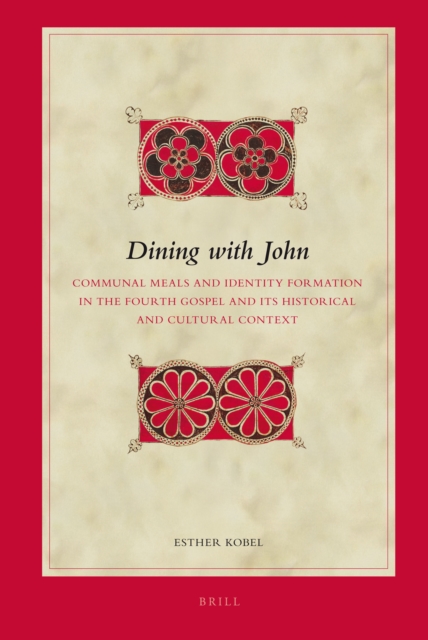
Dining with John : communal meals and identity formation in the Fourth Gospel and its historical and cultural context
This book provides an analysis of the role of food, drink and meals in the Fourth Gospel, in the formation of early Christian identity, and of the historical circumstances in which Johannine meal practices may have developed.
eBook