
Catalogue Search | MBRL


Are you sure you want to remove the book from the shelf?

{{itemTitle}}
845
result(s) for
"Koenig, Sarah"
Sort by:

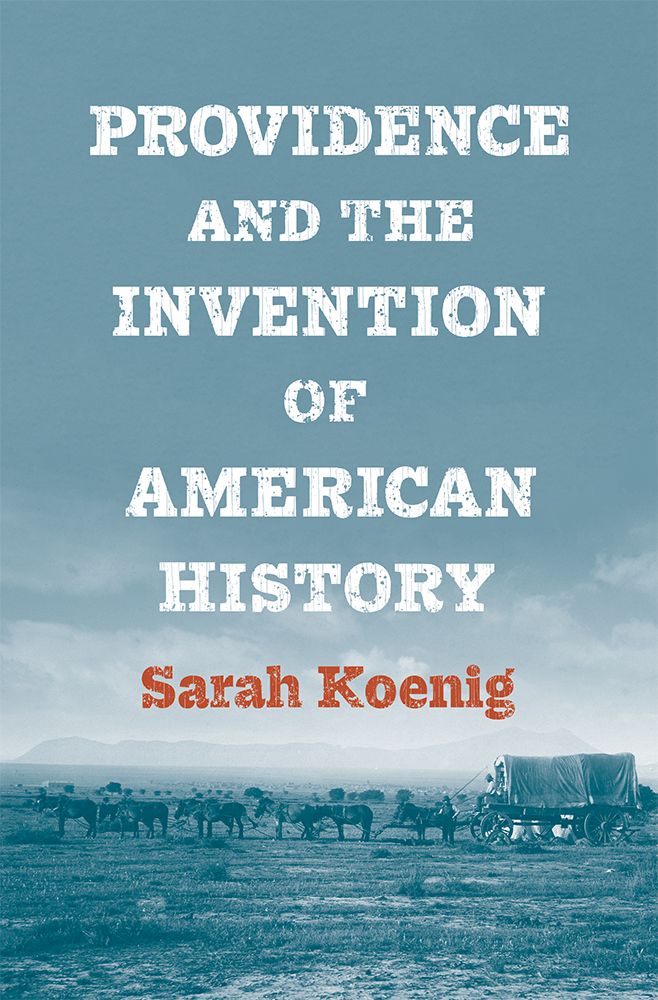
Providence and the Invention of American History
How providential history-the conviction that God is an
active agent in human history-has shaped the American historical
imagination In 1847, Protestant missionary Marcus Whitman
was killed after a disastrous eleven-year effort to evangelize the
indigenous peoples of the Pacific Northwest. By 1897, Whitman was a
national hero, celebrated in textbooks, monuments, and historical
scholarship as the \"Savior of Oregon.\" But his fame was based on a
tall tale-one that was about to be exposed. Sarah Koenig traces the
rise and fall of Protestant missionary Marcus Whitman's legend,
revealing two patterns in the development of American history. On
the one hand is providential history, marked by the conviction that
God is an active agent in human history and that historical work
can reveal patterns of divine will. On the other hand is objective
history, which arose from the efforts of Catholics and other racial
and religious outsiders to resist providentialists' pejorative
descriptions of non†'Protestants and nonwhites. Koenig examines how
these competing visions continue to shape understandings of the
American past and the nature of historical truth.
eBook

Speaking up behavior and cognitive bias in hand hygiene: Competences of German-speaking medical students
Infection prevention and speaking up on errors are core qualities of health care providers. Heuristic effects (e.g. overconfidence) may impair behavior in daily routine, while speaking up can be inhibited by hierarchical barriers and medical team factors. Aim of this investigation was to determine, how medical students experience these difficulties for hand hygiene in daily routine. On the base of prior investigations we developed a questionnaire with 5-point Likert ordinal scaled items and free text entries. This was tested for validity and reliability (Cronbach's Alpha 0.89). Accredited German, Swiss and Austrian universities were contacted and medical students asked to participated in the anonymous online survey. Quantitative statistics used parametric and non-parametric tests and effect size calculations according to Lakens. Qualitative data was coded according to Janesick. 1042 undergraduates of 12 universities participated. All rated their capabilities in hand hygiene and feedback reception higher than those of fellow students, nurses and physicians (p<0.001). Half of the participants rating themselves to be best educated, realized that faulty hand hygiene can be of lethal effect. Findings were independent from age, sex, academic course and university. Speaking-up in case of omitted hand hygiene was rated to be done seldomly and most rare on persons of higher hierarchic levels. Qualitative results of 164 entries showed four main themes: 1) Education methods in hand hygiene are insufficient, 2) Hierarchy barriers impair constructive work place culture 3) Hygiene and feedback are linked to medical ethics and 4) There is no consequence for breaking hygiene rules. Although partially limited by the selection bias, this study confirms the overconfidence-effects demonstrated in post-graduates in other settings and different professions. The independence from study progress suggests, that the effect occurs before start of the academic course with need for educational intervention at the very beginning. Qualitative data showed that used methods are insufficient and contradictory work place behavior in hospitals are frustrating. Even 20 years after \"To err is human\", work place culture still is far away from the desirable.
Journal Article

A novel approach to microsurgical teaching in head and neck surgery leveraging modern 3D technologies
The anatomically complex and often spatially restricted conditions of anastomosis in the head and neck region cannot be adequately reproduced by training exercises on current ex vivo or small animal models. With the development of a Realistic Anatomical Condition Experience (RACE) model, complex spatial-anatomical surgical areas and the associated intraoperative complexities could be transferred into a realistic training situation in head and neck surgery. The RACE model is based on a stereolithography file generated by intraoperative use of a three-dimensional surface scanner after neck dissection and before microvascular anastomosis. Modelling of the acquired STL file using three-dimensional processing software led to the model’s final design. As a result, we have successfully created an economical, sustainable and realistic model for microsurgical education and provide a step-by-step workflow that can be used in surgical and general medical education to replicate and establish comparable models. We provide an open source stereolithography file of the head-and-neck RACE model for printing for educational purposes. Once implemented in other fields of surgery and general medicine, RACE models could mark a shift in medical education as a whole, away from traditional teaching principles and towards the use of realistic and individualised simulators.
Journal Article
Surgeons’ participation in the development of collaboration and management competencies in undergraduate medical education
The teaching of professional roles in medical education is an interdisciplinary concern. However, surgeons require specific standards of professionalism for certain context-based situations. In addition to communication, studies require collaboration, leadership, error-/conflict-management, patient-safety and decision-making as essential competencies for surgeons. Standards for corresponding competencies are defined in special chapters of the German National Competency-based Learning Objectives for Undergraduate Medical Education (NKLM; chapter 8, 10). The current study asks whether these chapters are adequately taught in surgical curricula. Eight German faculties contributed to analysing mapping data considering surgical courses of undergraduate programs. All faculties used the MERlin mapping platform and agreed on procedures for data collection and processing. Sub-competency and objective coverage, as well as the achievement of the competency level were mapped. Overall counts of explicit citations were used for analysis. Collaboration within the medical team is a strongly represented topic. In contrast, interprofessional cooperation, particularly in healthcare sector issues is less represented. Patient safety and dealing with errors and complications is most emphasized for the Manager/Leader, while time management, career planning and leadership are not addressed. Overall, the involvement of surgery in teaching the competencies of the Collaborator and Manager/Leader is currently low. However, there are indications of a curricular development towards explicit teaching of these roles in surgery. Moreover, implicitly taught roles are numerous, which indicates a beginning awareness of professional roles.
Journal Article

Examiner effect on the objective structured clinical exam – a study at five medical schools
Background
The Objective Structured Clinical Examination (OSCE) is increasingly used at medical schools to assess practical competencies. To compare the outcomes of students at different medical schools, we introduced standardized OSCE stations with identical checklists.
Methods
We investigated examiner bias at standardized OSCE stations for knee- and shoulder-joint examinations, which were implemented into the surgical OSCE at five different medical schools. The checklists for the assessment consisted of part A for knowledge and performance of the skill and part B for communication and interaction with the patient. At each medical faculty, one reference examiner also scored independently to the local examiner. The scores from both examiners were compared and analysed for inter-rater reliability and correlation with the level of clinical experience. Possible gender bias was also evaluated.
Results
In part A of the checklist, local examiners graded students higher compared to the reference examiner; in part B of the checklist, there was no trend to the findings. The inter-rater reliability was weak, and the scoring correlated only weakly with the examiner’s level of experience. Female examiners rated generally higher, but male examiners scored significantly higher if the examinee was female.
Conclusions
These findings of examiner effects, even in standardized situations, may influence outcome even when students perform equally well. Examiners need to be made aware of these biases prior to examining.
Journal Article

The adaptation of colorectal cancer cells when forming metastases in the liver: expression of associated genes and pathways in a mouse model
Background
Colorectal cancer (CRC) is the second leading cause of cancer-related death in men and women. Systemic disease with metastatic spread to distant sites such as the liver reduces the survival rate considerably. The aim of this study was to investigate the changes in gene expression that occur on invasion and expansion of CRC cells when forming metastases in the liver.
Methods
The livers of syngeneic C57BL/6NCrl mice were inoculated with 1 million CRC cells (CMT-93) via the portal vein, leading to the stable formation of metastases within 4 weeks. RNA sequencing performed on the Illumina platform was employed to evaluate the expression profiles of more than 14,000 genes, utilizing the RNA of the cell line cells and liver metastases as well as from corresponding tumour-free liver.
Results
A total of 3329 differentially expressed genes (DEGs) were identified when cultured CMT-93 cells propagated as metastases in the liver. Hierarchical clustering on heat maps demonstrated the clear changes in gene expression of CMT-93 cells on propagation in the liver. Gene ontology analysis determined inflammation, angiogenesis, and signal transduction as the top three relevant biological processes involved. Using a selection list, matrix metallopeptidases 2, 7, and 9, wnt inhibitory factor, and chemokine receptor 4 were the top five significantly dysregulated genes.
Conclusion
Bioinformatics assists in elucidating the factors and processes involved in CRC liver metastasis. Our results support the notion of an invasion-metastasis cascade involving CRC cells forming metastases on successful invasion and expansion within the liver. Furthermore, we identified a gene expression signature correlating strongly with invasiveness and migration. Our findings may guide future research on novel therapeutic targets in the treatment of CRC liver metastasis.
Journal Article

Assessing Efficiency of Prompts Based on Learner Characteristics
Personalized prompting research has shown the significant learning benefit of prompting. The current paper outlines and examines a personalized prompting approach aimed at eliminating performance differences on the basis of a number of learner characteristics (capturing learning strategies and traits). The learner characteristics of interest were the need for cognition, work effort, computer self-efficacy, the use of surface learning, and the learner’s confidence in their learning. The approach was tested in two e-modules, using similar assessment forms (experimental n = 413; control group n = 243). Several prompts which corresponded to the learner characteristics were implemented, including an explanation prompt, a motivation prompt, a strategy prompt, and an assessment prompt. All learning characteristics were significant correlates of at least one of the outcome measures (test performance, errors, and omissions). However, only the assessment prompt increased test performance. On this basis, and drawing upon the testing effect, this prompt may be a particularly promising option to increase performance in e-learning and similar personalized systems.
Journal Article

The Legend of Marcus Whitman and the Transformation of the American Historical Profession
This article explores the secularization of the American historical profession through the lens of an early twentieth-century historical controversy: the debunking of the legend that nineteenth-century missionary Marcus Whitman saved the Pacific Northwest from becoming a British possession. The Whitman controversy was a key skirmish in an ongoing, and still unresolved, debate about what constitutes right practices and ideations of history in the American academy, what counts as undue historical bias, and what place (if any) appeals to religion should have in academic historical discourse. Through the Whitman debate and other early twentieth-century historical battles, Protestant providential narratives of history were purged from academic textbooks and providential historians marginalized from the academy. Taking a cue from the evolutionary schemas of religious studies scholars, professional historians cast tales like the Whitman legend—and the providential narratives that undergirded them—as primitive myths unfit for a modernizing society. The Whitman controversy thus serves as a case study into the American historical profession's transformation at the turn of the twentieth century, a transformation that remains contested and incomplete.
Journal Article
