
Catalogue Search | MBRL


Are you sure you want to remove the book from the shelf?

{{itemTitle}}
35
result(s) for
"Kohlrausch, Martin"
Sort by:

Brokers of modernity : East Central Europe and the rise of modernist architects, 1910-1950
The first half of the twentieth century witnessed the rise of modernist architects. 'Brokers of Modernity' reveals how East Central Europe turned into one of the pre-eminent testing grounds of the new belief system of modernism. By combining the internationalism of the CIAM organization and the modernising aspirations of the new states built after 1918, the reach of modernist architects extended far beyond their established fields. Yet, these architects paid a price when Europe?s age of extremes intensified. Mainly drawing on Polish, but also wider Central and Eastern European cases, this book delivers a pioneering study of the dynamics of modernist architects as a group, including how they became qualified, how they organized, communicated and attempted to live the modernist lifestyle themselves. In doing so, Brokers of Modernity raises questions concerning collective work in general and also invites us to examine the social role of architects today.
Book

The Syrkus couple and the global cause of modernism
This article discusses the role of modernist architects in Poland during the first half of the twentieth century. The article argues that against the background of economic catching-up processes and the establishment of a new nation state and capital, modernist architects could enter into a close relationship with the modernising state. This relationship could partially survive World War II, albeit under different auspices. By employing the example of Poland’s foremost modernist architect Szymon Syrkus and his wife Helena, and their extensive correspondence with other Congrès Internationaux d’Architecture Moderne architects, the article discusses, moreover, the impact of the deep breaks coming with the rise of authoritarian regimes in the 1930s, the coming World War and the Holocaust, and finally the establishment of communist regimes on modernist architects.
Journal Article

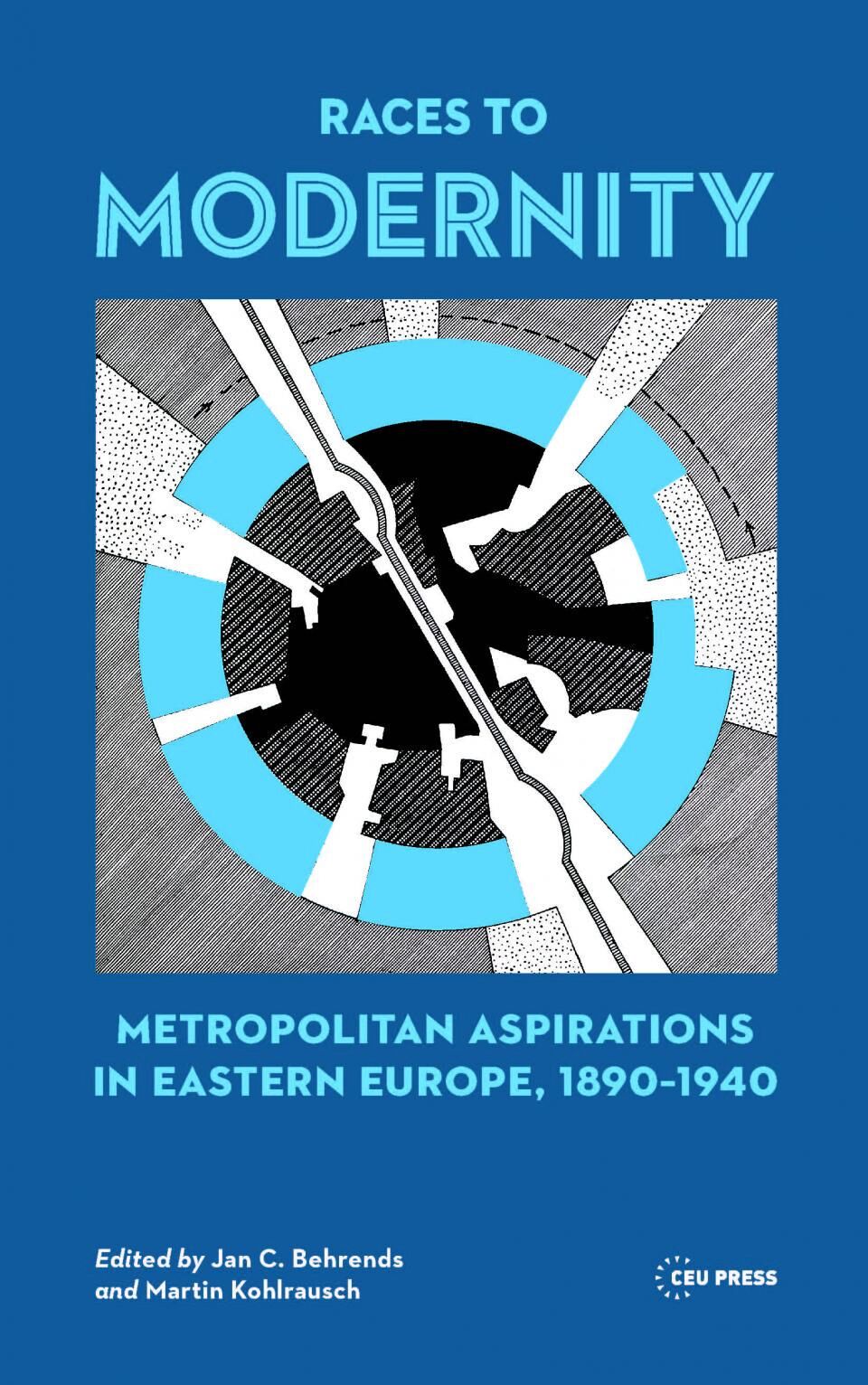
Races to modernity : metropolitan aspirations in Eastern Europe, 1890-1940
\"The book asks how far the model of the European City can be applied to the cities of Eastern Europe which massively expanded from the second half of the 19th century on but often lacked some of the fundamentals of the European urbanity in the Weberian sense. The authors employ a broad focus and look at metropolitan cities between Helsinki and Athens, Warsaw and Moscow. The period under investigation begins with the 1890s when East European societies entered an 'age of great acceleration' and stops with the outbreak of World War II which not only destroyed but also socially and ethnically altered many metropolitan cities of Eastern Europe. While before the First World War most of Eastern Europe was subsumed in the Habsburg, Romanov, and Ottoman empires, new (nation-) states and socialist ideologies shaped post-1918 urban development. For the majority of the new capitals created by the post-war order the state remained the main proponent of change. Both, historical preconditions--the economic situation, the legacy of the empires--and the experience of the upheaval of 1917/18 contributed to this particularity of the region. On the other hand Western Europe and her urban experts continued to be and became even stronger points of reference. The volume discusses the peculiar relationship between state, city and the challenges of modernity in the Eastern Europe with a focus on urban planning in the wider sense of the word. In particular, the different chapters of the book ask how far--given the omnipresent, albeit often idealized example of Western metropolitan cities--a 'reflective modernization' may be identified as a common marker of cities in the region under observation\"--Provided by publisher.
Book

Races to Modernity
This volume succeeds beautifully in conveying a detailed sense of urban development in Eastern Europe and the crucial importance of cities for the moderniszation of Eastern Europe during the half century before World War II.
eBook
Modernist architects and the age of extremes in Eastern Europe, 1920-1950: Introduction
This article demonstrates the social and political impact of modernist architects in Europe’s age of extremes beyond the narrower confines of architecture. In East Central Europe with its ideological tensions, massive socio-political ruptures and eventually the establishment of communist regimes, architects’ social visions and the states’ aspirations led to intense interactions as well as strong controversies. In order to unravel these, we stress the relevance of modernism as a belief and knowledge system. In so doing we point to often unacknowledged continuities between the interwar and the immediate post-war period thus re-politicising the work of modernist architects as a project of worldmaking in the context of competing ideologies and sociotechnical imaginaries.
Journal Article
Warszawa Funkcjonalna
Little was lacking for Warsaw to become for a short but significant moment the center of modern architecture. Early in 1933 it became apparent that the CIAM IV congress, the fourth meeting of the Congrès Internationaux d’Architecture Moderne (CIAM) could not be staged, as planned, in Moscow. One year earlier, Stalin had publicly changed the official art policy to Socialist Realism, thus excluding the more avant-garde currents of architecture from the sphere of the officially accepted. CIAM, the self-declared spearhead of the modernist movement in architecture, had thus lost the basis for a convention in the USSR.
For the young
Book Chapter
Technologische Innovation und transnationale Netzwerke: Europa zwischen den Weltkriegen
Technological Innovation and Transnational Networks: Europe between the Wars
The article sketches the historiography on the transfer of knowledge with a focus on the Interwar period. It stresses the need to analyse the cultural element of the exchange of knowledge beyond a history of innovation and transfer in the narrower sense. Three interrelated developments, which in part determine each other, are treated with particular attention. First, the general growth of international exchange and its altered forms through advances in institutionalisation. Second this process was directly interlinked with the emergence of new channels and fora of communication. Third, one can observe a multilayered ‹politicisation› of expertise, which was closely linked with the First World War and in particular with the rise of authoritarian and totalitarian regimes in the 1920s and 1930s. The articles assembled in this issue are particularly qualified to analyse these problems as each of them covers at least two countries and all of them are transnational in scope.
Innovation technologique et des réseaux transnationaux: L’Europe dans l’entre-deux-guerres
L’article retrace la recherche sur l’histoire du transfert du savoir en vue de l’entredeux- guerres en Europe. Il souligne la nécessité de dégager les facteurs culturels du transfert du savoir au-delà d’une histoire des innovations et des transferts au sens étroit. Trois évolutions particulièrement liées et partiellement coïncidentes sont au centre de l’analyse: premièrement l’augmentation générale de l’échange international et son changement de formes grâce à une institutionnalisation croissante, deuxièmement, l’apparition de nouveaux voies et forums de communication, et troisièmement une «politisation» de l’expertise à plusieurs couches, qui fut accompagné par la Première Guerre mondiale et, avant tout, par la réussite des régimes autoritaires et totalitaires dans les années 1920 et 1930. Les articles parus dans ce recueil thématique sont, dans une certaine mesure, appropriés à une analyse de ces problèmes, car chaque article offre une perspective transfrontalière et transnationale et se focalise sur au moins deux pays.
Journal Article
