
Catalogue Search | MBRL


Are you sure you want to remove the book from the shelf?

{{itemTitle}}
7
result(s) for
"Kompoliti, Katie"
Sort by:

Sources of Disability in Tourette Syndrome: Children vs. Adults
Tourette syndrome (TS) is a neurodevelopmental disorder characterized by tics and neuropsychiatric co-morbidities like Obsessive Compulsive Disorder (OCD) and Attention Deficit Disorder (ADHD), among others. In many instances tics get better with age but this is not always true regarding the psychiatric co-morbidities.
This manuscript reviews the disease-specific Quality of Life (QOL) instruments used to measure disability in TS and the existing literature on sources of functional impairment in children and adults with TS.
Traditionally, disability in TS has been recorded using objective measures. In recent years there has been a development of disease-specific instruments to measure subjectively the impact of the different aspects of TS on the patient's daily function. The differential impact of tics vs. the psychiatric co-morbidities in children with TS is an issue of debate in the existing literature. In adults with TS, the literature is scant, therefore the sources of disability in this group are even less defined compared to children.
As clinicians, we need to focus on determining the sources of disability in children and adults with TS so we can target our interventions successfully.
Journal Article
Donepezil use in children and adolescents with tics and attention-deficit/hyperactivity disorder: An 18-week, single-center, dose-escalating, prospective, open-label study
Background: Striatal cholinergic dysfunction may be important in tics and attention-deficit/hyperactivity disorder (ADHD).
Objective: The purpose of this study was to deter-mine the safety profile of donepezil and whether it improves chronic tics in young patients with comorbid ADHD.
Methods: This 18-week (14 weeks of open treatment followed by a 4-week washout period), single-center, dose-escalating, prospective, open-label trial was conducted in patients aged 7 to 17 years with tics, including chronic motor or vocal tics and Tourette's syndrome, and ADHD. Patients were treated with once-daily oral donepezil doses of 2.5 mg for 2 weeks, 5 mg for the next 6 weeks, and 10 mg for the last 6 weeks, followed by a 4-week washout period. Pa-tients were evaluated using the Children's Global Assessment Scale; the Yale Global Tic Severity Scale (YGTSS); the Revised Conners' Parent Rating Scale; the Symbol and Digit Wisconsin Card Sorting Test; the Stroop black/white, color, and interference tests; the Rey Complex Figure Test; and the Children's Yale-Brown Obsessive Compulsive Scale at 4 visits: baseline, week 8 (5-mg dose), week 14 (10-mg dose), and week 18 (washout).
Results: Seventeen males and 3 females (mean [SD] age, 11.3 [1.9] years [range, 8–14 years]; tic duration, 5.3 [1.9] years; ADHD duration, 6.5 [1.7] years) were included in this study. Tics were significantly reduced at the 10-mg (week-14) donepezil visit compared with the baseline and washout visits based on the total mean (SD) tic score of the YGTSS (18.6 [9.3] vs 12.2 [11.0];
P = 0.006). Fifty percent of patients withdrew and 65% experienced adverse events.
Conclusions: These preliminary results suggest that donepezil significantly reduced tics in these children and adolescents with comorbid ADHD who completed the study. No significant improvement in the symptoms of comorbid ADHD was found with the use of donepezil 10 mg. Donepezil 5 and 10 mg were not well tolerated in these children and adolescents.
Journal Article

Functional movement disorder gender, age and phenotype study: a systematic review and individual patient meta-analysis of 4905 cases
Functional movement disorder (FMD) is a common manifestation of functional neurological disorder presenting with diverse phenotypes such as tremor, weakness and gait disorder. Our current understanding of the basic epidemiological features of this condition is unclear. We aimed to describe and examine the relationship between age at onset, phenotype and gender in FMD in a large meta-analysis of published and unpublished individual patient cases. An electronic search of PubMed was conducted for studies from 1968 to 2019 according to Preferred Reporting Items for Systematic Reviews and Meta-Analyses guidelines. Individual patient data were collected through a research network. We described the distribution of age of onset and how this varied by gender and motor phenotype. A one-stage meta-analysis was performed using multilevel mixed-effects linear regression, including random intercepts for country and data source. A total of 4905 individual cases were analysed (72.6% woman). The mean age at onset was 39.6 years (SD 16.1). Women had a significantly earlier age of onset than men (39.1 years vs 41.0 years). Mixed FMD (23.1%), tremor (21.6%) and weakness (18.1%) were the most common phenotypes. Compared with tremor (40.7 years), the mean ages at onset of dystonia (34.5 years) and weakness (36.4 years) were significantly younger, while gait disorders (43.2 years) had a significantly later age at onset. The interaction between gender and phenotype was not significant. FMD peaks in midlife with varying effects of gender on age at onset and phenotype. The data gives some support to ‘lumping’ FMD as a unitary disorder but also highlights the value in ‘splitting’ into individual phenotypes where relevant.
Journal Article

Association Between Antipsychotics and Body Mass Index When Treating Patients with Tics
Objective:
Treatment with antipsychotics can be associated with weight gain, and second-generation (atypical) antipsychotics (SGAs) can increase the risk for diabetes and dyslipidemia. These risks have not been assessed in patients with tics, who receive lower doses than those used to treat psychosis. The objective of this study is to investigate the relationship between antipsychotic use and weight in tic patients and compare the effects of SGAs to first-generation (typical) antipsychotics (FGAs).
Methods:
We studied the association between antipsychotic use and body mass index (BMI) in consecutive patients with tics seen in a specialty Movement Disorders clinic.
Results:
Height and weight were recorded on 198 patients, average age 19.9 years±14.0 years, 128 treated and 70 not treated with antipsychotics. Standardized measures of BMI were significantly higher in the antipsychotic-treated patients compared to the untreated patients (0.56±1.10) treated vs. untreated (−0.31±0.82). This difference remained significant after controlling for age, gender, stimulant medications, and co-morbidities such as attention-deficit/hyperactivity disorder (ADHD) and obsessive compulsive disorder (OCD). Concomitant medications did not independently influence weight, and there was no difference between FGAs and SGAs. Antipsychotic dose, expressed in chlorpromazine (CPZ) equivalents, and treatment duration did not influence weight.
Conclusion:
Patients with tics on either FGAs or SGAs have higher BMI values compared to patients on no antipsychotics. Better knowledge of this risk should guide physician decision making when treating patients with tics.
Journal Article

Non‐Parkinsonian Movement Disorders
Chorea in the elderly is a clearly defined and fairly common syndrome but is more often recognized as part of other neurological syndromes such as tardive dyskinesia (TD), Huntington's chorea (HD), acquired hepatocerebral degeneration and complication of prolonged levodopa therapy in Parkinson's disease (PD). The clinical features of late‐onset HD resemble those of midlife onset, but the illness is more slowly progressive and less functionally debilitating. TD is frequently difficult to treat, hence only individuals with defined indications for the use of these agents should be treated, especially among the elderly, who appear to be at a higher risk for developing TD, and atypical neuroleptics should be the agents of choice. Restless legs syndrome (RLS) is a sensorimotor disorder characterized primarily by motor restlessness, which is brought on by rest and relieved by movement, such as walking or stretching. Periodic limb movement disorder (PLMD) is frequently associated with RLS but may occur independently, especially in the elderly. Both RLS and PLMD are treated with dopaminergic agents. Dystonia in the elderly appears mostly as focal or segmental dystonia and not generalized. It can be treated with botulinum toxin injections or medications. Tremor is a frequent occurrence in the elderly and can be seen as rest tremor, in PD, postural and kinetic tremor, in essential tremor (ET) and as a side effect of medications, intention tremor in situations associated with cerebellar lesions and task‐ or position‐specific tremor, in dystonia.
Book Chapter
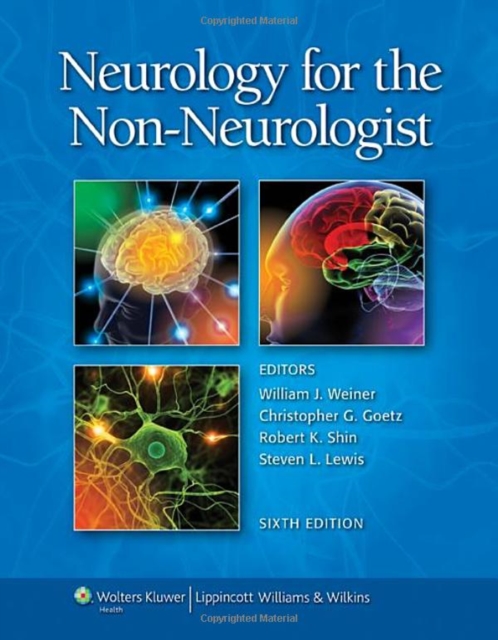
Neurology for the Non-Neurologist
This book is a practical guide for primary care physicians, psychiatrists, and other non-neurologist clinicians who encounter patients with neurologic problems. The book begins with overviews of neurologic symptoms, the neurologic examination, diagnostic tests, and neuroradiology, and then covers the full range of neurologic disorders that non-neurologists encounter. Chapters follow a consistent structure with key elements highlighted for quick scanning. Each chapter begins with Key Points and includes Special Clinical Points, Special Considerations in the Hospitalized Patient , and When a Non-neurologist Should Consider Referring to a Neurologist . Each chapter ends with an Always Remember section emphasizing the most important practical issues and a series of self-study questions.
eBook