
Catalogue Search | MBRL


Are you sure you want to remove the book from the shelf?

{{itemTitle}}
449
result(s) for
"Konstan, David"
Sort by:


Post-Utopia: The Long View
The present article is divided into three parts. The first discusses the nature of utopias and their hypothetical anti-type, dystopias, and also disaster scenarios that are sometimes assimilated to dystopias, with reference also to the idea of post-utopia. An argument is made for the continuity of the utopian impulse, even in an age when brutal wars and forms of oppression have caused many to lose faith in any form of collectivity. Representations of social breakdown and its apparent opposite, totalitarian rigidity, tend to privilege the very individualism that the utopian vision aspires to overcome. The second part looks at examples of each of these types drawn from classical Greek and Roman literature, with a view to seeing how utopias were conceived at a time before the emergence of the modern ideology of the pre-social self. Finally, the third part examines several stories from the collection A People’s Future of the United States which imagine life in the near future. While most illustrate the failure of confidence in the social that has encouraged the intuition that a utopian future is passé, one, it is suggested, reconceives the relation between the individual and the social in a way that points to the renewed possibility of the utopian.
Journal Article

In the orbit of love : affection in ancient Greece and Rome
\"This book is about love in the classical world - not erotic passion but the love that binds together intimate members of a family and close friends, but may also include a wider range of individuals for whom we care deeply. Among the topics discussed are friendship, loyalty, gratitude, grief, and civic solidarity\"-- Provided by publisher.
Book
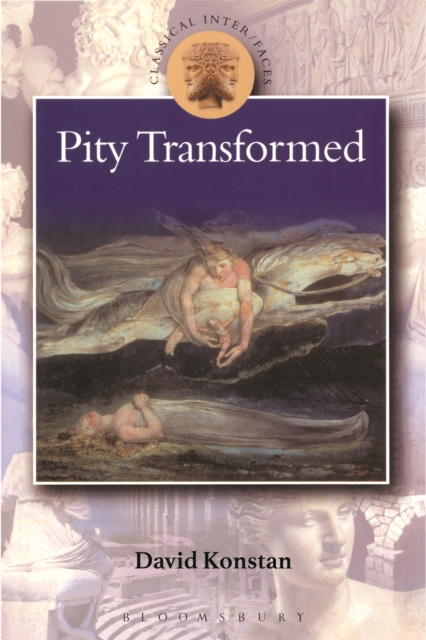
Pity Transformed
\"Pity Transformed\" is an examination of how pity was imagined and expressed in classical antiquity. It pays particular attention to the ways in which the pity of the Greeks and Romans differed from modern ideas. Among the topics investigated in this study are the appeal to pity in courts of law and the connection between pity and desert; the relation between pity and love or intimacy; self-pity; the role of pity in war and its relation to human rights and human dignity; divine pity from paganism to Christianity; and why pity was considered an emotion. This book will lead readers to ponder how the Greeks and Romans were both like and unlike us in this fundamental area of cultural sensibility.
eBook


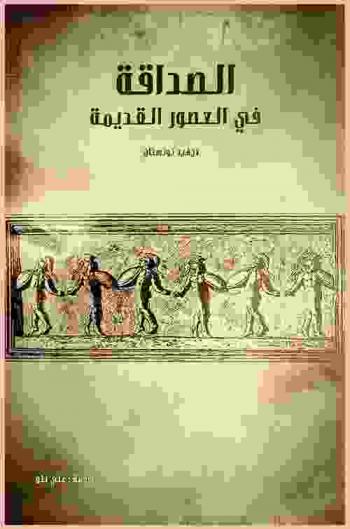
الصداقة في العصور القديمة
يتناول الكتاب تاريخ الصداقة عند الإغريق والرومان منذ هوميروس حتى القرن السادس قبل الميلاد، مرورا بالعصر الهيليني، وانتهاء بالصداقة في أوساط المسيحيين وغيرهم في القرن الرابع الميلادي، ويعتمد المؤلف ديفيد على الرصد الزمني التاريخي للتطورات التي طرأت على مفاهيم الصداقة، والمعايير المختلفة التي تميزها عن الروابط الودية الأخرى في أدبيات الأبحاث المعاصرة، ثم يعرض لأنواع الأدلة المناقضة للرأي السائد عالميا عن الصداقة في العصر القديم، على ضوء التحول الأنثروبولوجي الحديث في فهمنا للمجتمعات القديمة.
BOOK

The Philosophizing Muse
Despite the Romans' reputation for being disdainful of abstract speculation, Latin poetry from its very beginning was deeply permeated by Greek philosophy. Philosophical elements and commonplaces have been identified and appreciated in a wide range of writers, but the extent of the Greek philosophical influence, and in particular the impact of Pythagorean, Empedoclean, Epicurean and Stoic doctrines, on Latin verse has never been fully investigated. In this volume, an international group of scholars specialising in Roman literature and the reception of the Greek philosophical tradition have come together to analyse the debt of Latin poetry to Greek philosophy across a range of authors, from the 3rd century BC to the 1st century AD. The volume contains ten chapters, which examine Plautus, Ennius, Cato and Lucilius (Dorota Dutsch); Lucretius (Gordon Campbell); Vergil (Joseph Farrell); Horace (David Armstrong); Ovid (Myrto Garani); Manilius (Ilaria Ramelli); Seneca (Claudia Wiener); Lucan (Francesca D'Alessandro Behr); Persius (Shadi Bartsch); and Valerius Flaccus (Andrew Zissos). The contributors address the poems in a variety of ways, each according to the nature of the work under consideration and its particular relation to Greek philosophy. The essays are all original, published for the first time in this volume, and they illustrate the subtle ways in which these Roman poets absorbed and transformed their sources.
eBook

