
Catalogue Search | MBRL


Are you sure you want to remove the book from the shelf?

{{itemTitle}}
144
result(s) for
"Korsmeyer, Carolyn"
Sort by:

Gender and aesthetics
Feminist approaches to art are extremely influential and widely studied across a variety of disciplines, including art theory, cultural and visual studies, and philosophy. Gender and Aesthetics is an introduction to the major theories and thinkers within art and aesthetics from a philosophical perspective, carefully introducing and examining the role that gender plays in forming ideas about art. It is ideal for anyone coming to the topic for the first time. Organized thematically, the book introduces in clear language the most important topics within feminist aesthetics:
Why were there so few women painters?
Art, pleasure and beauty
Music, literature and painting
The role of gender in taste and food
What is art and who is an artist?
Disgust and the sublime.
Each chapter discusses important topics and thinkers within art and examines the role gender plays in our understanding of them. These topics include creativity, genius and the appreciation of art, and thinkers from Plato, Kant, and Hume to Luce Irigaray and Julia Kristeva. Also included in the book are illustrations from Gaugin and Hogarth to Cindy Sherman and Nancy Spero to clarify and help introduce often difficult concepts. Each chapter concludes with a summary and further reading and there is an extensive annotated bibliography. Carolyn Korsmeyer's style is refreshing and accessible, making the book suitable for students of philosophy, gender studies, visual studies and art theory, as well as anyone interested in the impact of gender on theories of art.
eBook

Wild Effervescences: A Retrospective Look at Feminist Art
Efervescencias salvajes: una mirada retrospectiva al arte feminista
Journal Article


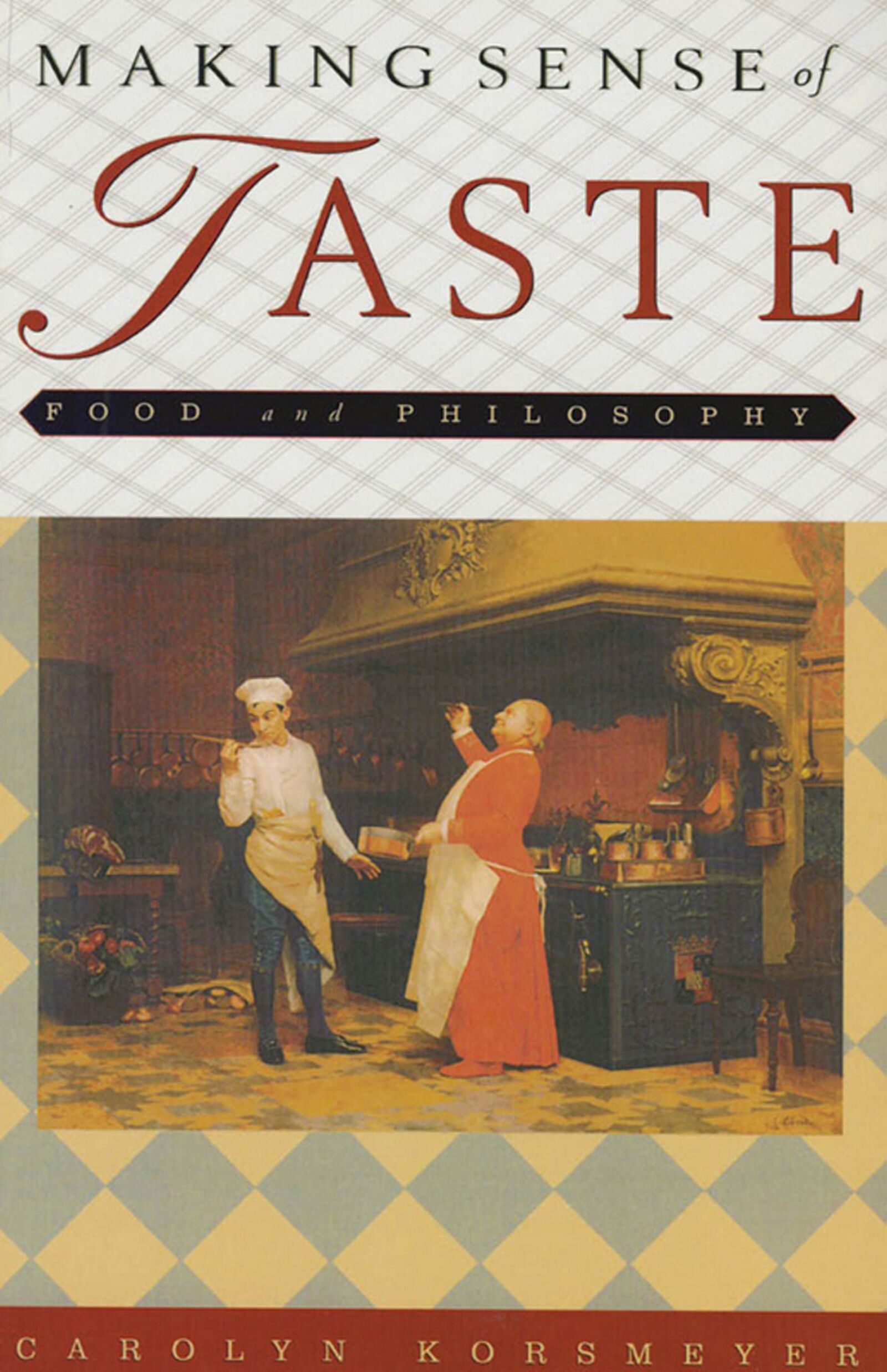
Making Sense of Taste
Taste, perhaps the most intimate of the five senses, has traditionally been considered beneath the concern of philosophy, too bound to the body, too personal and idiosyncratic. Yet, in addition to providing physical pleasure, eating and drinking bear symbolic and aesthetic value in human experience, and they continually inspire writers and artists.
In Making Sense of Taste, Carolyn Korsmeyer explains how taste came to occupy so low a place in the hierarchy of senses and why it is deserving of greater philosophical respect and attention. Korsmeyer begins with the Greek thinkers who classified taste as an inferior, bodily sense; she then traces the parallels between notions of aesthetic and gustatory taste that were explored in the formation of modern aesthetic theories. She presents scientific views of how taste actually works and identifies multiple components of taste experiences.
Turning to taste's objects-food and drink-she looks at the different meanings they convey in art and literature as well as in ordinary human life and proposes an approach to the aesthetic value of taste that recognizes the representational and expressive roles of food. Korsmeyer's consideration of art encompasses works that employ food in contexts sacred and profane, that seek to whet the appetite and to keep it at bay; her selection of literary vignettes ranges from narratives of macabre devouring to stories of communities forged by shared eating.
eBook
Efervescencias salvajes: una mirada retrospectiva al arte feminista
“¿Es posible que la efervescencia salvaje del mundo del arte durante las últimas siete u ocho décadas haya sido una fermentación terminal de algo cuya química histórica sigue sin ser entendida?” Esta provocadora pregunta del crítico y filósofo Arthur Danto procede de un ensayo en el que explora su célebre y controvertida tesis acerca del fin del arte. Él tiene en mente los cambios radicales que han tenido lugar en las artes visuales, empezando con el dadá y continuando con el conceptualismo, el pop y la performance. Estos movimientos han derrocado valores estéticos y artísticos tradicionales hasta tal punto que le llevan a sostener que el arte de su época requiere de una nueva narrativa para reemplazar nociones más antiguas sobre la naturaleza del progreso creativo. Este es el escenario en el que el arte feminista ha dejado su huella. La etiqueta ‘arte feminista’ denota un variado grupo de trabajos, algunos de los cuales encajan en los mundos del arte tradicional con relativa facilidad, pero muchos otros ciertamente parecen demandar una nueva narrativa, o al menos, una revisión en profundidad de la antigua. En cualquier caso, no está nada claro aún en qué podría consistir dicha revisión, e interpreto que la pregunta de Danto es un poco retórica, dejando implícito el que una respuesta segura no se nos va a dar en un futuro próximo. Por tanto, las ideas que siguen se ofrecen solamente de modo tentativo y con precaución.
Journal Article