
Catalogue Search | MBRL


Are you sure you want to remove the book from the shelf?

{{itemTitle}}
55
result(s) for
"Kossew, Sue"
Sort by:
Writing Woman, Writing Place
Contemporary women writers in these two societies are still writing about similar issues as did earlier generations of women, such as exclusions from discourses of nation, a problematic relationship to place and belonging, relations with indigenous people and the way in which women's subjectivity has been constructed through national stereotypes and representations. This book describes and analyses some contemporary responses to 'writing woman, writing place' through close readings of particular texts that explore these issues. Three main strands run through the readings offered in Writing Woman, Writing Place - the theme of violence and the violence of representational practice itself, the revisioning of history, and the writers' consciousness of their own paradoxical subject-position within the nation as both privileged and excluded. Texts by established writers from both Australia and South Africa are examined in this context, including international prize-winning novelists Kate Grenville and Thea Astley from Australia and Nadine Gordimer from South Africa, as well as those by newly-emerging and younger writers. This book will be of essential interest to students and academics within the fields of Postcolonial Literature and Women's Writing.
Sue Kossew was born in South Africa and spent her childhood in Zambia. She lived and taught in England and has been in Australia since 1987. She is a senior lecturer in the School of English at the University of New South Wales. Her previous publications have been in the field of South African and Australian literature, notably on J.M. Coetzee, André Brink and Nadine Gordimer.
\"The strength of Kossew’s book lies especially in her detailed, rich, and thoughtful readings of the selected works. Writing Woman, Writing Place takes a critically rigorous approach and offers meticulous attention to the possibilities that emerge at the crossover of colonial and postcolonial identity formation, especially as this relates to place, space, time, and, crucially, gender.\"
--H-Net Reviews
eBook

Precarity and Survival in Tara June Winch’s After the Carnage
A number of the first- and third-person protagonists/narrators (male and female, straight and gay, Aboriginal and non-Aboriginal, Australian and non-Australian) of these stories are marked by their precarious lives, their poverty and their marginalisation; and violence of various kinds (intimate partner violence, family/domestic violence and global terror), is represented as impacting on these lives. [...]the narrative provides enough of a 'back-story' to explain, if not excuse, his mother's retreat into risk-taking behaviour, at both a personal and historical level, as an Aboriginal woman who has had to cope with being left by her husband and having a number of abusive relationships after this, being homeless and having to scrape together a living in unskilled jobs, and eventually having a more stable home, partner and baby, only to have this taken from her in a reprise of the painful earlier loss of her still-born baby. [...]as in 'Failure to Thrive', she draws attention to the double standards in 'first world' responses to world suffering, where the trope of distance is used as self-justification for their apathy. [...]a man at the party in a newly-fashionable suburb of Brooklyn, attended by the woman and the man, watches images on a muted television of houses being blown up, in an unnamed war zone, and declares: 'From this distance nothing looks especially violent' (147). [...]Police are Taking Family Violence as Seriously as Terrorism.'
Journal Article

Giving Voice: Narrating silence, history and memory in André Brink’s The Other Side of Silence and Before I Forget
This essay examines André P. Brink's two most recent novels, The Other Side of Silence (2002) and Before I Forget (2004), in terms of their voicing of silence and the rewriting of history and memory. Each has a theme familiar to Brink's readers - an historical story of colonial violence and violation avenged; and the recounting by an older writer of his \"last love\", respectively - and each is mediated by a male narrator. Both narrators, though, draw attention to the problems associated with this reconstructive and potentially appropriative storytelling. These texts thereby enact, in a more complex way than many of Brink's previous novels, the intersections of narrative, history and memory.
Journal Article
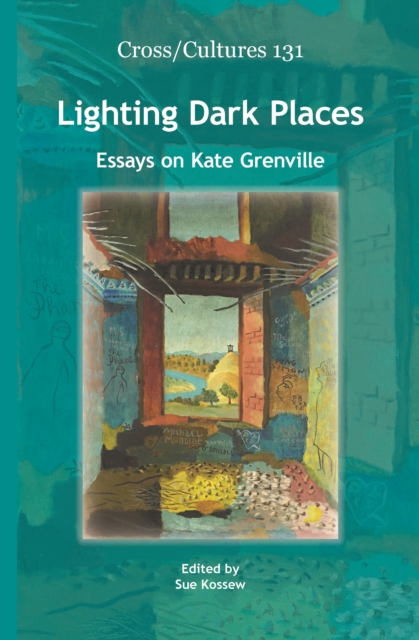
Lighting Dark Places
This is the first published collection of critical essays on the work of Kate Grenville, one of Australia's most important contemporary writers. Grenville has been acclaimed for her novels, winning numerous national and international prizes including the Orange Prize for Fiction and the Commonwealth Writers' Prize. Her novels are marked by sharp observations of outsider figures who are often under pressure to conform to society's norms. More recently, she has written novels set in Australia's past, revisiting and re-imagining colonial encounters between settlers and Indigenous Australians. This collection of essays includes a scholarly introduction and three new essays that reflect on Grenville's work in relation to her approach to feminism, her role as public intellectual and her books on writing. The other nine essays provide analyses of each of her novels published to date, from the early success of Lilian's Story and Dreamhouse to the most recently published novel, The Lieutenant. Her work has been the subject of some debate and this is reflected in a number of the essays published here, most particularly with regard to her most successful novel to date, The Secret River. This intellectual engagement with important contemporary issues is a mark of Grenville's fiction, testament to her own analysis of the vital role of writers in uncertain times. She has suggested that \"writers have ways of going into the darkest places, taking readers with them and coming out safely.\" This volume attests to Grenville's own significance as a writer in a time of change and to the value of her novels as indices of that change and in \"lighting dark places.\".
eBook
Revisiting the Haunted Past: Christine Piper’s After Darkness
[...]the image of the 'dead trees ... their limbs stretching skywards, as if begging for forgiveness' (After Darkness 3)-while describing the immediacy of the Australian landscape-has resonance in the novel for the histories of both Australia and Japan. [...]the ideas of guilt and forgiveness are represented as complex and conflicted, involving personal as well as national histories. [...]the entire notion of national identity is brought into question in the novel. Piper's fictionalised encounter is itself based on the discourses of racism of the time (perhaps rendered understandable under the circumstances of perceived and actual invasion from the 'yellow peril'). [...]despite a long history of Japanese presence in Australia dating back to the late nineteenth century when small pearling communities settled in towns such as Broome and Darwin, and in the sugar-growing region of northern Queensland, a poster from the time declares that 'the Japanese who came to spy out our land, now attempt to return and enslave it'. [...]the novel ends with an act of retrospective revelation, perhaps even apology, by someone implicated in events that have been and still are largely unacknowledged.
Journal Article

Re-Reading the Past: Monuments, History and Representation in Short Stories by Ivan Vladislavić and Zoë Wicomb
As representations of particular moments in history, monuments provide useful indices for processes of remembering and forgetting that accompany 'regime change'. Their paradoxical representational instability and their exposure to multiple readings and counter-readings over time make monuments fascinating material for literary investigations of the unstable nature of representation itself. Both Ivan Vladislavić and Zoë Wicomb have used the trope of monuments in their short stories, enabling them to explore acts of reading that reveal a spectrum of interpretations, often ironically resistant to the authorised version of history being celebrated. This article argues that, in drawing attention to these particular cultural constructions, both writers are also underscoring the ironies inherent in the inability of cultural forms to 'fix' either the past or the present, particularly in transitional historical moments.
Journal Article
Introduction: Gender and Violence in Cultural Texts of the Global South
In an article concerned with Western feminist responses to the 2012 gang rape and murder of a young woman on a bus in New Delhi, Elora Halim Chowdhury criticises analyses that fail to illuminate 'globalization and the structural inequalities that play a role in producing both victims and perpetrators of violence' (10). (121) In terms of gender-based research into the Global South, this can be seen in analyses of the feminisation of labour and poverty, including the increased vulnerability to violence of women who live in slums with restricted access to water and sanitation and who are required to travel long distances to workplaces (often operated by multi-national companies). Embodying subtle modes of resistance to colonial and white supremacist domination and the violence implicit in these gendering regimes, both the African American and the Haitian women in Morrell's study are strongly oriented towards alternative and emergent futures. Summaries of Essays In '\"Who Speaks for Culture?\" Challenging Gender and Sexual Violence in Māori and Pacific Island Literature in English', Chris Prentice analyses the intersecting pressures of colonisation, diaspora and globalisation to observe that Māori and Pacific Island territories, communities and cultures bear the social, economic, and environmental brunt of global capitalism whose so-called benefits are weighted strongly towards the North.
Journal Article

The Politics of Shame and Redemption in J. M. Coetzee's \Disgrace\
Fyodor Dostoevsky, The Possessed1 In both J. M. Coetzee's Booker Prize-winning novel Disgrace (1999) and André Brink's The Rights of Desire (2000), a middle-aged or older male protagonist (Coetzee's David Lurie is 52; Brink's Ruben Olivier is 65) has what might be seen as a final fling (or, in David Lurie's Romantic version, \"a last leap of the flame of sense before it goes out\" - 27) via a relationship with a much younger woman - in both cases, a university student - and faces life-changing decisions about work, life, and ethics. (Doubling 392) This debate, too, is staged in Coetzee's Disgrace in a number of ways: within the consciousness of David Lurie himself as he comes to terms with his personal and public shame and finds a kind of \"grace\" at the novel's end; between David and his daughter, Lucy, in their different ways of dealing with her rape and what she calls \"the price of staying on\" (158); in the encounter between Melanie's God-fearing father and the nonbelieving David; and in the context of the wider sociopolitical conditions of a transitional South Africa where power is changing hands and the erstwhile possessors of that power, the white population, are having to adapt to survive.
Journal Article