
Catalogue Search | MBRL


Are you sure you want to remove the book from the shelf?

{{itemTitle}}
1,272
result(s) for
"Kramer, Robert S."
Sort by:
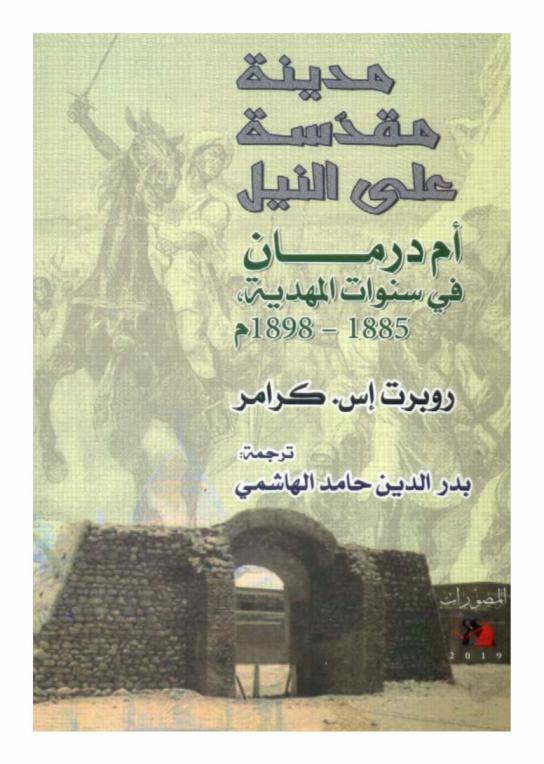
مدينة مقدسة على النيل : أم درمان في سنوات المهدية 1885-1898 م.
تكمن أهمية الكتاب أنه أرخ لأهم مدينة سودانية أسسها سودانيون لم تتأسس علي أيدي غزاة مستعمرين حتي غدت عاصمة للبلاد ورمزا من رموزها الوطنية. سبقتها في ذلك الوقت ربما مدينة الأبيض في وسط السودان من حيث النشأة والأهمية التجارية وإلي حد ما مدينة الفاشر مبتدأ درب الأربعين. هناك طبعا سواكن وبربر وشندي كمراكز تجارية هامة ولكن لم ينطبق عليها تعريف المدن. وقد أورد المؤلف مقتطف للرحالة السويسري بيركهاردت يصف فيه تجمعات السكان في السودان النيلي بأنها \" سلسلة من الدويلات الزراعية التي لا توجد فيها مدن.
BOOK

Ischemic preconditioning at a remote site prevents acute kidney injury in patients following cardiac surgery
Acute kidney injury, a common complication of cardiac surgery with cardiopulmonary bypass, is associated with increased morbidity and mortality. Ischemic preconditioning at a remote site mitigates ischemia–reperfusion injury and may prevent acute kidney injury after cardiac surgery, thus providing clinical benefit. To further study this, we enrolled 120 adult patients undergoing elective cardiac surgery for whom cardiopulmonary bypass was anticipated in a randomized, single-blind, and controlled pilot trial. Patients were stratified for the type of surgery and equally assigned to a control group or to receive remote ischemic preconditioning by an automated thigh tourniquet consisting of three 5-min intervals of lower extremity ischemia separated by 5-min intervals of reperfusion. The primary end point was acute kidney injury defined as an elevation of serum creatinine of ≥0.3mg/dl or ≥50% within 48h after surgery. Fifty-nine patients in each group were analyzed on an intention-to-treat basis. Acute kidney injury occurred in 12 remote ischemic preconditioned and 28 control patients, reflecting an absolute risk reduction of 0.27 and a significantly reduced relative risk due to preconditioning of 0.43. Hence, remote ischemic preconditioning prevents acute kidney injury in patients undergoing cardiopulmonary bypass-assisted cardiac surgery.
Journal Article

Historical dictionary of the Sudan
The Republic of the Sudan was long the largest country in Africa and, according to the general consensus, also one of the least successful in many ways. This was not entirely its fault since it lay along the fault line between Muslim and Christian Africa and between the Nile Valley civilizations and African Sudanic cultures. This partly explains the long and bloody warfare waged by the Southerners to achieve independence, which they did in July 2011. So this hefty book actually covers not one but two states.
This fourth edition of the Historical Dictionary of the Sudan does so, first, through a lengthy and detailed chronology tracing its relatively few successes and numerous failures. The introductory essay does an admirable job of putting it all in perspective. But the most informative part is the dictionary, with now over 700 entries for this fourth edition. They deal with important personalities, politics, the economy, society, culture, religion and inevitably the civil war. There are also appendixes and an extensive bibliography.
eBook

Concordance of Guideline-Based Risk Stratification and Selection of Patients for Transcatheter Aortic Valve Implantation or Surgical Replacement
The 2020 American Health Association/American College of Cardiology valve guidelines recommend surgical aortic valve replacement (SAVR) for symptomatic patients with aortic stenosis (AS) age <65 years and transcatheter aortic valve implantation (TAVI) for patients with AS age >80 years. We analyzed TAVI versus SAVR practice patterns using age-based recommendations. We compared 2016-to-2019 TAVI and isolated SAVR in northern New England at 5 centers according to guideline-recommended age groups. Multivariable logistic regression was performed to identify independent predictors of TAVI for the intermediate age group. The study was approved by each site's institutional review board in accordance with ongoing participation and quality improvement efforts in the Northern New England Cardiovascular Study Group. Among 4,161 patients with isolated severe AS, TAVI increased from 2016 to 2019: 55.8% versus 76.1%, p <0.01 for trend. SAVR for patients with AS age >80 years was uncommon and decreased over time: 13.1% versus 1.6%, p <0.01. TAVI utilization nearly doubled over time in young patients with AS age <65 years (14.3% vs 26.2%, p <0.01). Preference for SAVR decreased by 50% over time (p <0.01) in the intermediate age group (65 to 80 years). Independent predictors of TAVI among patients aged 65 to 80 years included older age, chronic obstructive pulmonary disease, previous stroke, and coronary artery bypass grafting, whereas vascular disease and clinical urgency favored SAVR. In conclusion, consistent with current American Health Association/American College of Cardiology guidelines, TAVI was the treatment of choice in >97% of severe patients with AS age >80 years by 2019. TAVI utilization in patients <65 years has doubled over time and thus may not reflect current guideline recommendations. TAVI is the preferred choice in those aged 65 to 80 years, especially among patients with previous stroke or coronary artery bypass grafting.
Journal Article

The death of Bassiouni: a case of complex identity in the Sudan
Contested national identity has been an important issue for much of Sudan's modern history, and was a key factor in the conflict between north and south since independence in 1956. The \"Islamisation\" of Sudanese government and society, beginning under Ja'far Numayri in 1983 and continuing after the military coup of 1989, led to new levels of widespread violence and ultimately the secession of the South in 2011. Meanwhile, Sudanese people everywhere have continued to debate what it means to be \"Sudanese\". History reveals a number of ways in which Sudan's diverse peoples have been accommodated and assimilated in periods of both stability and instability. This study examines Sudan's minority Jewish community in the nineteenth and twentieth centuries, and one important family in particular, to reveal how being \"Sudanese\" has sometimes crossed, or muddied, a variety of ethnic, religious and cultural boundaries.
Journal Article


Liberal or Restrictive Transfusion after Cardiac Surgery
To the Editor:
In their article on red-cell transfusion, Murphy et al. (March 12 issue)
1
report substantial nonadherence to treatment in both study groups — one of which had a restrictive threshold for hemoglobin level in red-cell transfusions and one of which had a liberal threshold. Although nonadherence (defined as either the failure to transfuse red cells within 24 hours after a patient's hemoglobin fell below an assigned threshold or the administration of a transfusion when the hemoglobin level was above the assigned threshold) increases the likelihood of a null result for the primary outcome, it might confound the finding . . .
Journal Article
Historical dictionary of the Sudan, fourth edition
The Republic of the Sudan was long the largest country in Africa and, according to the general consensus, also one of the least successful in many ways. This was not entirely its fault since it lay along the fault line between Muslim and Christian Africa and between the Nile Valley civilizations and African Sudanic cultures. This partly explains the long and bloody warfare waged by the Southerners to achieve independence, which they did in July 2011. So this hefty book actually covers not one but two states. This fourth edition of the Historical Dictionary of the Sudan does so, first, through a lengthy and detailed chronology tracing its relatively few successes and numerous failures. The introductory essay does an admirable job of putting it all in perspective. But the most informative part is the dictionary, with now over 700 entries for this fourth edition. They deal with important personalities, politics, the economy, society, culture, religion and inevitably the civil war. There are also appendixes and an extensive bibliography.
eBook