
Catalogue Search | MBRL


Are you sure you want to remove the book from the shelf?

{{itemTitle}}
531
result(s) for
"Kuper, Adam"
Sort by:

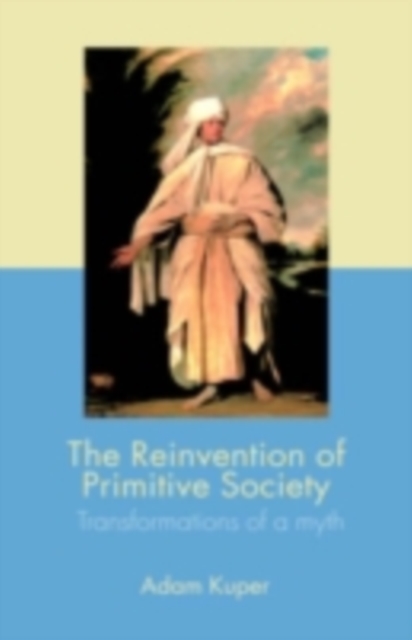
The Reinvention of Primitive Society
\"The Invention of Primitive Society, Adam Kuper's best selling critique of ideas about the origins of society and religion that have been much debated since Darwin, has been hugely influential in anthropology and post-colonial studies.
This topical new edition, entitled The Reinvention of Primitive Society, has been thoroughly revised and updated to take account of new research in the field. It coincides with a revival of the myth of primitive society by the 'indigenous peoples' movement', which taps into a widespread popular belief about the noble savage and reflects a romantic reaction against 'civilisation' and 'science'. By way of fascinating accounts of classic texts in anthropology, classical studies and law, the book reveals how wholly mistaken theories can become the basis for academic research and political programmes. In new chapters, Kuper challenges this most recent version of the myth of primitive society and traces conceptions of the barbarian, savage and primitive back through the centuries to ancient Greece.
Lucidly written and student friendly, this is the must-have text for those interested in anthropological theory and current post-colonial debates.\"
eBook
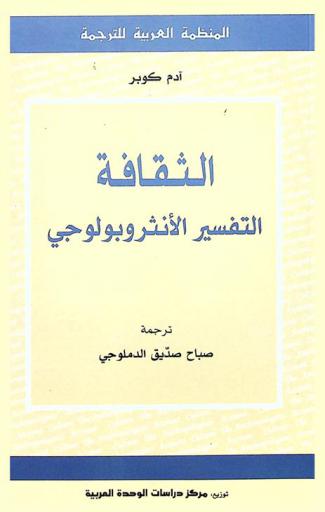
الثقافة : التفسير الأنثروبولوجي
يقدم الكتاب مراجعة نقدية لمفهوم الثقافة في الفكر الغربي الحديث، والأميركي المعاصر على وجه الخصوص، سعيا إلى تقييم مصداقية استخدام مفهوم الثقافة كأداة تحليلية في العلوم الاجتماعية والأنثروبولوجيا. فيتناول تاريخ اللفظة وتطور المفهوم، ويشتمل على بحث دقيق بشأن كيفية تشكل المفاهيم والمصطلحات، وتغيير دلالاتها عبر الزمن، ومن خلال الاستخدام، منذ الرومانسية الألمانية والبريطانية، وعبر المدارس الأنثروبولوجية الأميركية المتتالية لينتهي بعرض حجة بليغة ضد الطفرات الجديدة لما بعد الحداثة، والاحتفاء بالهوية سياسيا، واستغلال الدراسات الثقافية سياسيا.
Book

Incest and Influence
Like many gentlemen of his time, Charles Darwin married his first cousin. In fact, marriages between close relatives were commonplace in nineteenth-century England, and Adam Kuper argues that they played a crucial role in the rise of the bourgeoisie. This groundbreaking study brings out the connection between private lives, public fortunes, and the history of imperial Britain.
eBook

Anthropologists unite!
A minority of cultural anthropologists and archaeologists do apply evolutionary theory, or cognitive science, or adopt an ecological perspective on cultural variation, or play about with the theory of games, but they feel that they are isolated, even marginalized. A rare exception is the field of medical anthropology, where cultural anthropologists engage regularly with biologists in studies of HIV and AIDS, or posttraumatic stress disorders, or investigations of folk medical beliefs and practices.
Journal Article

Incest & influence : the private life of bourgeois England
Like many gentlemen of his time, Charles Darwin married his first cousin. In fact, marriages between close relatives were commonplace in nineteenth-century England, and Adam Kuper argues that they played a crucial role in the rise of the bourgeoisie. Incest and Influence shows us just how the political networks of the eighteenth-century aristocracy were succeeded by hundreds of in-married bourgeois clans—in finance and industry, in local and national politics, in the church, and in intellectual life. In a richly detailed narrative, Kuper deploys his expertise as an anthropologist to analyze kin marriages among the Darwins and Wedgwoods, in Quaker and Jewish banking families, and in the Clapham Sect and their descendants over four generations, ending with a revealing account of the Bloomsbury Group, the most eccentric product of English bourgeois endogamy. These marriage strategies were the staple of novels, and contemporaries were obsessed with them. But there were concerns. Ideas about incest were in flux as theological doctrines were challenged. For forty years Victorian parliaments debated whether a man could marry his deceased wife's sister. Cousin marriage troubled scientists, including Charles Darwin and his cousin Francis Galton, provoking revolutionary ideas about breeding and heredity. This groundbreaking study brings out the connection between private lives, public fortunes, and the history of imperial Britain.
eBook

Meyer Fortes
In the two decades after the Second World War, Meyer Fortes was a central figure in what was then called ‘British social anthropology’. Sometimes dismissed as simply a follower of Radcliffe-Brown, Fortes’ theoretical influences in fact ranged from Freud to Parsons. He formulated a distinctive theoretical synthesis, and produced the most influential version of ‘descent theory’. Fortes is currently out of fashion, but four decades after his retirement from the Cambridge chair a revaluation is in order.
Journal Article

Changing the subject - about cousin marriage, among other things
The original sin of anthropology was to divide the world into civilized and savage. The social systems of all those other peoples supposedly rested upon a foundation of blood relationships. Anthropologists therefore became at once the experts on the primitive and on kinship. In the 1970s Western kinship systems began to undergo radical change. Simultaneously, the old orthodoxies about kinship crumbled in anthropology. Young ethnographers generally lost interest in the topic. Kinship systems have nevertheless not gone away, out there in the world. But to understand them we must first abandon the opposition between the modern and the traditional, the West and the Rest. /// Le péché originel de l'anthropologie fut de diviser le monde en \"civilisé\" et \"sauvage\", en partant du principe que les systèmes sociaux des autres reposaient sur des fondations constituées par les liens du sang. Les anthropologues devinrent ainsi à la fois les experts des primitifs et de la parenté. Dans les années 1970, les systèmes de parenté occidentaux ont amorcé des changements radicaux. Dans le même temps, les vieilles orthodoxies anthropologiques relatives à la parenté ont commencé à s'effriter, et les jeunes ethnographes se sont pour la plupart désintéressés du sujet. Les systèmes de parenté n'ont pas disparu pour autant dans le monde mais il faut, pour les comprendre, renoncer d'abord à l'opposition entre modernité et tradition, entre l'Occident et le reste du monde.
Journal Article