
Catalogue Search | MBRL


Are you sure you want to remove the book from the shelf?

{{itemTitle}}
54
result(s) for
"Kutzner, Heinz"
Sort by:

Germline mutations in BAP1 predispose to melanocytic tumors
Thomas Wiesner and colleagues report that germline mutations in
BAP1
predispose to melanocytic tumors ranging histopathologically from epithelioid nevi to atypical melanocytic proliferations. Some
BAP1
mutation carriers also developed uveal or cutaneous melanomas.
Common acquired melanocytic nevi are benign neoplasms that are composed of small, uniform melanocytes and are typically present as flat or slightly elevated pigmented lesions on the skin. We describe two families with a new autosomal dominant syndrome characterized by multiple, skin-colored, elevated melanocytic tumors. In contrast to common acquired nevi, the melanocytic neoplasms in affected family members ranged histopathologically from epithelioid nevi to atypical melanocytic proliferations that showed overlapping features with melanoma. Some affected individuals developed uveal or cutaneous melanomas. Segregating with this phenotype, we found inactivating germline mutations of
BAP1
, which encodes a ubiquitin carboxy-terminal hydrolase. The majority of melanocytic neoplasms lost the remaining wild-type allele of
BAP1
by various somatic alterations. In addition, we found
BAP1
mutations in a subset of sporadic melanocytic neoplasms showing histological similarities to the familial tumors. These findings suggest that loss of
BAP1
is associated with a clinically and morphologically distinct type of melanocytic neoplasm.
Journal Article

Integrating Patient Data Into Skin Cancer Classification Using Convolutional Neural Networks: Systematic Review
Recent years have been witnessing a substantial improvement in the accuracy of skin cancer classification using convolutional neural networks (CNNs). CNNs perform on par with or better than dermatologists with respect to the classification tasks of single images. However, in clinical practice, dermatologists also use other patient data beyond the visual aspects present in a digitized image, further increasing their diagnostic accuracy. Several pilot studies have recently investigated the effects of integrating different subtypes of patient data into CNN-based skin cancer classifiers.
This systematic review focuses on the current research investigating the impact of merging information from image features and patient data on the performance of CNN-based skin cancer image classification. This study aims to explore the potential in this field of research by evaluating the types of patient data used, the ways in which the nonimage data are encoded and merged with the image features, and the impact of the integration on the classifier performance.
Google Scholar, PubMed, MEDLINE, and ScienceDirect were screened for peer-reviewed studies published in English that dealt with the integration of patient data within a CNN-based skin cancer classification. The search terms skin cancer classification, convolutional neural network(s), deep learning, lesions, melanoma, metadata, clinical information, and patient data were combined.
A total of 11 publications fulfilled the inclusion criteria. All of them reported an overall improvement in different skin lesion classification tasks with patient data integration. The most commonly used patient data were age, sex, and lesion location. The patient data were mostly one-hot encoded. There were differences in the complexity that the encoded patient data were processed with regarding deep learning methods before and after fusing them with the image features for a combined classifier.
This study indicates the potential benefits of integrating patient data into CNN-based diagnostic algorithms. However, how exactly the individual patient data enhance classification performance, especially in the case of multiclass classification problems, is still unclear. Moreover, a substantial fraction of patient data used by dermatologists remains to be analyzed in the context of CNN-based skin cancer classification. Further exploratory analyses in this promising field may optimize patient data integration into CNN-based skin cancer diagnostics for patients' benefits.
Journal Article

Discordance, accuracy and reproducibility study of pathologists’ diagnosis of melanoma and melanocytic tumors
Accurate melanoma diagnosis is crucial for patient outcomes and reliability of AI diagnostic tools. We assess interrater variability among eight expert pathologists reviewing histopathological images and clinical metadata of 792 melanoma-suspicious lesions prospectively collected at eight German hospitals. Moreover, we provide access to the largest panel-validated dataset featuring dermoscopic and histopathological images with metadata. Complete agreement is achieved in 53.5% of cases (424/792), and a majority vote ( ≥ five pathologists) in 90.9% (720/792). Considerable discordance is observed for non-invasive melanomas (complete agreement in only 10/73 cases). The expert panel disagrees with the local pathologists’ and dermatologists’ diagnoses in 14.9% and 33.5% of cases, respectively. This variability highlights the diagnostic challenges of early-stage melanomas and the need to reconsider how ground truth is established in routine care and AI research. Including at least two pathologists or virtual panels may contribute to more consistent diagnostic results.
The accuracy of melanoma diagnosis can vary considerably among clinicians, impacting both patient outcomes and the performance of related AI tools. Here, the authors systematically assess interrater variability among expert pathologists reviewing histopathological images and clinical metadata of melanoma-suspicious lesions collected at eight German hospitals.
Journal Article

Distinct Sets of Genetic Alterations in Melanoma
A genomic study of four groups of melanoma arising at sites with different levels of exposure to ultraviolet light reveals distinct genetic alterations among the groups and suggests that the groups will have differential responses to targeted therapies. These findings have implications for our understanding of the susceptibility to melanoma and the design of clinical trials.
A genomic study of four groups of melanoma arising at different sites with different levels of exposure to ultraviolet light reveals distinct genetic alterations and suggests that the groups will have differential responses to targeted therapies.
The rising incidence of melanoma and lack of effective treatments for advanced disease represent an important public health problem.
1
Exposure to the sun is generally accepted as a major causative factor.
1
–
3
However, its mechanism is unknown, and the role of exposure to ultraviolet light is complex and has some paradoxical features. For example, in light-skinned people, the group that is predominantly affected by melanoma, tumors are most common on areas that are intermittently exposed to the sun, such as the trunk, arms, and legs, rather than on areas that are chronically exposed to the sun, such as the face. . . .
Journal Article

TERT promoter mutation in sebaceous neoplasms
TERT promoter (TERTp) mutations widely occur in multiple human neoplasms, and they have been related to different clinicopathological features. To date, this mutation has not been identified in sebaceous tumors. Here, we analyzed TERTp mutations in 91 sebaceous neoplasms (17 adenomas, 45 sebaceomas, and 29 carcinomas). We detected mutations in 26.7% (8 of 29) of sebaceous carcinomas by pyrosequencing and Sanger sequencing. No mutation was detected in adenomas or sebaceomas. The difference was significant between sebaceoma and carcinoma. The most frequent TERTp mutations were C228T and C250T in 37.5% (3 of 8) of mutated cases each one. The mutation was not associated with poor clinical evolution. Using NGS, 20 of 29 (68.5%) sebaceous carcinomas harbored mutations in 8 of the 30 genes analyzed (TP53, TERTp, EGFR, ATRX, PDGFRA, CDKN2A, PTEN, and ACVR1). With immunohistochemistry, only 1 of 8 (12.5%) TERTp-mutated carcinomas lacked mismatch repair (MMR) protein expression compared to 6 of 21 (31.6%) of non-mutated ones. Sebaceous carcinomas with MMR protein expression had significantly higher frequency of total mutations and TP53 and TERTp mutations than MMR protein-deficient carcinomas. In conclusion, TERTp mutation has been detected in sebaceous carcinomas, and its presence could be useful to differentiate sebaceous carcinoma from sebaceoma, a difficult histopathological challenge.
Journal Article

Effects of Label Noise on Deep Learning-Based Skin Cancer Classification
Recent studies have shown that deep learning is capable of classifying dermatoscopic images at least as well as dermatologists. However, many studies in skin cancer classification utilize non-biopsy-verified training images. This imperfect ground truth introduces a systematic error, but the effects on classifier performance are currently unknown. Here, we systematically examine the effects of label noise by training and evaluating convolutional neural networks (CNN) with 804 images of melanoma and nevi labeled either by dermatologists or by biopsy. The CNNs are evaluated on a test set of 384 images by means of 4-fold cross validation comparing the outputs with either the corresponding dermatological or the biopsy-verified diagnosis. With identical ground truths of training and test labels, high accuracies with 75.03% (95% CI: 74.39-75.66%) for dermatological and 73.80% (95% CI: 73.10-74.51%) for biopsy-verified labels can be achieved. However, if the CNN is trained and tested with different ground truths, accuracy drops significantly to 64.53% (95% CI: 63.12-65.94%,
< 0.01) on a non-biopsy-verified and to 64.24% (95% CI: 62.66-65.83%,
< 0.01) on a biopsy-verified test set. In conclusion, deep learning methods for skin cancer classification are highly sensitive to label noise and future work should use biopsy-verified training images to mitigate this problem.
Journal Article
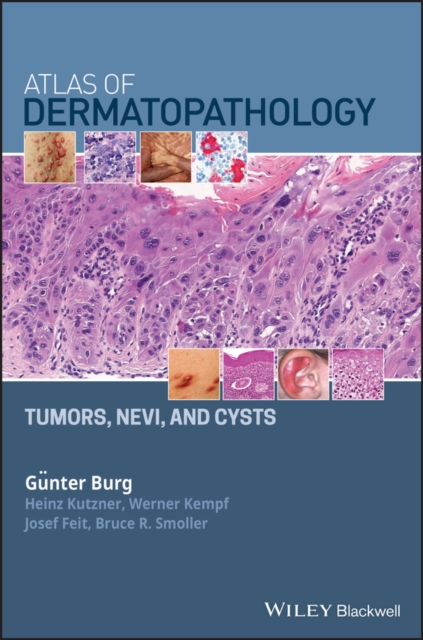
Atlas of Dermatopathology
Differential diagnosis is at its most accurate and efficient when clinical presentation and histopathological features are considered in correlation with one another. With this being so, the expert team behind this atlas has integrated both perspectives to create an innovative and essential resource for all those involved with the diagnosis of tumors, cysts, and nevi. Almost 1, 400 full-color images clearly illustrate common patterns and variants of tumorous lesions of the skin and are helpfully contextualized by concise, straightforward descriptions of key features and diagnostic clues.
Whether they are aspiring or experienced practitioners, dermatologists and pathologistsof all levels will find this an insightful and practically applicable addition to their bookshelf. Its far-reaching and easy-to-navigate coverage of relevant diseases of the skin provides trainees with an excellent grounding in the area, while practicing specialists may benefit from its use as a tool for the differential diagnoses of borderline cases.
Atlas of Dermatopathology: Tumors, Nevi, and Cysts offers a uniquely balanced, clear, and comprehensive guide to what can be a difficult process, and will be of tremendous assistance tostudents, dermatologists, dermatopathologists, and pathologists everywhere.
eBook


Malignant dermatofibroma: clinicopathological, immunohistochemical, and molecular analysis of seven cases
Dermatofibroma (cutaneous fibrous histiocytoma) represents a common benign mesenchymal tumor, and numerous morphological variants have been described. Some variants of dermatofibroma are characterized by an increased risk of local recurrences, and there are a few reported metastasizing cases. Unfortunately, an aggressive behavior cannot be predicted reliably by morphology at the moment, and we evaluated the value of array-comparative genomic hybridization (CGH) in this setting. Seven cases of clinically aggressive dermatofibromas were identified, and pathological and molecular features were evaluated. The neoplasms occurred in four female and in three male patients (mean age was 33 years, range 2–65 years), and arose on the shoulder, buttock, temple, lateral neck, thigh, ankle, and cheek. The size of the neoplasms ranged from 1 to 9 cm (mean: 3 cm). An infiltration of the subcutis was seen in five cases. Two neoplasms were completely excised, whereas an incomplete or marginal excision was reported in the remaining cases. Local recurrences were seen in six cases (time to the first recurrence ranged from 8 months to 9 years). Metastases were noted between 3 months and 8 years after diagnosis in six patients. Two patients died of disease, and two patients are alive with disease. Histologically, the primary tumors showed features of cellular dermatofibroma (four cases), cellular/aneurysmal dermatofibroma (one case), atypical/cellular dermatofibroma (one case), and classical dermatofibroma (one case). Mitotic figures ranged from 3 to 25 per 10 high-power fields, and focal necrosis was present in five cases. Interestingly, malignant transformation from cellular dermatofibroma to an obvious spindle cell/pleomorphic sarcoma was seen in one primary and in one recurrent neoplasm. Five neoplasms showed chromosomal aberrations by array-CGH, suggesting that these changes may represent an additional diagnostic tool in the recognition of cases of dermatofibroma with a metastatic potential.
Journal Article

CD64 Staining in Dermatofibroma: A Sensitive Marker Raising the Question of the Cell Differentiation Lineage of This Neoplasm
Dermatofibroma (DF) is a mesenchymal tumor of the dermis, but its exact differentiation lineage is still uncertain. A progenitor cell that may be able to differentiate into fibroblastic, myofibroblastic, or fibrohistiocytic cells has been hypothesized. Some authors have also proposed the possibility of a monocytic-histiocytic origin. We stained 47 consecutive dermatofibromas with CD64, CD34, CD14, CD163, and CD68 to test which marker is more reliable for the diagnosis and to gain insight into their histogenesis. From the 35 cases stained with the whole immunohistochemical panel, all were positive for CD64, mostly showing a strong and diffuse pattern. Regarding all the other staining, CD14 was strongly positive in 77% of the lesions and CD163 in 20%. The CD68 stain was intense and diffuse only in 20% of the cases. All lesions were negative for CD34, but two of them showed patchy and weak staining. DFs were immunohistochemically stained positively with a set of macrophage/monocyte/histiocyte lineage markers such as CD14, CD68, CD163, and CD64. This finding favors an active pro-inflammatory immature monocyte-lineage cell as the more suitable origin for DF. CD64 seems to be more sensitive than other markers to confirm the diagnosis.
Journal Article