
Catalogue Search | MBRL


Are you sure you want to remove the book from the shelf?

{{itemTitle}}
18
result(s) for
"Labate, Beatriz Caiuby"
Sort by:

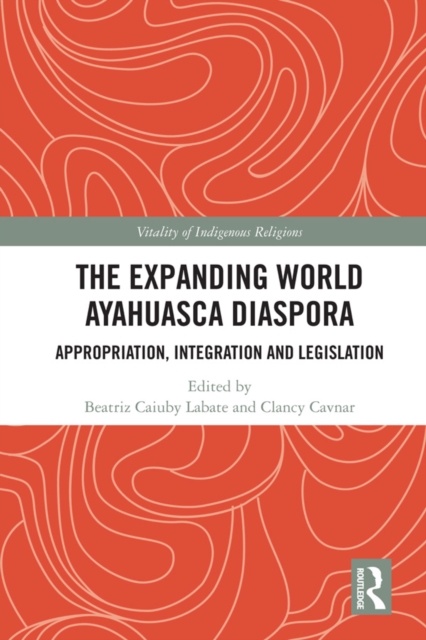
The Expanding World Ayahuasca Diaspora
During its expansion from the Amazon jungle to Western societies, ayahuasca use has encountered different legal and cultural responses. Following on from the earlier edited collection, The Expanding World Ayahuasca Diaspora continues to explore how certain alternative global religious groups, shamanic tourism industries, and recreational drug milieus grounded in the consumption of the traditionally Amazonian psychoactive drink ayahuasca embody various challenges associated with modern societies.
Each contributor explores the symbolic effects of a \"bureaucratization of enchantment\" in religious practice and the \"sanitizing\" of indigenous rituals for tourist markets. Chapters include ethnographic investigations of ritual practice, transnational religious ideology, the politics of healing, and the invention of tradition. Larger questions on the commodification of ayahuasca and the categories of sacred and profane are also addressed.
Exploring classic and contemporary issues in social science and the humanities, this book provides rich material on the bourgeoning expansion of ayahuasca use around the globe. As such, it will appeal to students and academics in religious studies, anthropology, sociology, psychology, cultural studies, biology, ecology, law, and conservation.
eBook

México y el narcoanálisis: una genealogía de las políticas de drogas en los gobiernos Calderón y Peña Nieto
Objetivo/Contexto: Este artículo presenta un análisis histórico de la prohibición de las drogas en México considerando las interconexiones entre los aspectos sociales, morales, económicos, políticos y de seguridad que componen la lucha contra algunas sustancias psicoactivas, sus productores, vendedores y consumidores. Metodología: El análisis sigue una propuesta teórica y metodológica original llamada narcoanálisis,(1) influenciada por los conceptos genealogía y biopolítica desarrollados por Michel Foucault. Dicha perspectiva entiende que la producción de un mercado ilegal de drogas se da por la yuxtaposición de cinco niveles analíticos: el moral, el sanitario, el de seguridad pública, el de seguridad nacional y el de seguridad internacional. Conclusiones: La aplicación del narcoanálisis al caso mexicano nos ayuda a comprender las transformaciones del narcotráfico local, su simbiosis con la economía legal y con el poder político; asimismo, las presentes propuestas de reformas legales para el control de las drogas como la marihuana y el peyote. Originalidad: Esta nueva propuesta teórico-metodológica se dedica a entender la producción y la transformación de las políticas de drogas, sus orígenes sociales, sus efectos políticos y sociales, teniendo en cuenta el dinamismo y la interconexión entre las esferas sociales, económicas y políticas, dentro y fuera de las fronteras mexicanas.
Journal Article

Um panorama da literatura sobre a internacionalização das religiões ayahuasqueiras brasileiras
Created during the twentieth century, Barquinha, Santo Daime, and the União do Vegetal, known as the Brazilian ayahuasca religions, were circumscribed to the northern region of Brazil at least until the beginning of the 1970s. Since then, Santo Daime and the União do Vegetal have expanded significantly, each one in its own way, reaching all the regions of the country, crossing the Brazilian borders and the Atlantic Ocean. The process of internationalization of these groups involves complex nets and transnational alliances, generating intriguing issues on cultural translation and religious diaspora. Nevertheless, the theme is rarely explored and the information is widely scattered. This article proposes a critical review of the academic literature on the internationalization of these groups, including articles, master’s theses and doctoral dissertations in various languages, published or not, as well as texts on the legal aspects. Through a comparative approach, we seek to identify the main characteristics, tendencies, and perspectives of the ayahuasca field of studies. In this way, we hope to call attention to the possibilities and gaps of this discussion and, at the same time, stimulate the development of more research. This article aims to become a sort of guide to the researchers in this area as well as to be of use to others interested in the subject. The internationalization of the ayahuasca religions has already reached dozens of countries in the world, and offers an interesting locus of study of the interaction among psychedelics, culture, language, and cognition.
Journal Article
México y el narcoanálisis: una genealogía de las políticas de drogas en los gobiernos Calderón y Peña Nieto
Objective/context: This article presents an historical analysis of the prohibition of drugs in Mexico considering the interconnections between different social, moral, economic, political and security aspects that comprise the fight against certain psychoactive substances, their producers, sellers and consumers. Methodology: The analysis follows a theoretical and methodological approach called narcoanalysis,2 influenced by the concepts of genealogy and biopolitics developed by Michel Foucault. Said outlook posits that the production of an illegal drug market takes place from the juxtaposition of five analytical levels: moral, health, public safety, national security and international security. Conclusions: The application of narcoanalysis to the Mexican case helps us understand the transformation of local narcotrafficking, its symbiosis with the legal economy and with political power; likewise, the proposals for legal reforms for the control of drugs, such as marijuana and peyote. Originality: This new theoretical-methodological approach seeks to understand the production and transformation of drug policies, their social origins, and their political and social effects, considering the dynamism and interconnectedness between the social, economic and political spheres, inside and outside the Mexican borders.
Journal Article


Música, tradução e linguagem na diáspora do Santo Daime
Este artigo aborda a diáspora do Santo Daime através de sua dimensão musical. Para isso, são estabelecidos alguns paralelos com a expansão internacional da capoeira, do neopentecostalismo e das religiões afro-brasileiras, situando a transnacionalização do Santo Daime dentro do movimento mais amplo de diáspora das religiões brasileiras e do Sul Global. Segue-se daí uma discussão sobre o papel ritual da música e sobre os hinos religiosos daimistas, que são considerados como presentes sagrados e representam um importante pilar dos rituais. Os autores descrevem e refletem sobre como os hinos são cantados, traduzidos e interpretados em distintos países e contextos. Argumentam que são produzidos, por um lado, coesão e redes transnacionais e, por outro, ressignificações e conflitos. Essas discussões nos convidam ao debate sobre o uso ritual de psicoativos, a relação entre música e religião e sobre as noções de tradição, autenticidade e sagrado.
This article addresses Santo Daime’s diaspora and its musical dimensions. In order to do this, the authors establish parallels from the international expansion of capoeira, neo-Pentecostalism and afro-Brazilian religions. These parallels situate the transnationalization of Santo Daime within the broader movement of the diaspora of Brazilian religions and the Global South. Thereafter, the paper discusses the ritual role of music and daimistas’ religious hymns, which are considered sacred gifts and represent a cornerstone of the rituals. The article then describes and discusses how the hymns are sung, translated, and interpreted into different countries and contexts. It is argued that the hymns generate cohesion and transnational networks on the one hand, and reinterpretation and conflicts on the other. These discussions encourage debates on the ritual use of psychoactive drugs, the relationship between music and religion, and on notions of tradition, authenticity and sacredness.
Journal Article
Mexico y el narcoanalisis : una genealogia de las politicas de drogas en los gobiernos Calderon y Pena Nieto/Mexico and the Narcoanalysis: a Genealogy of Drug Policies in the Calderon and Pena Nieto Governments/Mexico e a narcoanalise: uma genealogia das politicas de drogas nos governos Calderon e Pena Nieto
PALABRAS CLAVE: México; narcotráfico; política de drogas; narcoanálisis; prohibición.
Journal Article