
Catalogue Search | MBRL


Are you sure you want to remove the book from the shelf?

{{itemTitle}}
33
result(s) for
"Labinaz, Marino"
Sort by:

Milrinone as Compared with Dobutamine in the Treatment of Cardiogenic Shock
Patients with cardiogenic shock were assigned to receive milrinone or dobutamine for inotropic support. There was no significant difference between the two groups in the composite primary outcome of in-hospital death from any cause or cardiovascular or renal events.
Journal Article
Efficacy of a Device to Narrow the Coronary Sinus in Refractory Angina
Implantation of a device to narrow the coronary sinus and increase myocardial venous pressure was compared with a sham procedure in patients with refractory angina. The proportion of patients with improvement at 6 months was significantly greater with the device.
A growing number of patients with severe and diffuse obstructive coronary artery disease who are not candidates for revascularization have debilitating angina despite medical therapy.
1
–
3
The worldwide prevalence of refractory angina is increasing, and new therapeutic options are needed.
4
An endoluminal, balloon-expandable, stainless steel, hourglass-shaped device designed for percutaneous implantation in the coronary sinus (Reducer, Neovasc) creates a focal narrowing that leads to increased pressure in the coronary sinus, which may relieve angina (Figure 1). A nonrandomized first-in-human study involving 15 patients with refractory angina who were treated with the device showed significant improvement with respect to angina class. . . .
Journal Article

Transcatheter mitral valve repair for inotrope dependent cardiogenic shock – Design and rationale of the CAPITAL MINOS trial
Functional mitral regurgitation (MR) is an important clinical consideration in patients with heart failure. Transcatheter edge-to-edge repair (TEER) has emerged as a useful therapeutic tool for patients with chronic heart failure, however the role of TEER in patients with cardiogenic shock (CS) and MR has not yet been studied in a randomized trial. The Transcatheter Mitral Valve Repair for Inotrope Dependent Cardiogenic Shock (CAPITAL MINOS) trial was therefore designed to determine if TEER improves clinical outcomes in the CS population.
The CAPITAL MINOS trial is an open-label, multi-center randomized clinical trial comparing TEER to medical therapy in patients with CS and MR. A total of 144 patients with Society for Cardiovascular Angiography and Interventions (SCAI) class C or D CS and at least 3+ MR will be randomized in a 1:1 ratio to TEER or medical therapy alone. The primary outcome will be a composite of in-hospital all-cause mortality, cardiac transplantation, implantation of durable left ventricular assist device, or discharge on palliative inotropic therapy. Patients will be followed for the duration of their index hospitalization for the primary outcome. Secondary outcomes include 6 month mortality.
The CAPITAL MINOS trial will determine whether TEER improves outcomes in patients with CS and MR and will be an important step in optimizing treatment for this high-risk patient population.
Journal Article

Point-of-care genetic testing for personalisation of antiplatelet treatment (RAPID GENE): a prospective, randomised, proof-of-concept trial
Prospective assessment of pharmacogenetic strategies has been limited by an inability to undertake bedside genetic testing. The CYP2C19*2 allele is a common genetic variant associated with increased rates of major adverse events in individuals given clopidogrel after percutaneous coronary intervention (PCI). We used a novel point-of-care genetic test to identify carriers of the CYP2C19*2 allele and aimed to assess a pharmacogenetic approach to dual antiplatelet treatment after PCI.
Between Aug 26, 2010, and July 7, 2011, 200 patients were enrolled into our prospective, randomised, proof-of-concept study. Patients undergoing PCI for acute coronary syndrome or stable angina were randomly assigned to rapid point-of-care genotyping or to standard treatment. Individuals in the rapid genotyping group were screened for the CYP2C19*2 allele. Carriers were given 10 mg prasugrel daily, and non-carriers and patients in the standard treatment group were given 75 mg clopidogrel daily. The primary endpoint was the proportion of CYP2C19*2 carriers with high on-treatment platelet reactivity (P2Y12 reactivity unit [PRU] value of more than 234) after 1 week of dual antiplatelet treatment, which is a marker associated with increased adverse cardiovascular events. Interventional cardiologists and data analysts were masked to genetic status and treatment. Patients were not masked to treatment allocation. All analyses were by intention to treat. This study is registered with ClinicalTrials.gov, NCT01184300.
After randomisation, 187 patients completed follow-up (91 rapid genotyping group, 96 standard treatment). 23 individuals in each group carried at least one CYP2C19*2 allele. None of the 23 carriers in the rapid genotyping group had a PRU value of more than 234 at day 7, compared with seven (30%) given standard treatment (p=0·0092). The point-of-care genetic test had a sensitivity of 100% (95% CI 92·3–100) and a specificity of 99·3% (96·3–100).
Point-of-care genetic testing after PCI can be done effectively at the bedside and treatment of identified CYP2C19*2 carriers with prasugrel can reduce high on-treatment platelet reactivity.
Spartan Biosciences.
Journal Article
Inotrope versus placebo therapy in cardiogenic shock: Rationale and study design of the CAPITAL DOREMI2 trial
Cardiogenic shock (CS) is a state of end-organ hypoperfusion related to cardiac dysfunction. Current guidelines recommend consideration of inotrope therapy in patients with CS, however no robust data support their use. The purpose of the CAPITAL DOREMI2 trial is to examine the efficacy and safety of inotrope therapy against placebo in the initial resuscitation of patients with CS.
This is a multi-center, double-blind, randomized, placebo-controlled trial comparing single-agent inotrope therapy to placebo in patients with CS. A total of 346 participants with Society for Cardiovascular Angiography and Interventions class C or D CS will be randomized in a 1:1 fashion to inotrope or placebo therapy, which will be administered over a 12-hour period. After this period, participants will continue open-label therapies at the discretion of the treating team. The primary outcome is a composite of all-cause in-hospital death, and, as measured during the 12-hour intervention period, any of: sustained hypotension or high dose vasopressor requirements, lactate greater than 3.5 mmol/L at 6 hours or thereafter, need for mechanical circulatory support, arrhythmia leading to emergent electrical cardioversion, and resuscitated cardiac arrest. All participants will be followed for the duration of their hospitalization, and secondary outcomes will be assessed at the time of discharge.
This trial will be the first to establish the safety and efficacy of inotrope therapy against placebo in a population of patients with CS and has the potential to alter the standard care provided to this group of patients.
Journal Article
Acute kidney injury after radial or femoral artery access in ST-segment elevation myocardial infarction: AKI-SAFARI
Acute kidney injury (AKI) complicating primary percutaneous coronary intervention (PCI) is an independent predictor of short- and long-term outcomes in patients presenting with ST-elevation myocardial infarction (STEMI). Prior studies suggest a lower incidence of AKI in patients undergoing PCI through radial artery compared to femoral artery access; however, no randomized clinical trials have specifically investigated this question in patients presenting with STEMI.
To determine whether radial access (RA) is associated with a reduced frequency of AKI following primary PCI, we performed a substudy of the SAFARI-STEMI trial. The SAFARI-STEMI trial was an open-label, multicenter trial, which randomized patients presenting with STEMI to RA or femoral access (FA), between July 2011 and December 2018. The primary outcome of this post hoc analysis was the incidence of AKI, defined as an absolute (>0.5 mg/dL) or relative (>25%) increase in serum creatinine from baseline.
In total 2,285 (99.3%) of the patients enrolled in SAFARI-STEMI were included in the analysis—1,132 RA and 1,153 FA. AKI occurred in 243 (21.5%) RA patients and 226 (19.6%) FA patients (RR: 0.91, 95% CI: 0.78-1.07, P = .27). An absolute increase in serum creatinine >0.5 mg/dL was seen in 49 (4.3%) radial and 52 (4.5%) femoral patients (RR: 1.04, 95% CI: 0.71-1.53, P = .83). AKI was lower in both groups when the KDIGO definition was applied (RA 11.9% vs FA 10.8%; RR: 0.90, 95% CI: 0.72-1.13, P = .38).
Among STEMI patients enrolled in the SAFARI-STEMI trial, there was no association between catheterization access site and AKI, irrespective of the definition applied. These results challenge the independent association between catheterization access site and AKI noted in prior investigations.
Journal Article

Outcomes in Patients Stratified by PRECISE-DAPT Versus DAPT Scores After Percutaneous Coronary Interventions
The optimal length of dual antiplatelet therapy (DAPT) after percutaneous coronary intervention (PCI) remains debated. Current guidelines recommend individualized treatment with consideration of risk scores. We sought to evaluate the degree of agreement in treatment recommendations and the ability to predict ischemic and bleeding complications of the PRECISE-DAPT (predicting bleeding complications in patients undergoing stent implantation and subsequent dual antiplatelet therapy) and DAPT scores. Consecutive patients receiving 12 months of DAPT were grouped based on score treatment recommendation at the time of PCI: PRECISE-DAPT prolonged or shortened (PRECISE DAPT <25 vs ≥25) and DAPT prolonged or shortened (DAPT ≥2 vs <2). One-year ischemic and bleeding outcomes were compared for each group. In 451 patients, the PRECISE-DAPT and DAPT score recommendations were concordant in 56.7% of patients (Cohen's kappa for agreement of k = 0.139, 95% confidence interval 0.065 to 0.212). There was no difference in composite major adverse cardiovascular and cerebrovascular events between patients with high versus low PRECISE-DAPT or DAPT scores. In patients with a high PRECISE-DAPT score versus a low score, there was an increased incidence of 1-year all-cause mortality (2.13% vs 0%, p = 0.04) and an increase in bleeding (Bleeding Academic Research Consortium ≥3a: 17.0% vs 2.8%; p <0.001; Bleeding Academic Research Consortium 3b/c and 5: 8.5% vs 1.4%; p = 0.001). There were no differences in rates of mortality or bleeding for patients with high versus low DAPT scores. In conclusion, when applied at the baseline, the PRECISE-DAPT and DAPT scores frequently make discordant DAPT duration recommendations. The PRECISE-DAPT, but not the DAPT score, demonstrated associations with all-cause mortality and bleeding in patients prescribed 12 months of DAPT after PCI.
Journal Article
A Citywide Protocol for Primary PCI in ST-Segment Elevation Myocardial Infarction
To minimize door-to-balloon times, Ottawa developed a program in which patients with ST-elevation myocardial infarction were taken directly from the field to a cardiac care center for primary coronary angioplasty. The median door-to-balloon time (69 minutes) was approximately half that of patients who were transferred from emergency departments (123 minutes). Respective in-hospital mortality rates were 3.0% and 5.7% (P=0.30).
Ottawa developed a program in which patients with ST-elevation myocardial infarction were taken directly from the field to a cardiac care center for primary coronary angioplasty. The median door-to-balloon time (69 minutes) was approximately half that of patients who were transferred from emergency departments (123 minutes).
Survival of patients presenting with ST-segment elevation myocardial infarction is enhanced by rapid, complete, and sustained reperfusion of the infarct-related artery.
1
–
3
Delays in either door-to-needle
1
or door-to-balloon
4
–
7
times are associated with increased mortality. In patients who are treated with primary percutaneous coronary intervention (PCI), each 30 minutes of delay increases the relative risk of 1-year mortality by 7.5%.
6
It has been recommended that efforts be made to shorten door-to-balloon times for all patients because time-to-balloon strongly correlates with mortality regardless of the baseline risk of mortality.
7
PCI ensures more complete and sustained restoration of flow to the infarct-related . . .
Journal Article
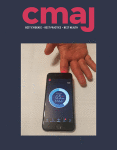
Photoplethysmography using a smartphone application for assessment of ulnar artery patency: a randomized clinical trial
Radial artery access is commonly performed for coronary angiography and invasive hemodynamic monitoring. Despite limitations in diagnostic accuracy, the modified Allen test (manual occlusion of radial and ulnar arteries followed by release of the latter and assessment of palmar blush) is used routinely to evaluate the collateral circulation to the hand and, therefore, to determine patient eligibility for radial artery access. We sought to evaluate whether a smartphone application may provide a superior alternative to the modified Allen test.
We compared the modified Allen test with a smartphone heart rate–monitoring application (photoplethysmography readings detected using a smartphone camera lens placed on the patient’s index finger) in patients undergoing a planned cardiac catheterization. Test order was randomly assigned in a 1:1 fashion. All patients then underwent conventional plethysmography of the index finger, followed by Doppler ultrasonography of the radial and ulnar arteries (the diagnostic standard). The primary outcome was diagnostic accuracy of the heart rate–monitoring application.
Among 438 patients who were included in the study, we found that the heart rate–monitoring application had a superior diagnostic accuracy compared with the modified Allen test (91.8% v. 81.7%, p = 0.002), attributable to its greater specificity (93.0% v. 82.8%, p = 0.001). We also found that this application had greater diagnostic accuracy for assessment of radial or ulnar artery patency in the ipsilateral and contralateral wrist (94.0% v. 84.0%, p < 0.001).
A smartphone application used at the bedside was diagnostically superior to traditional physical examination for confirming ulnar patency before radial artery access. This study highlights the potential for smartphone-based diagnostics to aid in clinical decision-making at the patient’s bedside. Trial registration: Clinicaltrials.gov, no. NCT02519491.
Journal Article

Concomitant Transcatheter Edge-to-Edge Repair and Left Atrial Appendage Occlusion
Background/Objectives: Atrial fibrillation is a frequent comorbidity amongst patients undergoing mitral valve transcatheter edge-to-edge repair (M-TEER) for mitral regurgitation. Left atrial appendage occlusion (LAAO) can be performed to reduce the risk of stroke in patients with atrial fibrillation. Both procedures require large-bore venous access, transseptal puncture, and real-time imaging of the left atrium. However, limited data exist evaluating the safety and feasibility of concomitant M-TEER and LAAO. Methods: We performed a retrospective review of all concomitant M-TEER and LAAO procedures at our institution between May 2019 and September 2024 to evaluate the safety and feasibility of this approach. Results: Concomitant left atrial appendage occlusion was successful in all 15 patients, requiring an additional 15 min (IQR 11–29) of procedural time. No patients died or had a major vascular complication. Routine transesophageal echocardiography performed within 90 days showed no device related thrombus, and no significant peri-device leak in any patients. Conclusions: Concomitant M-TEER and LAAO are feasible but additional prospective studies or randomized trials are needed to evaluate the potential clinical benefit.
Journal Article