
Catalogue Search | MBRL


Are you sure you want to remove the book from the shelf?

{{itemTitle}}
8
result(s) for
"Lambert, Gregg, 1961-"
Sort by:

Deleuze, a philosophy of the event : together with The vocabulary of Deleuze
\"This edition makes a new translation of two of Zourabichvili's most important writings on the philosophy of Gilles Deleuze available in a single volume. Deleuze: A Philosophy of the Event (1994) is an exposition of Deleuze's philosophy as a whole, while the complementary Deleuze's Vocabulary (2003) approaches Deleuze's work through an analysis of key concepts in a dictionary form. From the publication of Deleuze: A Philosophy of the Event to his untimely death in 2006, Franًcois Zourabichvili was regarded as one of the most important new voices of contemporary philosophy in France. His work continues to make an essential contribution to Deleuze scholarship today, and this new translation is set to become an event within Deleuze Studies for many years to come.\" -- Publisher's website.
BOOK


The World Is Gone
Exploring the existential implications of the Covid-19 crisis through meditations Part personal memoir, part philosophical reflection and written in the midst of the pandemic in 2021, The World Is Gone employs the Robinson Crusoe fable to launch an existential investigation of the effects of extreme isolation, profound boredom, nightly insomnia.
eBook

The Elements of Foucault
A new conceptual diagram of Foucault's original vision of the biopolitical order The history around the critical reception of Michel Foucault's published writings is troubled, according to Gregg Lambert, especially in light of the controversy surrounding his late lectures on biopolitics and neoliberal governmentality. In this book, Lambert's unique approach distills Foucault's thought into its most basic components in order to more fully understand its method and its own immanent rules of construction. The Elements of Foucault presents a critical study of Foucault's concept of method from the earlier History of Sexuality, Volume 1, to his later lectures. Lambert breaks down Foucault's post-1975 analysis of the idea of biopower into four elements: the method, the conceptual device (i.e., dispositif), the grid of intelligibility, and the notion of \"milieu.\" Taken together, these elements compose the diagram of Foucault's early analysis and the emergence of the neoliberal political economy. Lambert further delves into how Foucault's works have been used and misused over time, challenging the periodization of Foucault's later thought in scholarship as well as the major and most influential readings of Foucault by other contemporary philosophers-in particular Gilles Deleuze and Giorgio Agamben. The Elements of Foucault is the first generally accessible, yet rigorous and comprehensive, discussion of lectures and major published works of Foucault's post-1975 theory of biopower and of the major innovation of the concept of dispositif. It is also the first critical work to address the important influence of French philosopher Georges Canghuilhem on Foucault's thought.
eBook

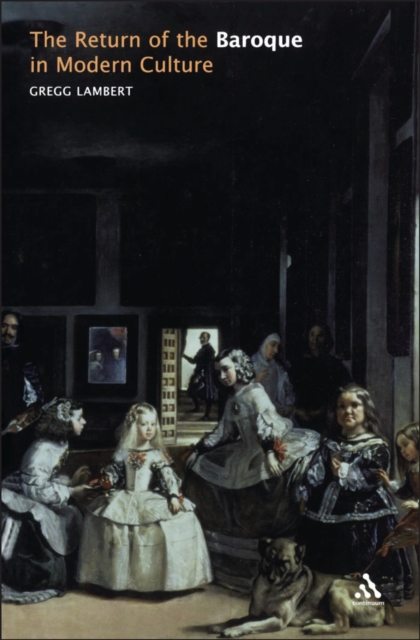
Return of the Baroque in Modern Culture
The Return of the Baroque in Modern Culture explores the re-invention of the early European Baroque within the philosophical, cultural, and literary thought of postmodernism in Europe, the United States, the Caribbean, and Latin America. Gregg Lambert argues that the ‘return of the Baroque’ expresses a principle often hidden behind the cultural logic of postmodernism in its various national and cultural incarnations, a principal often in variance with Anglo-American modernism. Writers and theorists examined include Walter Benjamin, Paul de Man, Jacques Derrida, Michel Foucault, Octavio Paz, and Cuban novelists Alejo Carpentier and Severo Sarduy. A highly original and compelling reinterpretation of modernity, The Return of the Baroque in Modern Culture answers Raymond Williams’ charge to create alternative national and international accounts of aesthetic and cultural history in order to challenge the centrality of Anglo-American modernism.
eBook

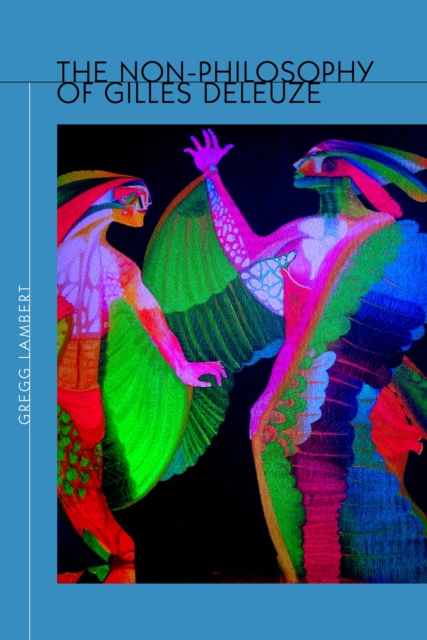
The Non-Philosophy of Gilles Deleuze
The Non-Philosophy of Gilles Deleuze takes up Deleuze‘s most powerful argument on the task of contemporary philosophy in the West. Deleuze argues that it is only through a creative engagement with the forms of non–philosophy––notably modern art, literature and cinema––that philosophy can hope to attain the conceptual resources to restore the broken links of perception, language and emotion. In short, this is the only future for philosophy if it is to repair its fragile relationship to immanence to the world as it is.A sequence of dazzling essays analyze Deleuze‘s investigations into the modern arts. Particular attention is paid to Deleuze‘s exploration of Liebniz in relation to modern painting and of Borges to an understanding of the relationship between philosophy, literature and language. By illustrating Deleuze‘s own approach to the arts, and to modern literature in particular, the book demonstrates the critical significance of Deleuze‘s call for a future philosophy defined as an quot;art of inventing concepts.quot;
eBook