
Catalogue Search | MBRL


Are you sure you want to remove the book from the shelf?

{{itemTitle}}
4
result(s) for
"Lang, Tim author"
Sort by:
The unmanageable consumer
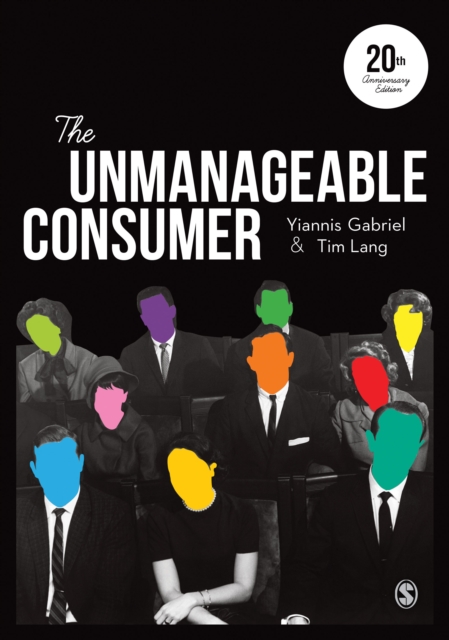
‘The Unmanageable Consumer has long been one of my favorite books in the sociology of consumption. This long overdue third edition has updated and revised the basic argument in many ways. Most importantly, it now offers a new chapter on the consumer as worker or, more generally, the prosumer. Assign it to your classes (I have…and will again) and read it for your edification.’ - George Ritzer, Distinguished University Professor, University of Maryland, USA ‘This book is essential reading for anyone interested in understanding one of the most complex and multifaceted concepts of our time: the idea of the consumer. I cannot recommend it highly enough.’ - Mark Tadajewski, Professor of Marketing, Durham University Business School, UK Western-style consumerism is often presented as unstoppable, yet its costs mount and its grip on consumer reality weakens. In this completely rewritten 20th Anniversary edition, Gabriel and Lang restate their thesis that consumerism is more fragile and unmanageable than is assumed by its proponents. Consumerism has been both stretched and undermined by globalization, the internet, social media and other cultural changes. Major environmental threats, debt, squeezed incomes and social inequalities now temper Western consumers' appetite for spending. The 20th century Deal, first championed by Henry Ford, of more consumption from higher waged work looks tattered. This edition of The Unmanageable Consumer continues to explore 10 different consumer models, and encourages analysis of contemporary consumerism. It looks at the spread of consumerism to developing countries like India and China and considers the effects of demographic changes and migration, and points to new features such as consumers taking on unwaged work. This new edition also touches on contemporary topics including the consumption movement on social media, the occupy movement, and the horsemeat scandal.
eBook

Ecological Public Health
What is public health? To some, it is about drains, water, food and housing, all requiring engineering and expert management. To others, it is the State using medicine or health education and tackling unhealthy lifestyles.
This book argues that public health thinking needs an overhaul, a return to and modernisation around ecological principles. Ecological Public Health thinking, outlined here, fits the twenty-first century's challenges. It integrates what the authors call the four dimensions of existence: the material, biological, social and cultural aspects of life. Public health becomes the task of transforming the relationship between people, their circumstances and the biological world of nature and bodies. For Geof Rayner and Tim Lang, this is about facing a number of long-term transitions, some well recognized, others not. These transitions are Demographic, Epidemiological, Urban, Energy, Economic, Nutrition, Biological, Cultural and Democracy itself.
The authors argue that identifying large scale transitions such as these refocuses public health actions onto the conditions on which human and eco-systems health interact. Making their case, Rayner and Lang map past confusions in public health images, definitions and models. This is an optimistic book, arguing public health can be rescued from its current dilemmas and frustrations. This century's agenda is unavoidably complex, however, and requires stronger and more daring combinations of interdisciplinary work, movements and professions locally, nationally and globally. Outlining these in the concluding section, the book charts a positive and reinvigorated institutional purpose.
eBook