
Catalogue Search | MBRL


Are you sure you want to remove the book from the shelf?

{{itemTitle}}
592
result(s) for
"Langhammer, A."
Sort by:
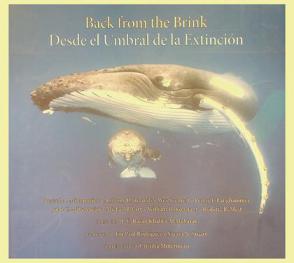
Back from the brink : 25 conservation success stories = Desde el umbral de la extinción : 25 historias de éxito en la conservación
\"Back from the Brink, written by leading international conservationists, presents species that have been saved from the \"brink of extinction\" through the resolve and collaborative initiatives of individuals, communities, organizations, and governments over the past decades.Along with awe-inspiring photographs, the book presents in-depth profiles of 25 threatened species and in all includes the stories of nearly 100 species - some formerly believed extinct but now successfully rescued. The detailed information underscores the urgent need to work together to prevent further loss of nature's diversity and beauty and to mitigate the causes of climate change. As ongoing destruction, degradation, and fragmentation of the planet's natural ecosystems increase to make way for human populations, this volume clearly demonstrates every society's obligation to ensure the right balance between urban growth and natural ecosystems.The beauty in these pages serves as an aspiration for our collective work and our shared future.\"--Book jacket.
Book

Validation of FRAX and the impact of self-reported falls among elderly in a general population: the HUNT study, Norway
SummaryFracture Risk Assessment Tool (FRAX) without bone mineral density (BMD) for hip fracture prediction was validated in a Norwegian population 50–90 years. Fracture risk increased with higher FRAX score, and the observed number of hip fractures agreed well with the predicted number, except for the youngest and oldest men.Self-reported fall was an independent risk factor for fracture in women.IntroductionThe primary aim was to validate FRAX without BMD for hip fracture prediction in a Norwegian population of men and women 50–90 years. Secondary, to study whether information of falls could improve prediction of fractures in the subgroup aged 70–90 years.MethodsData were obtained from the third survey of the Nord-Trøndelag Health Study (HUNT3), the fracture registry in Nord-Trøndelag, and the Norwegian Prescription Database (NorPD), including 15,432 women and 13,585 men.FRAX hip without BMD was calculated, and hip fractures were registered for a median follow-up of 5.2 years.The number of estimated and observed fractures was assessed, ROC curves with area under the curve (AUC), and Cox regression analyses. For the group aged 70–90 years, self-reported falls the last year before HUNT3 were included in the Cox regression model.ResultsThe risk of fracture increased with higher FRAX score. When FRAX groups were categorized in a 10-year percentage risk for hip fracture as follows, <4, 4–7.9, 8–11.9, and ≥12%, the hazard ratio (HR) for hip fracture between the lowest and the highest group was 17.80 (95% CI: 12.86–24.65) among women and 23.40 (13.93–39.30) in men. Observed number of hip fractures agreed quite well with the predicted number, except for the youngest and oldest men. AUC was 0.81 (0.78–0.83) for women and 0.79 (0.76–0.83) for men. Self-reported fall was an independent risk factor for fracture in women (HR 1.64, 1.20–2.24), and among men, this was not significant (1.09, 0.65–1.83).ConclusionsFRAX without BMD predicted hip fracture reasonably well. In the age group 70–90 years, falls seemed to imply an additional risk among women.
Journal Article

The associations of anxiety and depression symptoms with weight change and incident obesity: The HUNT Study
OBJECTIVE:
To investigate the associations of anxiety and depression symptoms with weight change and incident obesity in men and women.
DESIGN:
We conducted a prospective cohort study using the Norwegian Nord-Trøndelag Health Study (HUNT).
SUBJECTS:
The study cohort included 25 180 men and women, 19–55 years of age from the second survey of the HUNT (1995–1997).
MEASUREMENTS:
Anxiety and depression symptoms were measured using the Hospital Anxiety and Depression Scale. Weight change was determined for the study period of an average 11 years. Incident obesity was new-onset obesity classified as having a body mass index of ⩾30.0 kg m
2
at follow-up. The associations of anxiety or depression with weight change in kilograms (kg) was estimated using linear regression models. Risk ratios (RRs) for incident obesity associated with anxiety or depression were estimated using log-binomial regression.
RESULTS:
In men, any anxiety or depression was associated with an average 0.81 kg (95% confidence interval (CI) 0.27–1.34) larger weight change after 11 years compared with those without such symptoms (mean weight change: 5.04 versus 4.24 kg). Women with any anxiety or depression had an average 0.98 kg (95% confidence interval (CI) 0.49–1.47) larger weight change compared with those without such symptoms (mean weight change: 5.02 versus 4.04 kg). Participants with any anxiety or depression had a significantly elevated cumulative incidence of obesity (men: RR 1.37, 95% CI 1.13–1.65; women: RR 1.18, 95% CI 1.00–1.40).
CONCLUSION:
We found that symptoms of anxiety and depression were associated with larger weight change and an increased cumulative incidence of obesity in both men and women.
Journal Article
Proton pump inhibitors and fracture risk. The HUNT study, Norway
SummaryProton pump inhibitors (PPIs) have been linked to increased risk of fracture; the data have, however, been diverging. We did not find any increased risk of fractures among users of PPIs in a Norwegian population of 15,017 women and 13,241 men aged 50–85 years with detailed information about lifestyle and comorbidity.IntroductionProton pump inhibitors (PPIs) are widely prescribed and have been linked to increased risk of fracture.MethodsWe used data from the Nord-Trøndelag Health Study (HUNT3), The Fracture registry in Nord-Trøndelag, and the Norwegian Prescription Database, including 15,017 women and 13,241 men aged 50–85 years. The study population was followed from the date of participating in HUNT3 (2006–2008) until the date of first fracture (forearm or hip), death, or end of study (31 December 2012). The Cox proportional hazards model with time-dependent exposure to PPIs was applied, and each individual was considered as unexposed until the first prescriptions was filled. To be included, the prescription of PPIs should minimum be equivalent to 90 defined daily doses (DDD) in the period. Individuals were defined as exposed until 6 months after end of drug supply.ResultsThe proportion of women and men using PPIs was 17.9% and 15.5%, respectively. During a median of 5.2 years follow-up, 266 women and 134 men had a first hip fracture and 662 women and 127 men, a first forearm fracture. The combined rate/1000 patient-years for forearm and hip fractures in women was 49.2 for users of PPIs compared with 64.1 among non-users; for men 18.6 and 19.8, respectively. The hazard ratios with 95% confidence interval for the first forearm or hip fracture among users of PPIs in the age-adjusted analysis were 0.82 (0.67–1.01) for women and 1.05 (0.72–1.52) for men. Adjusting for age, use of anti-osteoporotic drugs, and FRAX, the HR declined to 0.80 (0.65–0.98) in women and 1.00 (0.69–1.45) in men.ConclusionsUse of PPIs was not associated with an increased risk of fractures.
Journal Article
Does treatment with bisphosphonates protect against fractures in real life? The HUNT study, Norway
SummaryBisphosphonates reduce fractures in randomized controlled trials (RCT); however, there is less information from real life. In our population including 14,990 women and 13,239 men, use of bisphosphonates reduced risk of fractures in hip and forearm in women. The magnitude of the effect was comparable to results from RCT.IntroductionThe objective was to examine if treatment with bisphosphonates (BPs) was associated with reduced risk of fractures in the hip and forearm in women and men in the general population.MethodsIn a cohort study based on data from the third wave of the population-based HUNT Study (HUNT3), the fracture registry in Nord-Trøndelag, and the Norwegian Prescription Database, 14,990 women and 13,239 men 50–85 years were followed from the date of participating in HUNT3 (2006–2008) until the date of first fracture in the hip or forearm, death, or end of study (31 December 2012). Hazard ratios with 95% confidence intervals for hip and forearm fracture according to use of BPs were estimated using Cox proportional hazards models with time-dependent exposure. Adjustment for individual FRAX® fracture risk assessment scores was included.ResultsBPs, predominantly alendronate, were used by 9.4% of the women and 1.5% of the men. During a median of 5.2 years of follow-up, 265 women and 133 men had a hip fracture, and 662 women and 127 men had a forearm fracture. Compared with non-users of BPs, the hazard ratios with 95% confidence interval for a fracture among users of BPs adjusted for age and FRAX® were 0.67 (0.52–0.86) for women and 1.13 (0.50–2.57) for men. Among users of glucocorticoids, the corresponding figures were 0.35 (0.19–0.66) and 1.16 (0.33–4.09), respectively.ConclusionsUse of BPs was associated with reduced risk of fractures in hip and forearm in women, and the magnitude of effect is comparable to results from RCTs.
Journal Article
Anti-osteoporosis drug use: too little, too much, or just right? The HUNT study, Norway
SummaryUse of anti-osteoporotic drugs (AODs) was examined in a Norwegian population 50–85 years. Among them with Fracture Risk Assessment Tool (FRAX) score for major osteoporotic fracture ≥ 20, 25% of the women and 17% of the men received AODs. The strongest predictors for AODs were high age in women and use of glucocorticoids among men.IntroductionTo examine the use of anti-osteoporotic drugs (AODs) and to identify predictors for prescriptions.MethodsData were obtained from the Nord-Trøndelag Health Study (HUNT3) performed in 2006–2008 and the Norwegian Prescription Database, including 15,075 women and 13,386 men aged 50–85 years. Bone mineral density (BMD) in the femoral neck was measured in a subgroup of 4538 women and 2322 men. High fracture risk was defined as a FRAX score for major osteoporotic fracture (MOF) ≥ 20%; in the subgroup with BMD, high risk was in addition defined as FRAXMOF ≥ 20% or T-score ≤ − 2.5. Hazard ratios (HRs) for predictors of incident use of AODs within 2 years after HUNT3 were estimated by Cox’ proportional hazards model.ResultsAmong individuals with FRAX MOF ≥ 20%, 25% of the women and 17% of the men were treated with AODs. Among those with FRAX MOF < 20%, 3% and 1% were treated, respectively. In the subgroup with BMD measurement, 24% of the women and 16% of the men at high risk of fractures were treated, compared to 3 and 1% in women and men not fulfilling the criteria. In women, high age was the strongest predictor for treatment (HR 3.84: 95% confidence interval 2.81–5.24), followed by use of glucocorticoids (GCs) (2.68:1.84–3.89). In men, predictors were use of GCs (5.28: 2.70–10.35) followed by multimorbidity (3.16:1.31–7.63). In the subgroup with BMD, T-score ≤ − 2.5 was the strongest predictor (women 3.98:2.67–5.89; men 13.31:6.17–28.74).ConclusionsThis study suggests an undertreatment of AODs in individuals at high risk of fracture.
Journal Article

GOLD Classifications, COPD Hospitalization, and All-Cause Mortality in Chronic Obstructive Pulmonary Disease: The HUNT Study
The Global Initiative for Chronic Obstructive Lung Disease (GOLD) has published three classifications of COPD from 2007 to 2017. No studies have investigated the ability of these classifications to predict COPD-related hospitalizations. We aimed to compare the discrimination ability of the GOLD 2007, 2011, and 2017 classifications to predict COPD hospitalization and all-cause mortality.
We followed 1300 participants with COPD aged ≥40 years who participated in the HUNT Study (1995-1997) through to December 31, 2015. Survival analysis and time-dependent area under receiver operating characteristics curves (AUC) were used to compare the discrimination abilities of the GOLD classifications.
Of the 1300 participants, 522 were hospitalized due to COPD and 896 died over 20.4 years of follow-up. In adjusted models, worsening GOLD 2007, GOLD 2011, or GOLD 2017 categories were associated with higher hazards for COPD hospitalization and all-cause mortality, except for the GOLD 2017 classification and all-cause mortality (p
=0.114). In crude models, the AUCs (95% CI) for the GOLD 2007, GOLD 2011, and GOLD 2017 for COPD hospitalization were 63.1 (58.7-66.9), 60.9 (56.1-64.4), and 56.1 (54.0-58.1), respectively, at 20-years' follow-up. Corresponding estimates for all-cause mortality were 57.0 (54.8-59.1), 54.1 (52.1-56.0), and 52.6 (51.0-54.3). The differences in AUCs between the GOLD classifications to predict COPD hospitalization and all-cause mortality were constant over the follow-up time.
The GOLD 2007 classification was better than the GOLD 2011 and 2017 classifications at predicting COPD hospitalization and all-cause mortality.
Journal Article
Excess mortality after hip fracture among elderly women in Norway
Summary
We wanted to study mortality after hip fractures among elderly women in Norway. We found that excess mortality was highest short time after hip fracture, but persisted for several years after the fracture. The excess mortality was not explained by pre-fracture medical conditions.
Introduction
The purpose of the present study was to investigate short and long term mortality after hip fracture, and to evaluate how comorbidity, bone mineral density, and lifestyle factors affect the survival after hip fractures.
Methods
The study cohort emerges from a population-based health survey in the county of Nord-Trøndelag, Norway. Women aged 65 or more at participation at the health survey who sustained a hip fracture after attending the health survey are cases in this study (
n
= 781). A comparison cohort was constructed based on participants at HUNT 2 with no history of hip fractures (
n
= 3, 142). Kaplan–Meier survival curves were used to evaluate crude survival, and Cox regression analyses were used to study age-adjusted hazard ratios for mortality and for multivariable analyses involving relevant covariates.
Results
Mean length of follow-up after fracture was 2.8 years. Within the first 3 months of follow-up, 78 (10.0%) of the hip fracture patients died, compared to only 39 (1.7%) in the control group. HR for mortality 3 months after hip fracture was 6.5 (95% CI 4.2–9.6). For the entire follow-up period women who sustained a hip fracture had an HR for mortality of 1.9 (95% CI 1.6–2.3), compared with women without a hip fracture.
Conclusions
We found that elderly women who sustained a hip fracture had increased mortality risk. The excess mortality was highest short time after the fracture, but persisted for several years after the fracture, and was not explained by pre-fracture medical conditions.
Journal Article

Level of Education Modifies Asthma Mortality in Norway and Sweden. The Nordic EpiLung Study
The relationship between socioeconomic status (SES), asthma and mortality is complex and multifaceted, and it is not established if educational level modifies the association between asthma and mortality. The aim was to study the association between asthma and mortality in Sweden and Norway and to what extent educational level modifies this association.
Within the Nordic EpiLung Study, >56,000 individuals aged 30-69 years participated in population-based surveys on asthma and associated risk factors in Sweden and Norway during 2005-2007. Data on educational level and 10-year all-cause mortality were linked by national authorities. The fraction of mortality risk attributable to asthma was calculated, and Cox regression was used to estimate hazard ratios (HR) and 95% confidence intervals (95% CI) for mortality related to asthma, stratified by educational level.
In total, 5.5% of all deaths was attributed to asthma. When adjusted for potential confounders, the HR for mortality related to asthma was 1.71 (95% CI 1.52-1.93). Those with primary level of education had higher hazard of all-cause death related to asthma than those with tertiary level (HR 1.80, 95% CI 1.48-2.18, vs HR 1.39, 95% CI 0.99-1.95).
Asthma was associated with an overall 71% increased all-cause mortality and 5.5% of deaths can be attributed to asthma. Educational levels modified the risk of mortality associated with asthma, with the highest risk among those with primary education.
Journal Article
Is the Disease Burden from COPD in Norway Falling off? A Study of Time Trends in Three Different Data Sources
Less smoking should lead to fewer COPD cases. We aimed at estimating time trends in the prevalence and burden of COPD in Norway from 2001 to 2017.
We used pre-bronchodilator spirometry and other health data from persons aged 40-84 years in three surveys of the Tromsø Study, 2001-2002, 2007-2008 and 2015-2016. We applied spirometry lower limits of normal (LLN) according to Global Lung Initiative 2012. Age-standardized prevalence was determined. We defined COPD as FEV
/FVC
Journal Article