
Catalogue Search | MBRL


Are you sure you want to remove the book from the shelf?

{{itemTitle}}
902
result(s) for
"Larkin, Philip"
Sort by:


Integration of oncology and palliative care: a Lancet Oncology Commission
Full integration of oncology and palliative care relies on the specific knowledge and skills of two modes of care: the tumour-directed approach, the main focus of which is on treating the disease; and the host-directed approach, which focuses on the patient with the disease. This Commission addresses how to combine these two paradigms to achieve the best outcome of patient care. Randomised clinical trials on integration of oncology and palliative care point to health gains: improved survival and symptom control, less anxiety and depression, reduced use of futile chemotherapy at the end of life, improved family satisfaction and quality of life, and improved use of health-care resources. Early delivery of patient-directed care by specialist palliative care teams alongside tumour-directed treatment promotes patient-centred care. Systematic assessment and use of patient-reported outcomes and active patient involvement in the decisions about cancer care result in better symptom control, improved physical and mental health, and better use of health-care resources. The absence of international agreements on the content and standards of the organisation, education, and research of palliative care in oncology are major barriers to successful integration. Other barriers include the common misconception that palliative care is end-of-life care only, stigmatisation of death and dying, and insufficient infrastructure and funding. The absence of established priorities might also hinder integration more widely. This Commission proposes the use of standardised care pathways and multidisciplinary teams to promote integration of oncology and palliative care, and calls for changes at the system level to coordinate the activities of professionals, and for the development and implementation of new and improved education programmes, with the overall goal of improving patient care. Integration raises new research questions, all of which contribute to improved clinical care. When and how should palliative care be delivered? What is the optimal model for integrated care? What is the biological and clinical effect of living with advanced cancer for years after diagnosis? Successful integration must challenge the dualistic perspective of either the tumour or the host, and instead focus on a merged approach that places the patient's perspective at the centre. To succeed, integration must be anchored by management and policy makers at all levels of health care, followed by adequate resource allocation, a willingness to prioritise goals and needs, and sustained enthusiasm to help generate support for better integration. This integrated model must be reflected in international and national cancer plans, and be followed by developments of new care models, education and research programmes, all of which should be adapted to the specific cultural contexts within which they are situated. Patient-centred care should be an integrated part of oncology care independent of patient prognosis and treatment intention. To achieve this goal it must be based on changes in professional cultures and priorities in health care.
Journal Article

Mutations in the DNA demethylase OsROS1 result in a thickened aleurone and improved nutritional value in rice grains
The rice endosperm, consisting of an outer single-cell layer aleurone and an inner starchy endosperm, is an important staple food for humans. While starchy endosperm stores mainly starch, the aleurone is rich in an array of proteins, vitamins, and minerals. To improve the nutritional value of rice, we screened for mutants with thickened aleurones using a half-seed assay and identified thick aleurone 2–1 (ta2-1), in which the aleurone has 4.8 ± 2.2 cell layers on average. Except for starch, the contents of all measured nutritional factors, including lipids, proteins, vitamins, minerals, and dietary fibers, were increased in ta2-1 grains. Map-based cloning showed that TA2 encodes the DNA demethylase OsROS1. A point mutation in the 14th intron of OsROS1 led to alternative splicing that generated an extra transcript, mOsROS1, with a 21-nt insertion from the intron. Genetic analyses showed that the ta2-1 phenotype is inherited with an unusual gametophytic maternal effect, which is caused not by imprinted gene expression but rather by the presence of the mOsROS1 transcript. Five additional ta2 alleles with the increased aleurone cell layer and different inheritance patterns were identified by TILLING. Genome-wide bisulfite sequencing revealed general increases in CG and CHG methylations in ta2-1 endosperms, along with hypermethylation and reduced expression in two putative aleurone differentiation-related transcription factors. This study thus suggests that OsROS1-mediated DNA demethylation restricts the number of aleurone cell layers in rice and provides a way to improve the nutrition of rice.
Journal Article


The Emerging Technological Revolution in Earth Observations
A technology revolution in Earth observation sensor design is occurring. This revolution in part is associated with the emergence of CubeSat platforms that have forced a de facto standardization on the volume and power into which sensors have to fit. The extent that small sensors can indeed provide similar or replacement capabilities compared to larger and more expensive counterparts has barely been demonstrated and any loss of capability of smaller systems weighed against the gains in costs and new potential capabilities offered by implementing them with a more distributed observing strategy also has not yet been embraced. This paper provides four examples of observations made with prototype miniaturized observing systems, including from CubeSats, that offer a glimpse of this emerging sensor revolution and a hint at future observing system design.
Journal Article

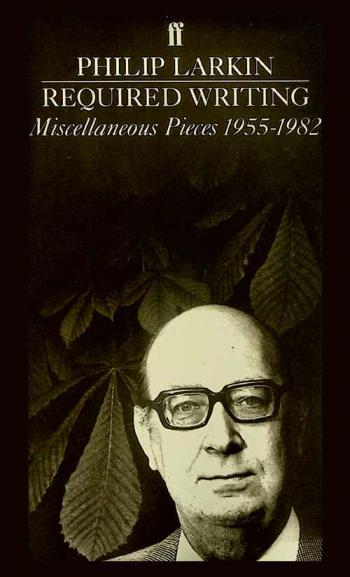
The complete poems
\"This entirely new edition brings together all of Philip Larkin's poems. In addition to those that appear in Collected Poems (1988) and Early Poems and Juvenilia (2005), some unpublished pieces from Larkin's typescripts and workbooks are included, as well as verse--by turns scurrilous, satirical, affectionate, and sentimental--that had been tucked away in his letters. For the first time, Larkin's poems are given a comprehensive commentary. This draws critically upon, and substantially extends, the accumulated scholarship on Larkin, and covers closely relevant historical contexts, persons and places, allusions and echoes, and linguistic usage. Prominence is given to the poet's comments on his own work, which often outline the circumstances that gave rise to a poem or state that he was trying to achieve. Larkin often played down his literariness, but his poetry enrichingly alludes to and echoes the writings of many others. Archie Burnett's commentary establishes Larkin as a more complex and more literary poet than many readers have suspected.\"--Publisher's website.
Book

Experiences of Venous Leg Ulcer persons following an individualised nurse-led education: protocol for a qualitative study using a constructivist grounded theory approach
IntroductionVenous leg ulcers are slow-healing wounds with a high risk of recurrences. To prevent recurrences and promote healing, different nurse-led educational interventions have been developed. The impact of these interventions on self-management is ambiguous. Also, how persons with a venous leg ulcer experiences these educational sessions are poorly described.AimThis study protocol presents the methodology to provide a comprehensive explanation of participants’ journeys—of how they experience their individualised education sessions concerning self-management.Methods and analysisA constructivist grounded theory approach according to Charmaz involving 30 participants will be used. Data will be collected through semistructured face-to-face interviews. Interviews will be transcribed verbatim and analysed with initial and focus coding using MAXQDA. Data collection and data analysis will occur iteratively, focusing on constant comparison to obtain well-developed categories. Categories will be reinforced using existent literature.Ethics and disseminationThis pre-results study is embedded in a clinical trial (NCT04019340) and approved by ethical committee of the canton of Geneva (CCER: 2019-01964). A theory will emerge from participants’ journeys informing future education sessions for patients with venous leg ulcers. The findings will be disseminated through peer-reviewed publications and communications.
Journal Article


Consensus definition of advance care planning in dementia: A 33‐country Delphi study
INTRODUCTION Existing advance care planning (ACP) definitional frameworks apply to individuals with decision‐making capacity. We aimed to conceptualize ACP for dementia in terms of its definition and issues that deserve particular attention. METHODS Delphi study with phases: (A) adaptation of a generic ACP framework by a task force of the European Association for Palliative Care (EAPC); (B) four online surveys by 107 experts from 33 countries, September 2021 to June 2022; (C) approval by the EAPC board. RESULTS ACP in dementia was defined as a communication process adapted to the person's capacity, which includes, and is continued with, family if available. We identified pragmatic boundaries regarding participation and time (i.e., current or end‐of‐life care). Three interrelated issues that deserve particular attention were capacity, family, and engagement and communication. DISCUSSION A communication and relationship‐centered definitional framework of ACP in dementia evolved through international consensus supporting inclusiveness of persons with dementia and their family. Highlights This article offers a consensus definitional framework of advance care planning in dementia. The definition covers all stages of capacity and includes family caregivers. Particularly important are (1) capacity, (2) family, (3) engagement, and communication. Fluctuating capacity was visualized in relation to roles and engaging stakeholders.
Journal Article