
Catalogue Search | MBRL


Are you sure you want to remove the book from the shelf?

{{itemTitle}}
197
result(s) for
"Larue, James"
Sort by:

Ban Bombs Managing Public Comments in 2024
Across the country, many school and public libraries have seen a surge in intellectual freedom challenges - attempts to restrict or remove access to library resources. But this round of challenges doesn't follow the usual playbook of a single patron filling out a Request for Reconsideration for just one library resource. Like a photo bomb, this is a disruptive intrusion. We might call it a \"ban bomb\" -- also disruptive, but with the intent of preventing others from having access to intellectual content. To be clear, citizens have a right to protest, a right enshrined in the same First Amendment that informs library collections. But many public boards are used to no one showing up at all. When an angry mob descends, board members are often at a loss. They lose control of the meeting, and they lose control of a community narrative. This article addresses some approaches to responding in a way that is both respectful and productive.
Journal Article

INTELLECTUAL FREEDOM -AND- SOCIAL JUSTICE
Intellectual freedom is a core value of librarianship. It also may have reflected a dawning social justice awareness: People had the right, and perhaps the obligation, to investigate what was going on in the world the better to prevent human tragedy and oppression. Social Justice or Social Responsibility also has a long history in librarianship. The core tenets of Social Justice as a rising value in librarianship seem to trace their origin to Critical Race Theory (CRT). Eventually, this area of writing and research generated many of the terms we now use to discuss Equity, Diversity and Inclusion: white privilege, unconscious bias, microaggressions, and systemic racism in many institutions, pointedly including the law. Critical Race Theory also included the need to transform society through principled resistance, through calling out racist or bigoted behavior, and through being better allies to marginalized people.
Journal Article
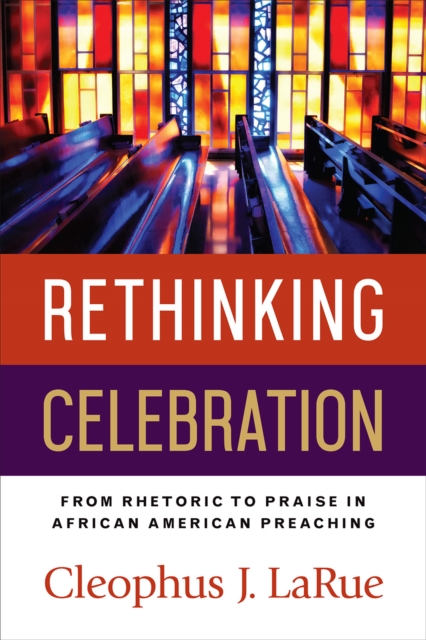
Rethinking Celebration
\"This book is a clarion call for African American preachers to think more deeply about the aims and ends of their preachingnamely to stop putting so much emphasis on celebratory endings to our sermons and focus more on the substantive content in our sermons. Our so-called celebratory preaching, designed to excite the congregation into action through a highly emotional closing of the sermon, has had the opposite effect. Rather than inducing action, it has lulled generations of black congregants to sleep. While we are jumping up and down, shouting, and waving our hands in the air every Sunday during the worship hour, we seem not to notice the growing number of churched and unchurched alike who are becoming powerfully alienated from any form of institutional religion.\"
from the introduction
\"Celebration\" is a term that has long been used to describe African American preaching, characterized by content that affirms the goodness and powerful intervention of God as well as style that builds from quiet beginnings to an emotionally rich crescendo in conclusion. Cleophus J. LaRue argues that while celebration is one of African American preaching's greatest gifts to the larger church, too many black preachers have become content with the form of celebrationvolume, vocabulary, pitch, speed, rhythm, and the liketo the neglect of its essencethe proclamation of the mighty acts of God in the lives of their congregations and communities. This kind of preaching, LaRue contends, fails to address the ongoing problems of the African American community and is powerless to prevent the growing disaffection of black America with the black church. In words both prophetic and practical, LaRue suggests ways to improve black preaching that honor both the form and the power of the African American homiletical practice of celebration. Preachers will learn how to use celebration more selectively and as part of a fully formed preaching practice rather than as a means of distracting the congregation from pressing social and theological questions. The book includes six illustrative sermons from LaRue as well as Paschal Sampson Wilkinson Sr., Brian K. Blount, and Claudette Anderson Copeland.
eBook

My Intellectual Freedom Journey: Reclaiming a Moral Sanction for the Public Sector
Intellectual freedom—the idea that all people have the right to express themselves freely and access the expressions of others—is a core value of librarianship. But every value, every institution, must go through a kind of rediscovery with each generation. This “re-valuing” is necessary and right. Do our institutions serve us, or are we forced to serve them? Do we practice what we say we believe? An example of this re-evaluative process concerns the promise, the vision, of the Declaration of Independence. Jefferson wrote, “We hold these truths to be self-evident, that all men are created equal, that they are endowed by their Creator with certain unalienable Rights, that among these are Life, Liberty and the pursuit of Happiness.” But that clear statement of “self-evident truths” was on the one hand immediately contradicted by the explicit endorsement of slavery (3/5ths of a human being), and by the denial of a vote to women. Nonetheless, the underlying idea was so powerful and compelling that subsequent generations returned to it again and again, edging closer to the original vision.I believe that intellectual freedom is under such a review by librarians now. I believe, too, that the value remains an abiding and powerful call to service.In this article I will present three snapshots from my own intellectual freedom journey. Each has a context in time that may lend depth of understanding to today’s challenges. Perhaps, too, it will point the way to a new place for intellectual freedom in our work.
Journal Article
False Witness: Morality in Media and EBSCO
In June of 2017, the Office for Intellectual Freedom got its first ever intellectual freedom challenge to a library database. The case was in Colorado and involved the Cherry Creek School District. According to a parent in the district, EBSCO, a periodical database, was promoting obscene and pornographic content to middle school students. At this writing, the campaign has spread to almost a dozen other states from the southeast to the northwest. Some schools immediately, and without much analysis, shut down access to EBSCO. Others have followed their policies and procedures and retained it, despite persistent attempts at political pressure.
Journal Article
Speech and Consequences
This issue begins with the moving story of intellectual freedom champion Gordon Conable. The drama plays out like this: a principled and outspoken defender of First Amendment rights stands up for a controversial book in accordance with library policy and federal law. Then, his community vilifies, harasses, and punishes him for this defense until his death. One lesson is the inescapable truth that although we have the right to free speech, there can be consequences, whether in Michigan, or in Russia (see this issue’s review of Garden of Broken Statues).
Journal Article
People Behaving Badly, or Can We Get an Adult in the Room?
Shut Up! (self-published 2016; ISBN 978-1-5333-8233-7) is a self-published book about a war between authors Megan Fox and Kevin DuJan and the Orland Park Public Library (OPPL)—except mostly, it isn’t. That modest story really doesn’t require 651 pages. On this topic, in the words attributed to Ambrose Bierce, “The covers of this book are too far apart.”What does fill the pages, then? There are many words of praise for people hailed as “great conservatives, writers, and pundits” such as Rush Limbaugh, Ann Coulter, and Andrew Breitbart (to whom the book is dedicated). On the other hand, the authors believe that even the people they describe as good, honest, unfailingly truth-seeking conservative talk radio hosts are just too timid to withstand the oppressive, unscrupulous importunities of the liberal left. Welcome, again, to the culture wars.
Journal Article

Six Lessons for New, Novice, and Bi-Vocational Southern Baptist Pastors in the Southeastern Post-2016 United States Navigating the Complexities of Politically Polarized Influence in the Church
This report presents research identifying six problems that new, novice, and bi–vocational pastors may encounter in the politically polarized post–2016 United States. Further, the presented research identifies six solutions to these problems enabling pastors to avoid many unnecessary mistakes in this hyper–polarized environment. This report examines the culture, society, and the political polarization influencing the attitudes of church members and pastors. The presented data and research aids in identifying the problems and provides solutions to them.The foundation of this project rests on the biblical principles in Josh 4:1–24 which emphasizes Joshua’s faithfulness through obedience. Jer 29:4–7 provides context demonstrating faithful obedience to the Lord. Finally, 2 Pet 1:12–15 demonstrates the guiding hand of the pastor as he teaches and reminds his people over and again enabling them the ability to recall the words and commands of God. For the pastor to succeed in upholding the commands and truths found in all three of these passages, he must faithfully obey the Lord even in those areas often masquerading as an amoral decision since many believers are caught up in the passions of political machinations. Chapter 1 introduces the subject matter of this project and the context in which the author ministers. Chapter 2 provides the biblical foundation on which to build the discovered research. Chapter 3 lays out the context of the post–2016 United States and the problems the research uncovered. In Chapter 4 the solutions to the identified problems, along with the underlying data, provides the reasoning for these specific solutions. Chapter 5 provides conclusions to the presented discovery of the problems and their solutions.
Dissertation
Editorial: Journal of Intellectual Freedom and Privacy
We are so pleased to introduce the first issue of the Journal of Intellectual Freedom and Privacy (JIFP).JIFP is an expansion of The Newsletter on Intellectual Freedom (NIF), published between 1952 and 2015. Ever mindful of serials librarians’ woes, we hereby state that this new publication is a continuation of NIF, but begun over with vol. 1, no. 1. The publication will be online only. For questions on subscriptions, contact Deborah Caldwell-Stone, deputy director of the Office for Intellectual Freedom, at dstone@ala.org.
Journal Article