
Catalogue Search | MBRL


Are you sure you want to remove the book from the shelf?

{{itemTitle}}
87
result(s) for
"Lask, Bryan"
Sort by:


Eating Disorders and the Brain
Why is the brain important in eating disorders? This ground-breaking new book describes how increasingly sophisticated neuroscientific approaches are revealing much about the role of the brain in eating disorders. Even more importantly, it discusses how underlying brain abnormalities and dysfunction may contribute to the development and help in the treatment of these serious disorders. * Neuropsychological studies show impairments in specific cognitive functions, especially executive and visuo-spatial skills. * Neuroimaging studies show structural and functional abnormalities, including cortical atrophy and neural circuit abnormalities, the latter appearing to be playing a major part in the development of anorexia nervosa. * Neurochemistry studies show dysregulation within neurotransmitter systems, with effects upon the modulation of feeding, mood, anxiety, neuroendocrine control, metabolic rate, sympathetic tone and temperature. The first chapter, by an eating disorders clinician, explains the importance of a neuroscience perspective for clinicians. This is followed by an overview of the common eating disorders, then chapters on what we know of them from studies of neuroimaging, neuropsychology and neurochemistry. The mysterious phenomenon of body image disturbance is then described and explained from a neuroscience perspective. The next two chapters focus on neuroscience models of eating disorders, the first offering an overview and the second a new and comprehensive explanatory model of anorexia nervosa. The following two chapters offer a clinical perspective, with attention on the implications of a neuroscience perspective for patients and their families, the second providing details of clinical applications of neuroscience understanding. The final chapter looks to the future. This book succinctly reviews current knowledge about all these aspects of eating disorder neuroscience and explores the implications for treatment. It will be of great interest to all clinicians (psychiatrists, psychologists, nurses, dieticians, paediatricians, physicians, physiotherapists) working in eating disorders, as well as to neuroscience researchers.
eBook

A short introduction to understanding and supporting children with eating disorders
Increasing numbers of children and young people are presenting for treatment of an eating disorder, but there are many different types and they are often confused, making it difficult to know what support to offer.This easy-to-read guide presents all the vital information on a range of eating disorders: anorexia nervosa, bulimia nervosa, selective eating, and avoidant and restrictive intake disorders. Each eating disorder is clearly defined, making it easy to draw distinctions between them. The book covers their origins, characteristics and typical development, letting teachers and parents know what signs to look out for. There is practical advice on how to help young people, strategies for overcoming common difficulties, as well as information on available treatments. Vignettes feature throughout to help teachers and parents apply knowledge to real-life situations. This is an essential resource for teachers and parents of children and young people with eating disorders.
eBook

Eating Disorders in Childhood and Adolescence
In the fourth edition of this accessible and comprehensive book, Bryan Lask and Rachel Bryant-Waugh build on the research and expertise of the previous three editions. First published in 1993, this was the first book of its kind to explore eating disorders in children and young adolescents, a population that is very different from those in their late teens and adulthood.
The contributors’ experience and knowledge have increased and the field has moved forward over the past 20 years. This fully revised edition offers a distillation of current information relating to the younger population, and contains brand new chapters on areas of experience, research and practice including:
The perspective of a young person going through an eating disorder
Experiences of a parent
Updated information regarding advances from neuroscience
Therapeutic engagement
Cognitive remediation therapy
Eating Disorders in Childhood and Adolescence offers the reader knowledge, insight and understanding into this fascinating but challenging patient group. It has both a clinical and research focus and will be an essential text for a wide range of professionals, as well as being readable for parents of children suffering from eating disorders.
Bryan Lask trained at the University of London and was a consultant in child and adolescent psychiatry at Great Ormond Street Hospital for 25 years. There, with Rachel Bryant-Waugh, he initiated the first early onset eating disorders programme in the UK. Subsequently he has written 11 books and over 200 papers. He is Past-President of the Eating Disorders Research Society and recipient of a Lifetime Achievement Award from the Academy for Eating Disorders.
Rachel Bryant-Waugh is Lead Consultant Clinical Psychologist and Joint head of the Feeding and Eating Disorders Service at Great Ormond Street Hospital. She is also Honorary Senior Lecturer at the Institute of Child Health, University College London. She obtained a PhD from the University of Sussex investigating children with eating disorders, and trained as a clinical psychologist in London. She has specialised in feeding and eating difficulties in children for many years, has taught and published widely in this field and is an internationally respected expert. She is recipient of the 2012 Academy for Eating Disorders Leadership Award for Clinical, Educational and Academic Service.
Preface. Part I: Perspectives . Nunn , The Sensitivities that Hinder and the Sensitivities that Heal. Caroline , A Child’s Perspective. Simons, A Parent’s Perspective. Part II: Assessment and Course . Bryant-Waugh, Lask , Overview. Nicholls , Aetiology. Katzman, Steinegger , Physical Assessment. Nicholson , Psychological Assessment. Frampton, Rose , Eating Disorders and the Brain. Gowers , Outcome. Part III: Management . Lask, Bryant-Waugh , Overview. Wiig, Lask , Therapeutic Engagement. Hart , Nutrition and Refeeding. Herscovici, Family Approaches. Watkins , Cognitive Behavioural Approaches. Troupp , Individual Psychotherapy. Owen, Lindvall, Lask, Cognitive Remediation Therapy. Stewart, Ta , Ethical and Legal Issues.
eBook

Metabolic Control and Illness Perceptions in Adolescents with Type 1 Diabetes
Background. Disturbed eating behavior and psychosocial variables have been found to influence metabolic control, but little is known about how these variables interact or how they influence metabolic control, separately and combined. Objective. To explore associations between metabolic control (measured by HbA1c) and eating disorder psychopathology, coping strategies, illness perceptions, and insulin beliefs in adolescents with type 1 diabetes. Methods. A total of 105 patients (41.9% males) with type 1 diabetes (12–20 years) were interviewed with the Child Eating Disorder Examination. In addition, self-report psychosocial questionnaires were completed. Clinical data, including HbA1c, was obtained from the Norwegian Childhood Diabetes Registry. Results. Significant gender differences were demonstrated. Among females, HbA1c correlated significantly with eating restriction (.29, p < .05), the illness perception dimensions consequences, personal control, coherence, and concern (ranging from .33 to .48), and the coping strategy ventilating negative feelings (−.26, p < .05). Illness perception personal control contributed significantly to HbA1c in a regression model, explaining 23% of the variance among females (β .48, p < .001). None of the variables were significantly associated with HbA1c among males. Conclusions. Illness perceptions appear to be important contributors to metabolic control in females, but not males, with type 1 diabetes.
Journal Article

Verbal fluency in anorexia nervosa
Verbal fluency performance is commonly evaluated in clinical neuropsychology, in particular for assessment of executive functioning. Fluency is usually assessed by the person’s ability to produce as many words as possible from a given cue within a specific timeframe. The cues are typically
phonemic
, e.g. words beginning with a specific letter, or
semantic
, e.g. words within a given category. Important components underlying fluency performance include clustering (the production of words within subcategories) and switching (the switch between clusters). Previous studies have demonstrated good performance on verbal fluency tasks in patients with anorexia nervosa (AN), but have not investigated the underlying components of this performance. The aim of the present study was to compare phonemic fluency performance in patients with AN to healthy controls (HC) and to investigate the use of clustering and switching in the two groups. Fifty-two patients with AN were compared with 37 HC on a phonemic fluency task. The patient group produced more words in total but the results were not significantly different compared to the HC sample. There were no differences between the two groups with regard to clustering, but patients with AN performed significantly more switches. In addition, switching was significantly more related to total output score in the patient sample. In contrast with previous studies of other areas of cognitive flexibility in AN, patients with AN appear to have good verbal set-shifting skills.
Journal Article

Eating Disorders
Eating problems are common in children and teenagers. Yet myths about such problems abound and it can be very difficult to separate the facts from popular beliefs; unusual or disturbed eating patterns can be understandably bewildering and distressing for parents.
Whatever aspect of your child's eating behaviour is causing you concern, this book will help you understand some of the more common reasons why problems arise, and will give you advice on what you and others can do to manage the situation.
Written by two experienced clinicians, this new edition of Eating Disorders: A Parents' Guide is dedicated to clarifying the subject of eating disorders. Combining an accessible and straightforward introduction to the subject with practical advice, this book represents the first step towards recognising, understanding and dealing with the problem.
Case-studies are used to help parents understand their children's experiences of this complex and challenging subject and sensitive advice is offered on a range of issues, including:
how to identify a complete range of eating difficulties
how to approach specific problems
where to seek help and treatment.
This book will be welcomed by anyone who is concerned about the eating habits of their children and will be invaluable to professionals working with those suffering from eating disorders.
Introduction. What are eating disorders? What causes eating disorders? How do I know if my child has an eating disorder? What can I do? General principles. What can I do? Specific problems . Who should I consult and what will they do? What about the future? Case vignettes.
Rachel Bryant-Waugh is Lead Consultant Clinical Psychologist and Joint Head of the Feeding and Eating Disorders Service at Great Ormond Street Hospital. She is also Honorary Senior Lecturer at the Institute of Child Health, University College London. She obtained a DPhil from the University of Sussex investigating children with eating disorders, and trained as a clinical psychologist in London. She has specialized in feeding and eating difficulties in children for many years, has taught and published widely in this field and is an internationally respected expert. She is the recipient of the 2012 Academy for Eating Disorders Leadership Award for Clinical, Administrative or Educational Service.
Bryan Lask is Emeritus Professor of Child and Adolescent Psychiatry at the University of London, Honorary Consultant at Great Ormond Street Hospital and Academic Director at the Ellern Mede Centre, London. He is Immediate Past-President of the Eating Disorders Research Society and recipient of a Lifetime Achievement Award from the Academy for Eating Disorders.
eBook
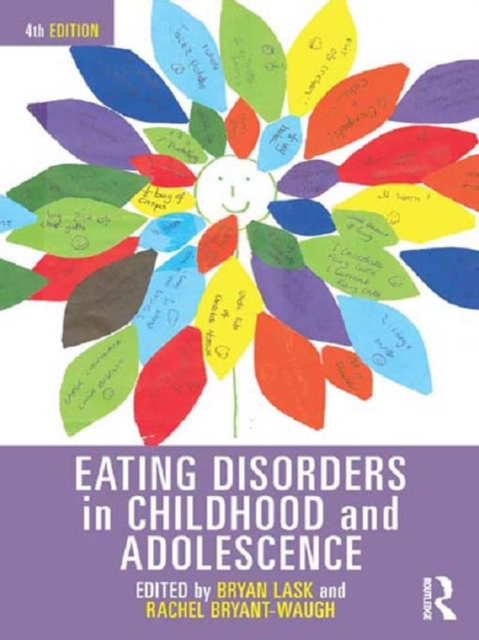
Eating Disorders in Childhood and Adolescence
In the fourth edition of this accessible and comprehensive book, Bryan Lask and Rachel Bryant-Waugh build on the research and expertise of the previous three editions. First published in 1993, this was the first book of its kind to explore eating disorders in children and young adolescents, a population that is very different from those in their late teens and adulthood.
The contributors' experience and knowledge have increased and the field has moved forward over the past 20 years. This fully revised edition offers a distillation of current information relating to the younger population, and contains brand new chapters on areas of experience, research and practice including:
The perspective of a young person going through an eating disorder
Experiences of a parent
Updated information regarding advances from neuroscience
Therapeutic engagement
Cognitive remediation therapy
Eating Disorders in Childhood and Adolescence offers the reader knowledge, insight and understanding into this fascinating but challenging patient group. It has both a clinical and research focus and will be an essential text for a wide range of professionals, as well as being readable for parents of children suffering from eating disorders.
eBook


Pervasive refusal syndrome (PRS) 21 years on: a re-conceptualisation and a renaming
Twenty-one years ago, Lask and colleagues first described pervasive refusal syndrome (PRS) as a child’s “dramatic social withdrawal and determined refusal to walk, talk, eat, drink, or care for themselves in any way for several months” in the absence of an organic explanation. PRS has been conceptualised in a variety of ways since then. These have included a form of post-traumatic stress disorder, learnt helplessness, ‘lethal mothering’, loss of the internal parent, apathy or the ‘giving-up’ syndrome, depressive devitalisation, primitive ‘freeze’, severe loss of activities of daily living and ‘manipulative’ illness, meaning the possibility that the children have been drugged to increase chances of asylum in asylum-seeking families. Others have insisted that PRS is simply depression, conversion disorder, catatonia or a factitious condition. This paper reviews these conceptualisations, explores some of the central complexities around PRS and proposes a neurobiological explanatory model, based upon autonomic system hyper-arousal. It touches upon the clinical implications and suggests a new name for the condition reflecting what we believe to be a more sophisticated understanding of the disorder than was available when it was first described.
Journal Article