
Catalogue Search | MBRL


Are you sure you want to remove the book from the shelf?

{{itemTitle}}
6
result(s) for
"Laynesmith, Joanna"
Sort by:
The Fifteenth Century XV
The focus of this volume may be summed up as \"The Word\". Its essays examine the contents and provenance of manuscripts which were written for polemical purposes, treasured by the duchess of York, and through the new medium of print introduced to a wider public topics of historical interest and illustrations of the geography of the known world. The essays here also consider official records of forest administration, expressed in arcane language; documents preserved in the papal curia which reveal significant facts about the lives of Scottish bishops; archives produced by the English chancery noting the movements of a royal councillor; and letters, poems and songs exposing the political strategy of a German prince. Nor is the spoken word neglected, whether employed in speeches delivered at the start of parliaments, using as their themes scriptures and classical texts to set a political agenda; or as sermons to open-air congregations gathered at St. Paul's Cross, where the oratory of Bishop Alcock stirred his listeners in different ways. Contributors: Michael Bennett, Julia Boffey, Paul Cavill, J.M. Grussenmeyer, Tom Johnson, J.L. Laynesmith, John Milner, Ben Pope, Dan E. Seward, Sarah Thomas
eBook
The fifteenth century.: (Writing, records and rhetoric)
The focus of this volume may be summed up as \"The Word\". Its essays examine the contents and provenance of manuscripts which were written for polemical purposes, treasured by the duchess of York, and through the new medium of print introduced to a wider public topics of historical interest and illustrations of the geography of the known world. The essays here also consider official records of forest administration, expressed in arcane language; documents preserved in the papal curia which reveal significant facts about the lives of Scottish bishops; archives produced by the English chancery noting the movements of a royal councillor; and letters, poems and songs exposing the political strategy of a German prince. Nor is the spoken word neglected, whether employed in speeches delivered at the start of parliaments, using as their themes scriptures and classical texts to set a political agenda; or as sermons to open-air congregations gathered at St. Paul's Cross, where the oratory of Bishop Alcock stirred his listeners in different ways. Contributors: Michael Bennett, Julia Boffey, Paul Cavill, J.M. Grussenmeyer, TomJohnson, J.L. Laynesmith, John Milner, Ben Pope, Dan E. Seward, Sarah Thomas
eBook
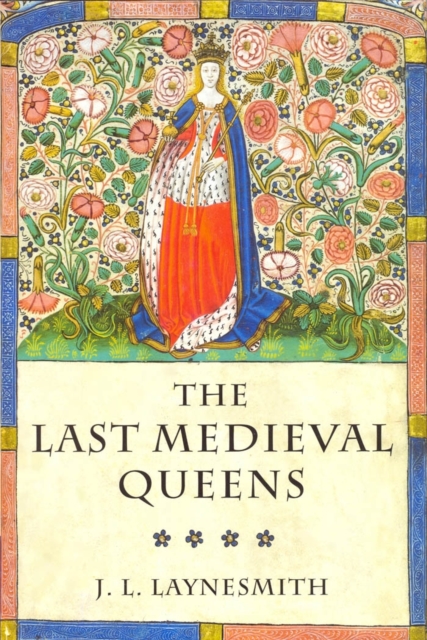
The last medieval queens : English queenship, 1445-1503
The last medieval queens of England were Margaret of Anjou, Elizabeth Woodville, Anne Neville, and Elizabeth of York - four very different women whose lives and queenship were dominated by the Wars of the Roses. This book is not a traditional biography but a thematic study of the ideology and practice of queenship. It examines the motivations behind the choice of the first English-born queens, the multi-faceted rituals of coronation, childbirth, and funeral, the divided loyalties between family and king, and the significance of a position at the heart of the English power structure that could only be filled by a woman. It sheds new light on the queens' struggles to defend their children's rights to the throne, and argues that ideologically and politically a queen was integral to the proper exercise of mature kingship in this period.
eBook

The king's mother
This article describes the life, career and political position of Cecily Neville, Duchess of York, mother of Edward IV and Richard III, examining in particular the claims that Edward IV was a bastard and her role in the 1649 rebellion. It seems clear that she was a politically astute woman, neither the whore implied by Richard Neville, nor the angel described by some historians. Her piety may have been genuine but her role in the 1469 rebellion will probably never be known for certain. The theory that she had fallen out with Edward is not entirely convincing. (Quotes from original text)
Magazine Article