
Catalogue Search | MBRL


Are you sure you want to remove the book from the shelf?

{{itemTitle}}
128
result(s) for
"Leach, Neil"
Sort by:

Architecture in the age of artificial intelligence : an introduction to AI for architects
Artificial intelligence is everywhere - from the apps on our phones to the algorithms of search engines. Without us noticing, the AI revolution has arrived. But what does this mean for the world of design? The first volume in a two-book series, 'Architecture in the Age of Artificial Intelligence' introduces AI for designers and considers its positive potential for the future of architecture and design. Explaining what AI is and how it works, the book examines how different manifestations of AI will impact the discipline and profession of architecture. Highlighting current case-studies as well as near-future applications, it shows how AI is already being used as a powerful design tool, and how AI-driven information systems will soon transform the design of buildings and cities.
BOOK
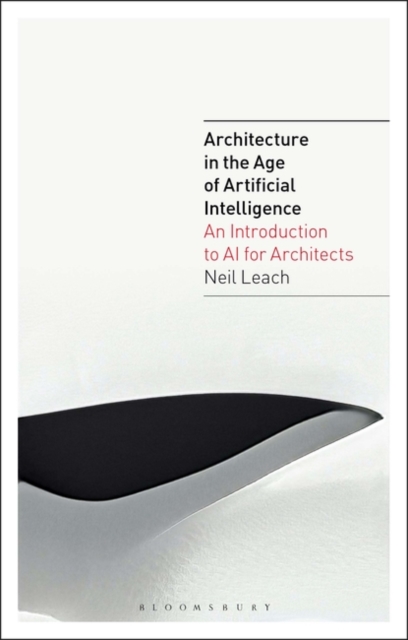
Architecture in the Age of Artificial Intelligence
Artificial intelligence is everywhere – from the apps on our phones to the algorithms of search engines. Without us noticing, the AI revolution has arrived. But what does this mean for the world of design? The first volume in a two-book series, Architecture in the Age of Artificial Intelligence introduces AI for designers and considers its positive potential for the future of architecture and design. Explaining what AI is and how it works, the book examines how different manifestations of AI will impact the discipline and profession of architecture. Highlighting current case-studies as well as near-future applications, it shows how AI is already being used as a powerful design tool, and how AI-driven information systems will soon transform the design of buildings and cities. Far-sighted, provocative and challenging, yet rooted in careful research and cautious speculation, this book, written by architect and theorist Neil Leach, is a must-read for all architects and designers – including students of architecture and all design professionals interested in keeping their practice at the cutting edge of technology.
eBook
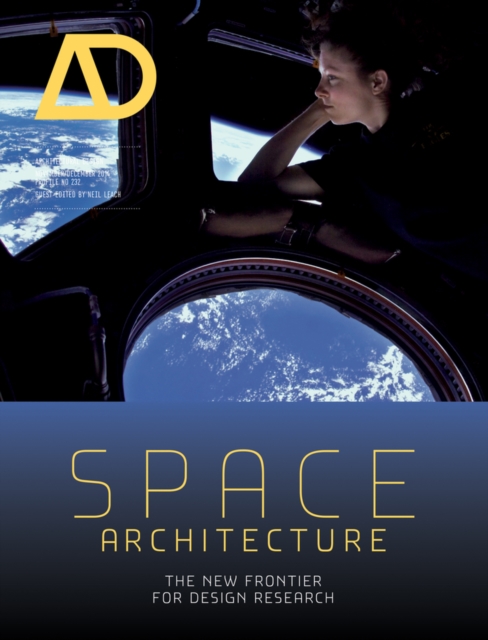
Space Architecture
Forty years on from the first moon landing, architecture in Space is entering a new era. Over the last decade, there has been a fundamental shift in the Space industry from short-term pioneering expeditions to long-term planning for colonisation, and new ventures such as Space tourism. Architects are now involved in designing the interiors of long-term habitable structures in Space, such as the International Space Station, researching advanced robotic fabrication technologies for building structures on the Moon and Mars, envisioning new 'space yachts' for the super-rich, and building new facilities, such as the Virgin Galactic 'Spaceport America' in New Mexico designed by Foster + Partners. Meanwhile the mystique of Space remains as alluring as ever, as high-profile designers and educators – such as Greg Lynn – are running designs studios drawing upon ever more inventive computational design techniques. This issue of AD features the most significant current projects underway and highlights key areas of research in Space, such as energy, materials, manufacture and robotics. It also looks at how this research and investment in new technologies might transfer to terrestrial design and construction. Space architects: Constance Adams, Marc Cohen, Ondrej Doule, Sandra Häuplik-Meusburger, Scott Howe, Brent Sherwood, Madhu Thangavelu, Andreas Vogler, Robert Zubrin. Architects: Bevk Perovic Arhitekti, Dekleva Gregoric Arhitekti, Foster + Partners, Neil Leach, Greg Lynn, OFIS architects, SADAR + VUGA.
eBook


Waste milk feeding, animal by-products regulations and antibiotic resistance
[...]the practice of feeding waste milk to calves on the farm of origin of such milk does not breach ABP legislation.
Journal Article

Architecture and Revolution
Architecture and Revolution explores the consequences of the 1989 revolutions in Central and Eastern Europe from an architectural perspective. It presents new writings from a team of renowned architects, philosophers and cultural theorists from both the East and the West. They explore the questions over the built environment that now face architects, planners and politicians in the region. They examine the problems of buildings inherited from the communist era: some are environmentally inadequate, many were designed to serve a now redundant social programme and others carry the stigma of association with previous regimes. Contributors include: Daniel Libeskind, Bernard Tschumi, Laura Mulvey, Helene Cixous, Andrew Benjamin and Frederic Jameson.
bPart I. Historical Perspectives. 1. Sources of a Radical Mission in the Early Soviet Profession: Alexei Gan and the Moscow Anarchists. 2. The Vesnin's Palace of Labour: the Role of Practice in Materialising the Revolutionary. 3. Notes for a Manifesto. A Postmodern Critic's Kit for Interpreting Socialist. Part II. Architecture and Change. 5. History Lessons - Policing the Body: Descartes and the Architecture of Change. 7. The State as a Work of Art: the Trauma of Ceausescu's Disneyland - 8. Architecture or Revolution? Part III. Strategies for a New Europe. 9. Traces of the Unborn. Resisting the Erasure of History: Daniel Libeskind Interviewed by Anne Wagner. 11. The Humanity of Architecture. 12. Disjunctions. 13. The Dark Side of the Domus : The Redomestication of Central and Eastern Europe. 14. Architecture in a Post-Totalitarian Society: Round-Table Discussion Conducted by Bart Goldhoorn. Part IV. The Romanian Question. 15. Totalitarian city: Bucharest 1980-9, Semio-Clinical Files. 16. The People's House, or the Voluptuous Violence of an Architectural Paradox.17. Utopia 1988, Romania; Post-Utopia 1995, Romania. 18. Rediscovering Romania. Part V. Tombs and Monuments. 19. Berlin 1961-89: The Bridal Chamber. Reflections on Disgraced Monuments. 21. Attacks on the Castle. Index.
eBook
